 how-to
Cost of Professional Yard Drainage Installation
Table of Contents
- What Professional Yard Drainage Installation Costs
- Drainage System Types and Their Installation Expenses
- Factors That Affect Your Drainage Installation Price
- Yard Grading Cost and Site Preparation
- Cost to Install 100 Feet of French Drain
- What's Included in Professional Installation and Long-Term Maintenance
- Frequently Asked Questions
Last Updated: October 20, 2026
What Professional Yard Drainage Installation Costs
The cost of professional yard drainage installation depends on the system type, yard size, soil conditions, and local labor rates. Simpler systems cost less than comprehensive solutions for serious water pooling or foundation concerns.
Understanding what goes into the cost of professional yard drainage installation helps you budget accurately. The work typically includes site assessment, trenching, pipe installation, gravel, filter fabric, and often landscape restoration, skipping any of these often means the system won't perform as intended.
Investing in professional installation upfront prevents costly repairs later.
Drainage System Types and Their Installation Expenses
Different drainage solutions serve different problems, each with its own cost profile. The system you need depends on your water issue: standing water in low spots, pooling near your foundation, or general runoff. The table below gives typical installed price bands; treat them as budgeting ranges, not bids, because trench length, access, and discharge distance move the number more than the system label does.
| System | Typical installed cost | Typical unit basis |
|---|---|---|
| French drain (subsurface) | $2,000-$8,000 | $20-$45 per linear foot |
| Catch basin (single, with solid pipe run) | $600-$2,500 | $500-$1,500 per basin plus $15-$30 per foot of solid pipe |
| Surface drain / channel drain | $500-$2,000 | $15-$35 per linear foot |
| Yard grading and slope correction | $1,500-$6,000 | $1-$4 per square foot of regraded area |
| Dry well / infiltration pit | $1,000-$3,500 | Per pit, depending on size and stone volume |
| Sump pump and discharge line | $800-$2,500 | Per pump plus discharge run |
French Drain Installation Cost Breakdown
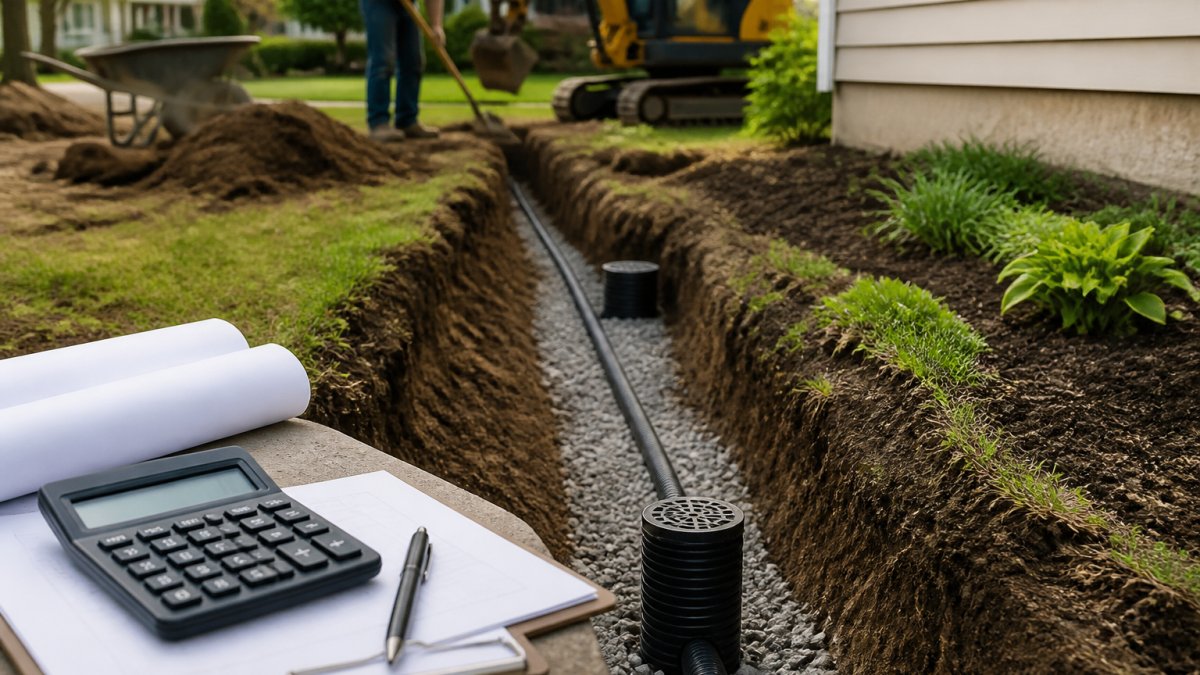
A French drain is a perforated pipe buried in a gravel-filled trench that redirects water away from problem areas. It's one of the most common residential solutions because it handles moderate to severe pooling effectively.
Most professionals price French drains by the linear foot, bundling excavation, perforated pipe, filter fabric, and washed drainage stone. Rates vary depending on factors like trench depth, soil conditions, machine access, and discharge runs.
Installation includes digging the trench to proper depth, laying perforated pipe, wrapping it in filter fabric, filling with drainage rock, and restoring the surface. A distant or complex discharge point increases costs.
Cost to Install a Catch Basin and Surface Drains
Catch basins and surface drains work differently than French drains. A catch basin collects water from a specific low point and channels it through solid pipe to a discharge location; surface drains sit at ground level and funnel water away from problem zones.
A single catch basin typically includes the basin and grate, with the solid pipe run adding to the overall cost. A vehicle-rated basin for a driveway or parking area costs more than a pedestrian-rated unit because the grate and collar must carry load. Surface and channel drains are often an effective way to move water off a patio, walkway, or garage apron.
These systems often cost less per linear foot than French drains because they need less excavation and gravel fill. But a distant discharge or special handling (such as connecting to municipal storm drains) raises costs significantly, and a vehicle-rated basin for a driveway adds material cost.
What Drives the Per-Foot Rate Up or Down
Two systems quoted at the same per-foot rate can land thousands apart once site conditions are priced in. The biggest swing factors: trench depth (12 inches and 30 inches are different jobs), soil type (sandy soil trenches quickly; hard-packed clay and rock can double or triple machine time), access (a narrow gate may require hand digging or a mini-excavator), and discharge distance (every extra foot of solid pipe adds material and labor). Restoration is the quiet cost driver: sod, concrete patching, or replanting can add several hundred to a few thousand dollars.
Factors That Affect Your Drainage Installation Price
Several real-world conditions determine your final bill. Understanding them helps you anticipate costs and compare bids line by line instead of lump sum to lump sum.
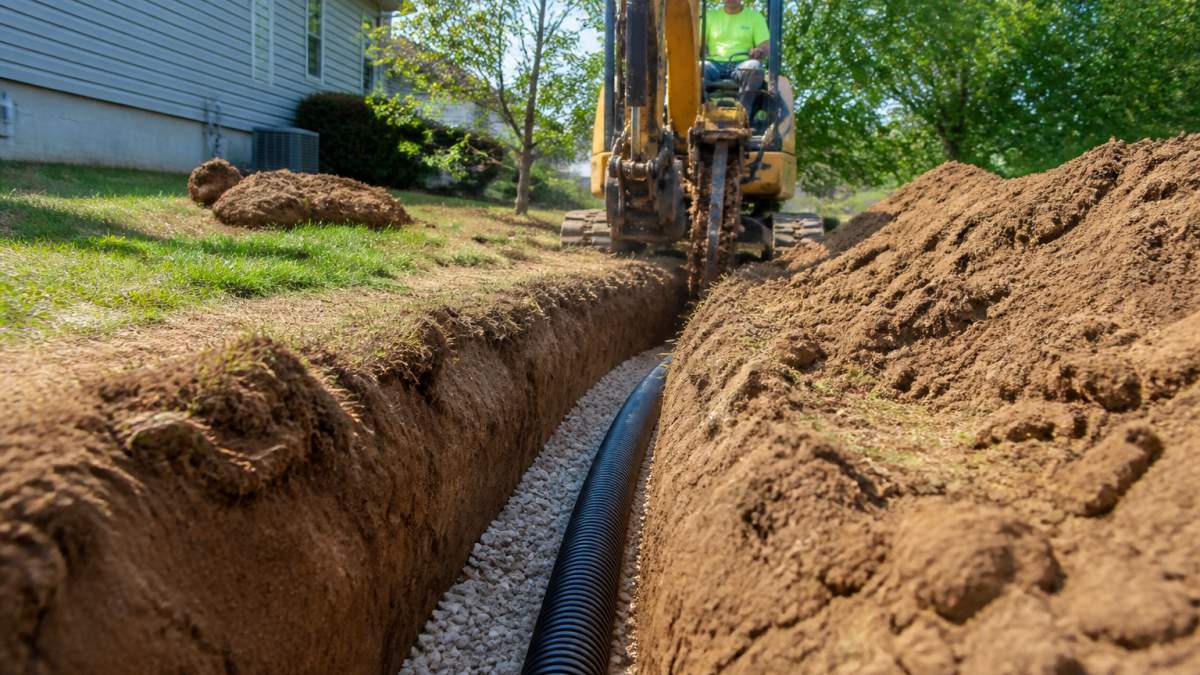
Yard size and drainage-system length is the primary driver: longer trenches mean more labor, pipe, gravel, and time on site. Longer trenches mean more labor, pipe, gravel, and time on site, and the gap widens when the longer run needs more discharge pipe and restoration.
Excavation depth and soil conditions matter enormously. Rocky soil requires more equipment time and skill than loose soil, and hard-packed clay can double or triple excavation time compared to sand. The deeper the trench, the more labor-intensive the work. Expect the excavation line to vary depending on ground conditions and access.
Discharge location affects complexity and cost. Gravity flow downhill to a storm drain, street, or low point is straightforward. Special handling, connecting to a municipal system, crossing a neighbor's property with a written easement, or pumping uphill, increases costs substantially. A sump pump and discharge line adds to the cost, and a long solid-pipe run to a distant outlet adds pipe and labor to the bill.
Site accessibility determines equipment options. A cramped backyard may require hand-digging or smaller equipment, costing more in labor; wide-open yards allow larger excavators and faster work. Hand-digging can add to the cost over machine excavation.
Landscape restoration can add significant cost. Removing and replacing sod, cutting and restoring concrete, or replanting landscaping stacks onto the base drainage cost .
How to Read an Itemized Drainage Estimate
The useful skill is comparing two bids on the same scope. A well-built estimate separates the work into line items so you can see where the money goes and where a cheaper bid is quietly cutting corners.
A complete estimate usually includes:
- Site assessment and drainage design (sometimes a separate fee, sometimes credited toward the project)
- Utility locating and marking before excavation
- Excavation, measured in linear feet and trench depth
- Pipe, fittings, filter fabric, and drainage stone, itemized by quantity
- Catch basins, grates, or channel drains, itemized per unit
- Labor and equipment, often bundled into the per-foot rate
- Spoils hauling and disposal
- Surface restoration, with the restoration standard spelled out (sod vs. seed, concrete patch vs. full replacement)
- Permits or right-of-way approvals, if required
- Contingency for unforeseen rock, roots, or utilities, usually 10-15%
When one bid is dramatically lower, check which lines are missing or underspecified. Common shortcuts: thinner gravel, no filter fabric, shallow trench depth, seed instead of sod, and no spoils disposal. Those omissions rarely show up in the total but show up in performance within a few seasons.
Long-Term Cost of Ownership
Installation is the largest single cost, but not the only one. A French drain, catch basin, and surface drain can perform reliably for many years when installed correctly. Maintenance is modest but not zero: clean catch basins annually, clear surface drain grates, and inspect French drain outlets for sediment and root intrusion. Budget a small annual allowance and a professional inspection every few years, especially after heavy storm seasons. Failure signs are usually visible early, soggy patches returning, water backing up at the outlet, or the catch basin filling faster than usual.
Yard Grading Cost and Site Preparation
Proper grading is often essential before or alongside drainage installation. If your yard slopes toward your foundation or has low spots that collect water, grading corrects the underlying problem rather than just managing symptoms.
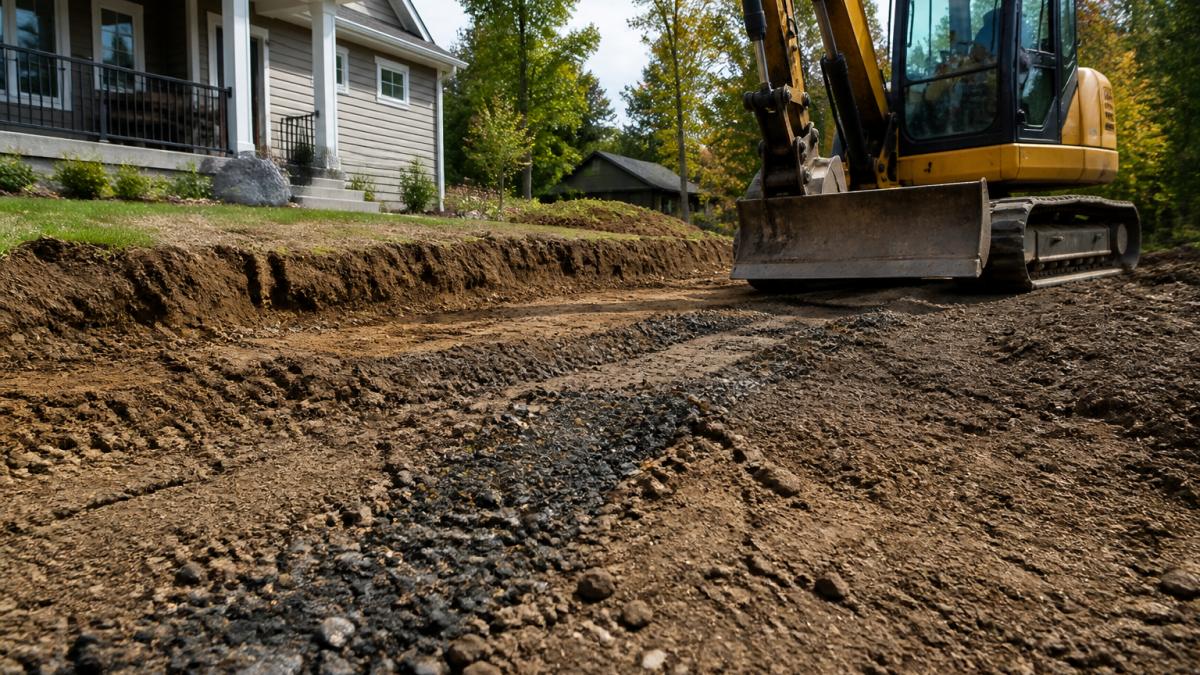
Yard grading reshapes the terrain to direct water away from structures and toward proper discharge points. It requires earthmoving equipment and skilled operators; cost depends on how much soil must be moved, the area graded, and whether imported soil is needed.
Sometimes grading alone solves the water problem; other times, grading combined with French drains or surface drains is the complete solution. A professional assessment determines which approach fits.
Cost to Install 100 Feet of French Drain
Installing 100 feet of French drain is a common residential project size, typically addressing water problems in one section of a yard or around part of a foundation.
The cost to install 100 feet of French drain includes excavation for 100 linear feet of trench, perforated pipe, filter fabric, drainage rock fill, and surface restoration. Labor is the largest portion, especially with challenging soil or a deep trench.
Discharge planning matters too: running to a natural low point on your property keeps costs lower, while reaching a distant storm drain or street adds pipe and labor to the bill.
What's Included in Professional Installation and Long-Term Maintenance
Professional installation means more than digging and laying pipe. Quality work includes site assessment to identify the real problem, proper trench dimensions, correct pipe slope for gravity flow, adequate filter fabric to prevent soil infiltration, proper gravel sizing and depth, and careful surface restoration.
Many homeowners overlook maintenance. French drains can clog with sediment or roots, catch basins need periodic cleaning, and surface drains need inspection. Installed correctly with basic ongoing maintenance, a professional system performs reliably for many years.
OCAS Residential handles the complete process: assessment, installation, and guidance on long-term care.
| System Type | Typical Scope | Key Maintenance | Lifespan |
|---|---|---|---|
| French Drain | Subsurface perforated pipe in gravel-filled trench | Inspect for clogs; clean catch basin annually | 25-30 years |
| Catch Basin | Surface collection point with solid discharge pipe | Clean basin; check for debris buildup | 20-25 years |
| Surface Drain | Ground-level grate directing water away | Clear grate; ensure discharge flows freely | 15-20 years |
| Yard Grading | Terrain reshaping to direct water flow | Monitor for settling; regrade as needed | Ongoing |
Professional yard drainage installation protects your property from water damage, foundation problems, and landscape erosion. The cost of professional yard drainage installation reflects your situation's complexity, the system type, site conditions, and local labor rates. Rather than guessing at budget, work with a professional who can assess your property, identify the actual problem, and recommend the right solution.
OCAS Residential specializes in drainage solutions tailored to residential properties across the region. We evaluate your yard's grading, soil conditions, and water flow patterns to design a system that works. Our team handles excavation, installation, and site restoration, leaving your property protected and your yard restored. Learn more about proper drainage design from the American Society of Civil Engineers. Schedule a free estimate to understand the cost of professional yard drainage installation for your specific property.
Frequently Asked Questions
How much does it cost to install drainage in a yard?
The cost of professional yard drainage installation depends on system type, yard size, soil conditions, and labor. The cost of French drains, surface drains, and catch basins varies depending on the project. Site conditions like clay soil, slope, and excavation depth significantly impact pricing. Contact OCAS Residential for a free estimate tailored to your property's specific drainage needs.
What factors affect the cost of professional yard drainage installation?
Key cost drivers include system type (French drain vs. surface drain), linear footage of drain line needed, excavation depth, soil type, grading requirements, landscaping restoration, and discharge location. Properties with clay soil or poor slope typically cost more due to additional grading work. Equipment access, permit requirements, and concrete cutting for pavement also influence final pricing. OCAS Residential evaluates all these factors during site assessment.
Are French drains worth the money?
French drains are worth the investment for properties with persistent standing water or foundation drainage issues. They can provide effective solutions when installed correctly with proper gravel, filter fabric, and perforated pipe. French drains can help prevent costly water damage to foundations and landscaping, protecting your property's structural integrity and usable yard space.
Does yard drainage installation include grading and restoration?
Professional yard drainage installation typically includes site grading to establish proper water flow and discharge direction. Landscaping restoration, filling trenches, regrading slopes, and restoring grass or soil, is often a separate line item or add-on service. OCAS Residential handles both drainage system installation and complete site restoration, ensuring your yard is functional and properly prepared after work is complete. Clarify what's included in your contractor's scope before signing a quote.