 listicle
Benefits of Good Yard Drainage: Prevention & Property Protection
Table of Contents
- Why Good Yard Drainage Matters for Your Property
- Signs of Poor Yard Drainage to Watch For
- Protecting Your Foundation and Preventing Basement Leaks
- Reducing Soil Erosion and Preserving Landscape Integrity
- How to Improve Drainage in a Yard
- Yard Drainage Solutions That Work
- How to Fix a Muddy Yard and Reclaim Usable Space
- Long-Term Benefits: Health, Value, and Peace of Mind
- Frequently Asked Questions
Last Updated: October 14, 2026
Why Good Yard Drainage Matters for Your Property
Good yard drainage is one of the most overlooked investments a homeowner can make. When water doesn't drain properly from your yard, it creates a cascade of problems that affect your home's foundation, your landscape, and your ability to enjoy your outdoor space.
Standing water and waterlogging are more than aesthetic issues. Water that pools in your yard doesn't evaporate, it soaks deeper into the soil, putting pressure on your foundation and creating conditions for basement leaks. Over time, this moisture weakens soil integrity and accelerates erosion. The longer water sits, the more damage it causes.
The benefits of good yard drainage extend far beyond keeping your feet dry, they protect your property investment and preserve the health of your landscape.
Signs of Poor Yard Drainage to Watch For
Recognizing drainage problems early prevents them from becoming expensive disasters. Poor yard drainage shows itself in predictable ways.
Look for water pooling in the same spots after rain. If water sits for more than a few hours, your soil isn't absorbing it properly, either the ground is compacted, the slope is wrong, or both. Check your yard's surface water patterns. Water should move away from your home, not toward it.
Muddy patches that stay wet for days signal waterlogging. This condition kills grass and plants because roots can't access oxygen in saturated soil. You'll also notice moss, algae, and mold growth in these damp areas. These organisms thrive in moisture and indicate your yard stays too wet.
Near your foundation, look for water stains, efflorescence (white mineral deposits), or visible cracks. These are signs that water is accumulating against your foundation walls. Basement dampness or musty smells suggest water is finding its way inside, a clear indicator that surface drainage has failed.
Soil erosion appears as bare patches where topsoil has washed away, or gullies where water runs during heavy rain. This erosion strips nutrients from your landscape and destabilizes the ground. If your lawn is spongy underfoot or your plants are struggling despite adequate sunlight, poor drainage is likely the culprit.
Protecting Your Foundation and Preventing Basement Leaks
Your foundation is your home's most critical structural element. Foundation damage is expensive to repair and can compromise your entire property. Water is the primary threat.
When yard drainage fails, water accumulates against your foundation walls. Hydrostatic pressure builds as water saturates the soil around your foundation. This pressure forces water through cracks, gaps, and porous concrete. Basement leaks often begin this way, not from above, but from the water table rising around your home's perimeter.
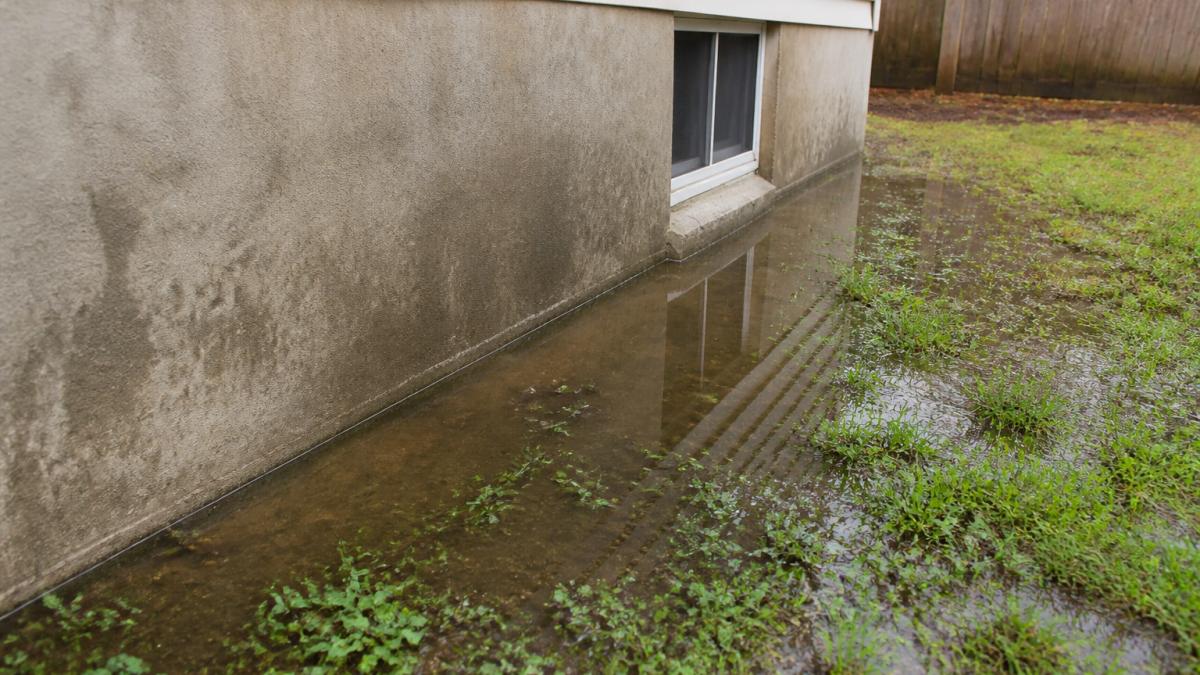
Foundation damage develops slowly but compounds over time. Repeated freeze-thaw cycles in wet soil expand cracks. Soil erosion leaves voids beneath the foundation, allowing it to settle unevenly. Water damage to the foundation's structural integrity is permanent and costly to repair.
Good yard drainage solves this at the source. By redirecting surface water away from your foundation and improving soil drainage around your home's perimeter, you eliminate the pressure that forces water inside.
OCAS Residential specializes in precision grading that directs water away from your home's foundation. This foundational work prevents the standing water and moisture accumulation that lead to basement leaks and water damage.
Reducing Soil Erosion and Preserving Landscape Integrity
Soil erosion destroys landscapes and destabilizes your property. When water runs across uncontrolled terrain, it carries topsoil away, leaving bare patches and gullies.
Erosion happens fastest on slopes and in areas where water concentrates. Heavy rain flowing down a slope can strip inches of topsoil in a single storm. This erosion removes the nutrient-rich layer where plants grow. It also exposes subsoil, which is compacted, nutrient-poor, and difficult for roots to penetrate.
Proper drainage reduces erosion by controlling water flow. Instead of water running freely across your yard, good drainage systems redirect it in controlled paths. Grading that slopes water away from critical areas prevents concentrated runoff. Permeable surfaces allow water to absorb rather than run off.
Preserving soil integrity means maintaining the structure and composition of your yard's earth. Compacted soil absorbs water poorly, leading to both standing water and erosion. Healthy soil has structure, it's not too dense and not too loose. Good drainage works with healthy soil to absorb water at the right rate, preventing both waterlogging and erosion.
Plants depend on soil integrity. Roots need to penetrate deep into stable, well-draining soil. Erosion that removes topsoil or compaction that hardens the ground both prevent healthy root development. By maintaining soil integrity through proper drainage, you create conditions where plants thrive.
How to Improve Drainage in a Yard
Improving yard drainage requires understanding your property's water flow patterns and soil conditions. Here's how to approach it systematically.
Step 1: Identify problem areas. Walk your property after rain and observe where water pools. Mark these spots. Check your yard's slope, water should move away from your home and toward lower ground.
Step 2: Assess soil type. Clay soil drains poorly. Sandy soil drains too quickly, sometimes not allowing good water absorption. Most yards benefit from soil amendment or surface improvements that optimize drainage. Compacted soil is a common culprit; breaking up compacted areas improves water absorption.
Step 3: Evaluate existing grading. The slope of your yard determines water flow. Ideally, the ground slopes away from your home at least 1 inch per 10 feet for the first 10 feet.
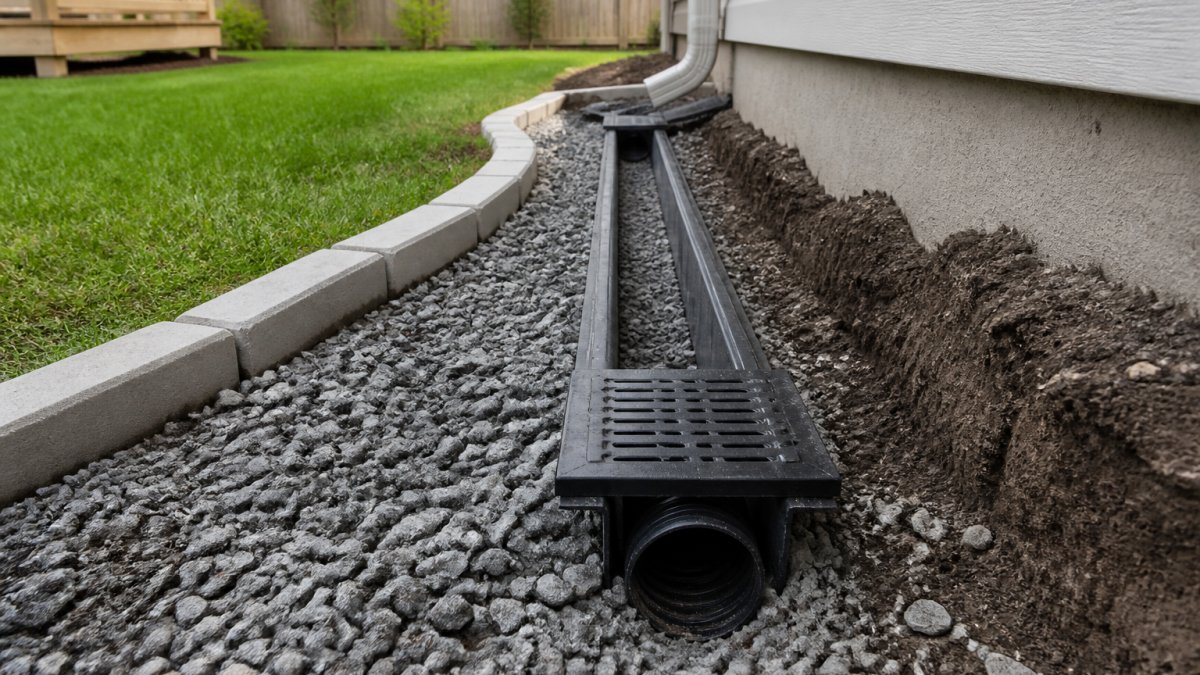
Step 4: Plan water redirection. Determine where water should flow. It should move away from your foundation, away from low-lying structures, and toward natural drainage areas or storm drains. French drains, swales, or grading can redirect water effectively.
Step 5: Implement drainage solutions. This might involve regrading, installing drainage systems, amending soil, or creating permeable surfaces. The right solution depends on your specific conditions.
Step 6: Monitor and maintain. After improvements, observe how water behaves during rain. Adjust if needed. Maintain drainage systems to keep them functioning.
Yard Drainage Solutions That Work
Different drainage problems require different solutions. Understanding your options helps you choose the right approach.
Regrading is the foundation of most drainage solutions. By adjusting your yard's slope, water naturally flows away from problem areas.
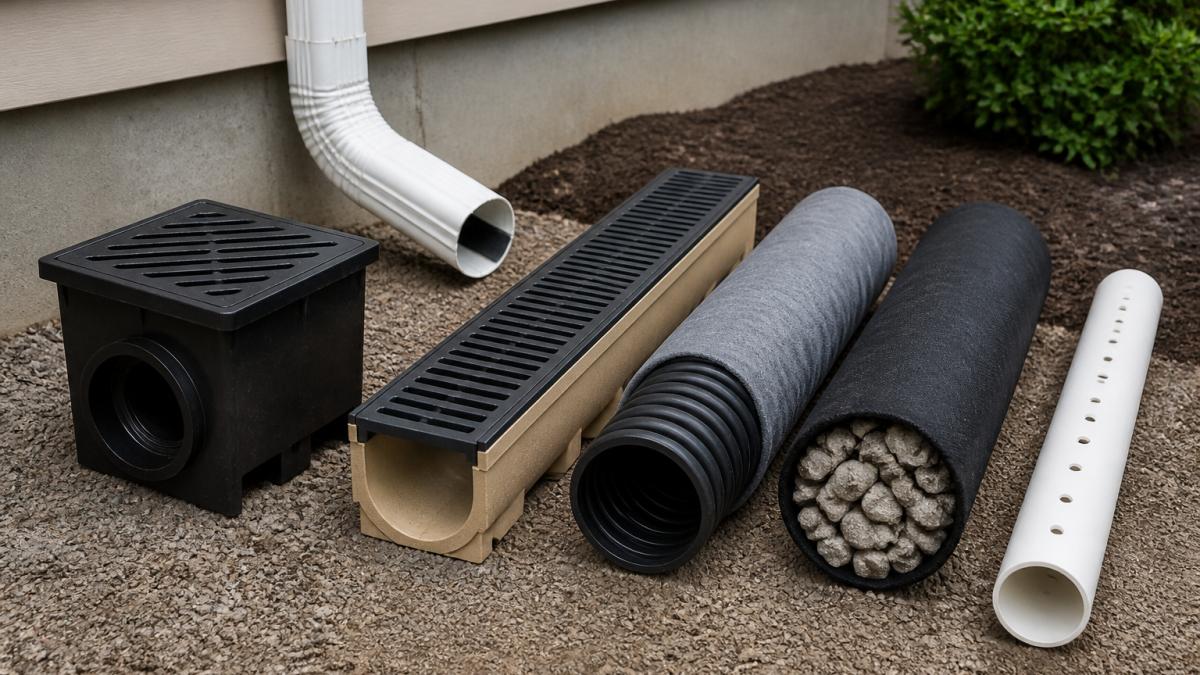
French drains are subsurface systems that collect water and redirect it away from your home. They work well in areas with persistent water accumulation.
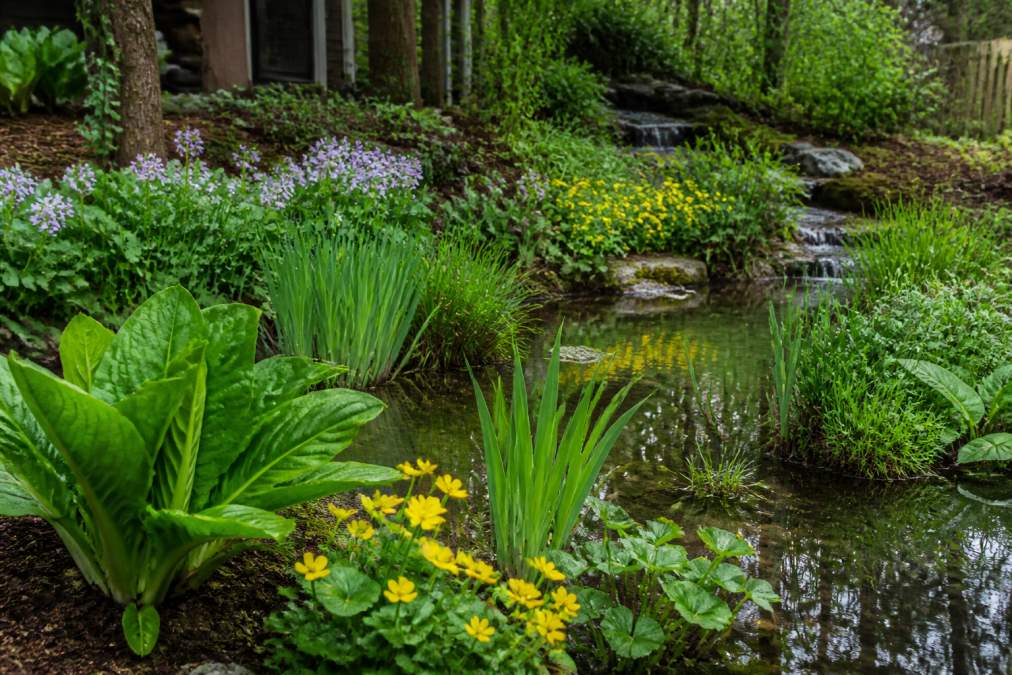
Swales are shallow, vegetated channels that direct water across your yard. They're effective for managing runoff and can be integrated into your landscape design. Swales slow water flow, allowing better absorption while directing excess water away from critical areas.
Permeable surfaces like porous pavement or gravel allow water to absorb into the ground rather than running off. These work well for driveways, patios, and walkways, reducing runoff and improving drainage overall.
Soil amendment improves drainage by changing how water moves through the ground. Adding organic matter to clay-heavy soil improves its structure and water absorption. This is often a first step in improving yard drainage.
Surface drainage involves creating proper slope and directing water with grading. This is often the most practical solution and requires no underground systems or special materials.
The right solution depends on your soil type, property slope, water source, and budget. Many properties benefit from a combination approach, improved grading plus targeted drainage systems in problem areas.
| Solution | Best For | Effectiveness | Maintenance |
|---|---|---|---|
| Regrading | Sloped yards, foundation protection | High | Minimal |
| French drains | Persistent pooling, subsurface water | High | Moderate |
| Swales | Runoff management, landscape integration | Moderate | Low |
| Permeable surfaces | Driveways, patios, runoff reduction | Moderate | Low |
| Soil amendment | Poor absorption, compacted soil | Moderate | Low |
How to Fix a Muddy Yard and Reclaim Usable Space
A muddy yard is unusable. You can't walk on it without sinking. Kids and pets track mud into the house. The landscape looks neglected. Fixing a muddy yard requires addressing the underlying drainage issue.
Mud forms when soil stays saturated. Water can't drain away, so the ground becomes waterlogged. The solution is improving drainage so soil dries properly between rains.
Start by identifying why the area stays muddy. Is water pooling there? Is the soil compacted? Is the area in a low spot where water naturally collects? Each cause has a different solution.
Regrading to create slope is often the most effective fix. By raising the muddy area or creating a slope that directs water away, you allow the ground to dry. Compacted soil should be broken up and amended with organic matter to improve drainage.
In some cases, the muddy area is genuinely a low spot where water naturally collects. Here, a French drain or swale can capture water and redirect it, allowing the ground to dry. Alternatively, raising the ground elevation in that area creates better drainage.
Once drainage improves, the ground dries faster. This creates a usable outdoor space, a yard where you can walk, play, and enjoy the landscape without sinking into mud.
Long-Term Benefits: Health, Value, and Peace of Mind
The benefits of good yard drainage extend far beyond immediate usability. They compound over years, protecting your property and enhancing your quality of life.
Prevents costly repairs. Foundation damage, basement leaks, and structural problems are expensive. Good drainage prevents these issues from starting.
Protects plant health. Healthy plants need well-drained soil. Good drainage provides the balance plants need, enough moisture without waterlogging.
Preserves property value. A home with drainage problems is harder to sell and commands a lower price. Buyers recognize water damage and foundation issues as red flags.
Creates usable outdoor space. A dry, well-maintained yard is a place you actually want to spend time. Your outdoor space becomes an extension of your home, a place for recreation, relaxation, and entertaining.
Reduces maintenance. A properly draining yard requires less work. You're not constantly dealing with mud, standing water, or struggling plants. Maintenance shifts from problem-solving to routine upkeep.
Environmental benefits. Proper drainage manages stormwater runoff, reducing strain on municipal systems. It allows water to recharge groundwater rather than overwhelming storm drains. Healthy landscapes support local ecosystems.
The peace of mind is worth the investment. You know your foundation is protected. You know your basement won't flood. You know your property is being maintained properly. That confidence is invaluable.
Good yard drainage isn't a luxury, it's essential maintenance. Our professional land leveling and site grading ensure water flows away from your property, not toward it. Schedule a free estimate to assess your property's drainage and discover how proper grading protects your investment.
Frequently Asked Questions
What are the main benefits of good yard drainage?
Good yard drainage prevents standing water, protects your foundation from leaks and flooding, reduces soil erosion, keeps your yard usable and mud-free, and supports healthy plants and lawn growth. It also prevents costly water damage repairs and extends the life of your landscape. Proper drainage redirects surface water away from your home and compacted areas, eliminating the conditions that cause moss, algae, and mold growth.
How does poor yard drainage lead to foundation damage?
Standing water and water accumulation around your foundation create hydrostatic pressure that forces water into basement walls and crawl spaces. Over time, this moisture weakens foundation materials, causes cracks, and leads to basement leaks and flooding. Poor drainage also causes soil to become waterlogged and unstable, which can shift and settle unevenly, damaging the foundation structure and creating expensive repair costs.
Can good yard drainage really prevent soil erosion?
Yes. When surface water runs off uncontrolled, it erodes topsoil and exposes plant roots, damaging your landscape and lawn health. Proper drainage redirects runoff in controlled ways, allowing water to absorb into well-drained soil instead of creating erosive flows. This preserves soil integrity, protects root systems, and maintains the appearance and stability of your yard and garden areas.
When should I hire a professional to fix my yard drainage?
If you have persistent standing water, a muddy yard, visible erosion, moss or algae growth, or signs of foundation moisture, professional drainage assessment is worthwhile. A drainage professional can diagnose the root cause and recommend solutions tailored to your soil type, grading, and site conditions. Professional grading and drainage system installation ensures proper water redirection and long-term performance.