 how-to
How to Fix Backyard Drainage Issues: 2026 Guide
Table of Contents
- Signs of Poor Yard Drainage You Should Never Ignore
- Diagnose the Cause Before You Dig: Soil, Slope, and Water Table
- Yard Grading for Drainage: The Fix That Solves Most Backyard Drainage Issues
- French Drain Installation Cost and When It Beats Regrading
- Swales, Dry Creek Beds, and Surface Drains That Move Water Fast
- Downspouts, Gutters, and Rain Gardens: Managing Roof Water
- HOA Rules, Permits, and Where Yard Drains Can Discharge
- DIY vs Pro: Cost, Risk, and When to Call a Grading Contractor
- Frequently Asked Questions
Last Updated: September 25, 2026
Signs of Poor Yard Drainage You Should Never Ignore
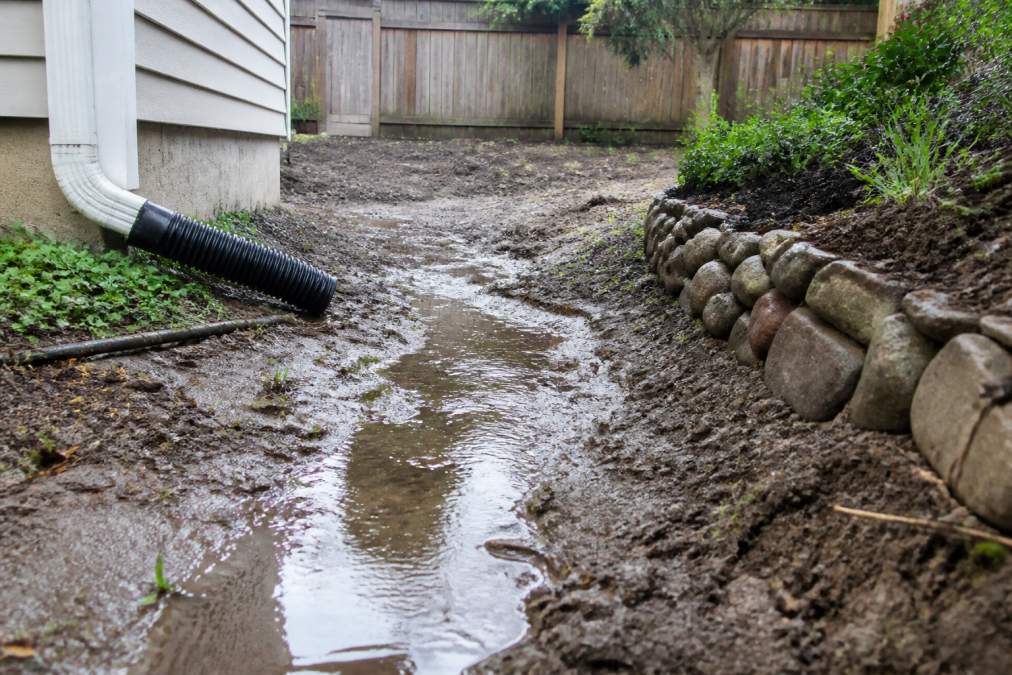
Water pooling in your backyard after a storm is the clearest sign of a drainage problem. Learning how to fix backyard drainage issues starts with reading the warning signs before damage spreads.
Standing water is the most obvious clue. But smaller signals matter just as much:
- Soggy patches that never dry out, even days after rain
- Mosquitoes breeding in shallow puddles
- Yellow or dying grass in low spots
- Soil that squishes underfoot near the foundation
- Water stains or dampness in a crawl space or garage
Miss these early warnings and the repair bill grows fast.
Standing Water, Soggy Patches, and Mosquito Breeding Zones
Standing water is a health problem, not just a lawn problem. Mosquitoes need only a small amount of still water to breed, and a soggy patch stays wet for days.
That constant moisture also kills grass roots. Turf drowns when soil stays saturated, leaving bare mud that erodes with the next storm.
Foundation Cracks, Erosion, and Hydrostatic Pressure
Water next to your foundation is the most expensive sign to ignore. As soil soaks up water, it swells and pushes against foundation walls. This pressure, called hydrostatic pressure, can crack concrete and seep into basements.
Erosion makes it worse. Water running across bare soil carves channels, exposes roots, and pulls topsoil away from the house. Fix the water flow, and you protect the foundation.
Diagnose the Cause Before You Dig: Soil, Slope, and Water Table
Diagnosing the cause before you dig is the step most homeowners skip. Digging a trench without knowing why water collects often wastes money and leaves the problem in place.
Check three things first:
- Soil type. Clay soil holds water and drains slowly. Sandy loam drains fast. Compacted soil blocks percolation almost completely.
- Slope. Water should flow away from the house. A landscape slope that tilts back toward the foundation traps water.
- Water table. A high water table means groundwater sits close to the surface. No surface drain fixes that.
A common mistake is adding topsoil over a wet spot without checking the slope. That just raises the mud.
Yard Grading for Drainage: The Fix That Solves Most Backyard Drainage Issues
Yard grading for drainage is the single most effective fix for most wet yards. Regrading reshapes the soil so water flows away from the house and toward a safe discharge point.
The goal is a gentle slope of about 2% to 6%, meaning the ground drops roughly 2 to 6 inches every 100 feet. That is enough to move water without making the yard hard to use.
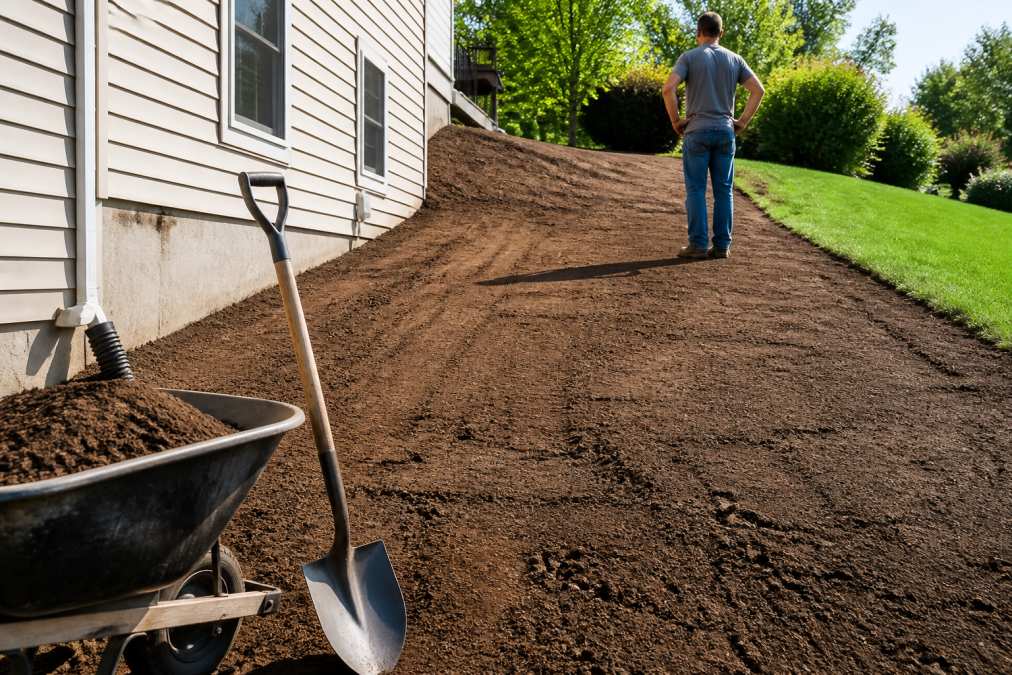
How to Regrade a Low Spot by Hand
Fixing a single low spot is a weekend job for most homeowners. Here is the step-by-step process:
- Mark the low area and the direction water should flow.
- Remove grass from the problem zone with a flat shovel.
- Add clean topsoil in thin layers, no more than 2 inches at a time.
- Tamp each layer down to prevent settling.
- Rake the surface to a smooth, even slope.
- Replant grass or lay sod to hold the new soil in place.
- Water lightly and watch the next rain to confirm flow.
Expected result: water should sheet away from the house instead of pooling.
French Drain Installation Cost and When It Beats Regrading
French drain installation cost depends on length, depth, and how much gravel and pipe the job needs. Pricing varies widely by yard, so get a written quote rather than guessing.
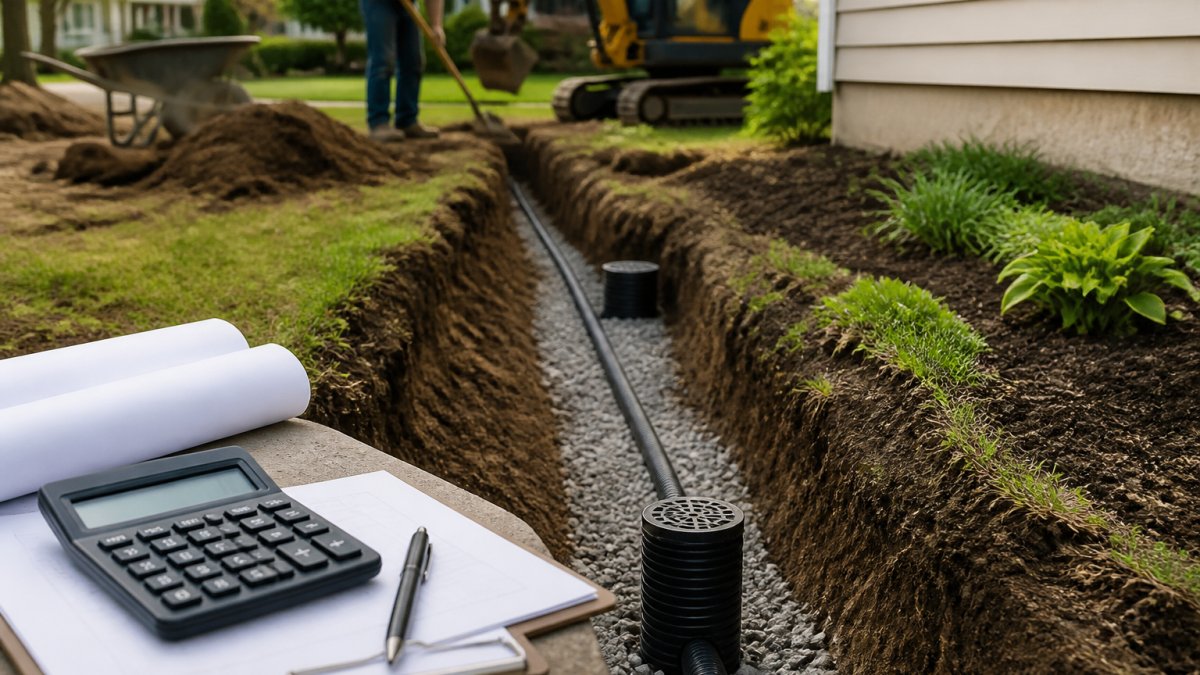
A French drain is a gravel-filled trench with a perforated drainage pipe at the bottom. Water seeps through the gravel, enters the pipe, and flows to a discharge point. Filter fabric wraps the gravel to keep soil from clogging the pipe.
Choose a French drain over regrading when:
- The yard is flat and cannot be sloped enough
- Water collects in one stubborn low spot
- You need to move water past a foundation or retaining wall
| Fix | Best For | Effort | Lasts |
|---|---|---|---|
| Regrading | Sloped yards, surface pooling | Medium | Years with upkeep |
| French drain | Flat yards, one wet zone | High | Long-term |
| Swale | Directing surface runoff | Low | Needs reshaping |
| Dry creek bed | Looks plus drainage | Medium | Long-term |
| Downspout extension | Roof water problems | Low | A few years |
Swales, Dry Creek Beds, and Surface Drains That Move Water Fast
Swales and dry creek beds move surface water without buried pipe. A swale is a shallow, grassy channel that guides runoff downhill. A dry creek bed is a swale lined with rock that looks like a natural feature.
Both handle surface runoff well. Neither handles a high water table.
Surface drains and trench drains catch water at a low point. A catch basin collects water and sends it through drainage pipe to a safe exit. These work best where water gathers fast and needs to leave fast.
Downspouts, Gutters, and Rain Gardens: Managing Roof Water
Roof water is the most common source of backyard drainage problems. A single downspout can dump hundreds of gallons during one storm, all in one spot.
Fix it before you touch the yard:
- Add downspout extensions to carry water at least 4 to 6 feet from the foundation
- Clean gutters so water does not overflow at the roofline
- Point extensions toward a slope, swale, or rain garden
- Check that splash blocks sit on stable ground
A rain garden is a shallow planted bed that soaks up roof water. Native plants with deep roots help water filter into the soil. Rain gardens work well in sandy loam and poorly in heavy clay unless you amend the soil.
HOA Rules, Permits, and Where Yard Drains Can Discharge
HOA rules and local permits decide where your drain can send water. This is the step most guides skip, and it can undo an otherwise solid fix.
Before you dig, check:
- Whether your HOA bans visible drainage features
- Whether a permit is required for grading or trenching
- Where water may legally discharge on your lot
- Setback rules near property lines and easements
Some areas require erosion control measures during any grading work. Others restrict how close a drain can sit to a property line. Confirm the rules first, then design the fix around them.
DIY vs Pro: Cost, Risk, and When to Call a Grading Contractor
DIY works for small fixes. A low spot, a downspout extension, or a short swale are all reasonable weekend projects.
Call a grading contractor when the job involves:
- Large-scale regrading or land leveling
- Trenching near utilities or a foundation
- A high water table or serious erosion
- Any work that needs a permit or engineering
The risk with DIY is digging into a utility line or creating a slope that sends water toward the house. A pro reads the site, checks the slope, and builds the fix to last.
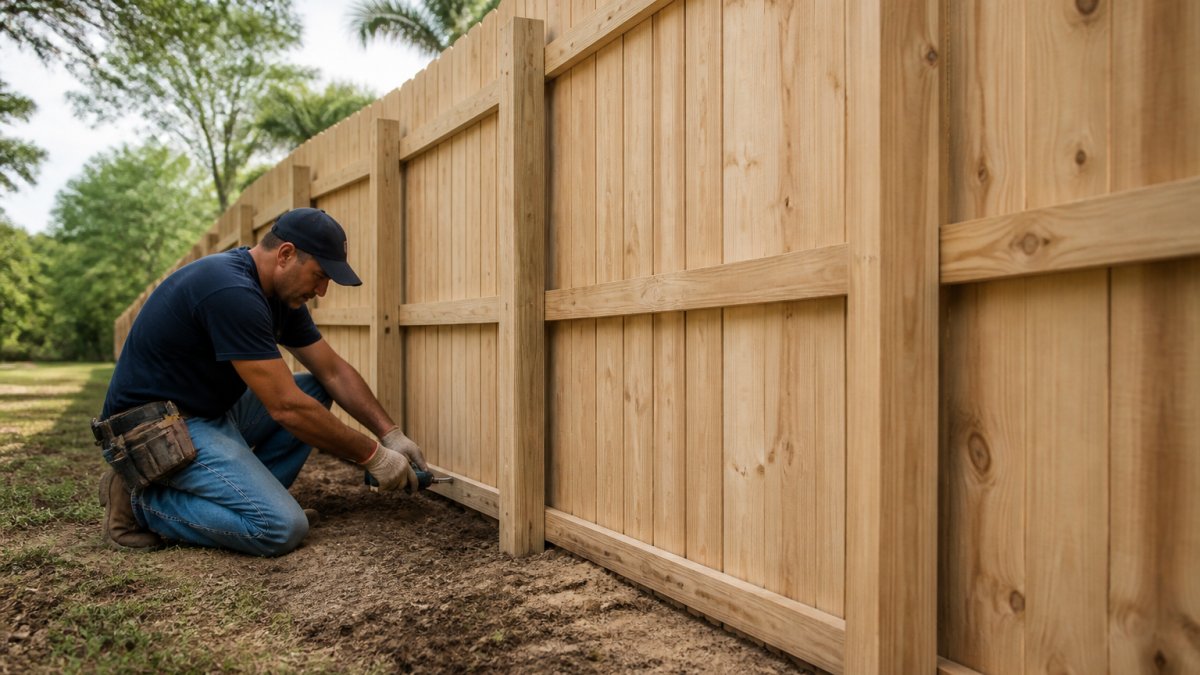
Standing water, erosion, and foundation cracks only get worse with time. If your yard has a drainage problem that keeps coming back, the fix starts with a proper diagnosis and the right grading. OCAS Residential offers professional land leveling, precision grading, drainage solutions, site cleanup, and custom fence and gate installation, so you can solve the water problem and finish the yard in one project. Schedule a free estimate with OCAS Residential and get your backyard draining the way it should.
Frequently Asked Questions
How much does it cost to fix backyard drainage?
Pricing depends on yard size, soil type, pipe length, and whether a contractor handles the work. Get a free estimate from OCAS Residential for accurate numbers on your property.
What can I do to fix my waterlogged backyard?
Start by checking the signs of poor yard drainage: standing water, soggy patches, and mosquito activity. Then confirm whether the slope runs toward or away from your foundation. Most waterlogged yards need one of three fixes: yard grading for drainage, a French drain, or a swale. A site visit is the fastest way to know which one your yard actually needs.
Can I fix backyard drainage issues myself?
Small fixes like downspout extensions, aerating compacted soil, and regrading a shallow low spot are reasonable DIY projects. Larger jobs involving subsurface drainage, trench drains, or catch basins require excavation, proper pipe slope, and filter fabric placement. Mistakes there can make water pool worse. A grading contractor can confirm whether your issue is DIY-scale or not.
How do I know if my yard has poor drainage?
The clearest signs of poor yard drainage are water standing more than 24 hours after rain, muddy patches that never dry, soil that stays spongy near the foundation, and visible erosion channels. If you also see foundation cracks or a damp crawl space, the problem has likely reached your structure and needs professional attention.