 how-to
How to Recycle Construction Waste Materials
Table of Contents
- What Is Construction and Demolition Waste
- Creating a Construction Waste Management Plan
- Understanding Construction Dumpster Accepted Materials
- Recycling Concrete and Asphalt on Your Jobsite
- Salvaging Building Materials for Reuse
- Step-by-Step Material Sorting and Separation
- Hauling and Disposal: What to Expect
- Measuring Your Waste Diversion Rate
- Frequently Asked Questions
Last Updated: October 19, 2026
What Is Construction and Demolition Waste
Construction and demolition waste (C&D debris) is any material left over from building, renovation, or demolition, concrete, wood, metal, drywall, asphalt, and similar debris.
Construction waste management beats landfill disposal: when you recycle construction waste, materials get a second life.
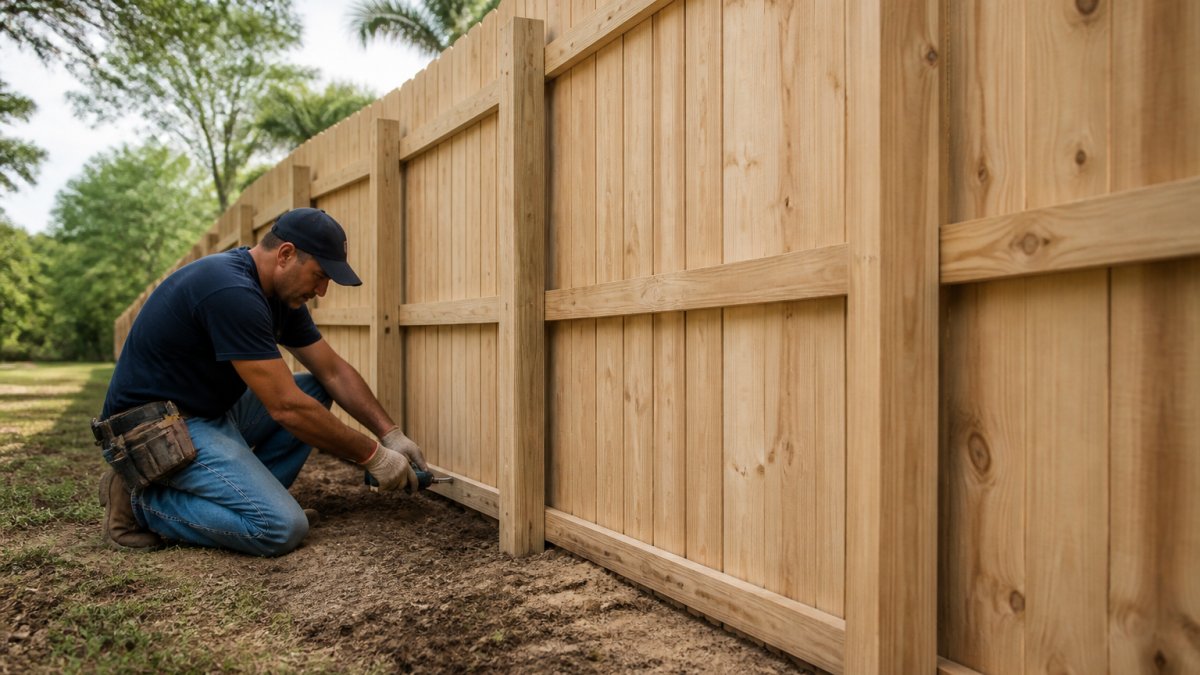
Most residential projects generate significant debris: a kitchen renovation produces drywall scraps, cabinets, flooring remnants, and packaging; a foundation repair leaves concrete chunks; a fence replacement creates posts, hardware, and nails.
Creating a Construction Waste Management Plan
A waste management plan separates a jobsite that recycles from one that talks about it. It is a short written document, often one to three pages, listing the materials your project will generate, where each goes, who moves it, and how you will prove diversion.
Step 1: Estimate Waste by Material and Phase
Walk the project before demolition day and list materials by the phase that produces them:
- Demolition phase: concrete, brick, drywall, wood framing, metal studs, roofing shingles, old fixtures
- Rough-in phase: packaging, cardboard, wire spools, pipe cutoffs, insulation scraps
- Finish phase: drywall offcuts, trim, tile, flooring remnants, cabinet packaging, paint cans
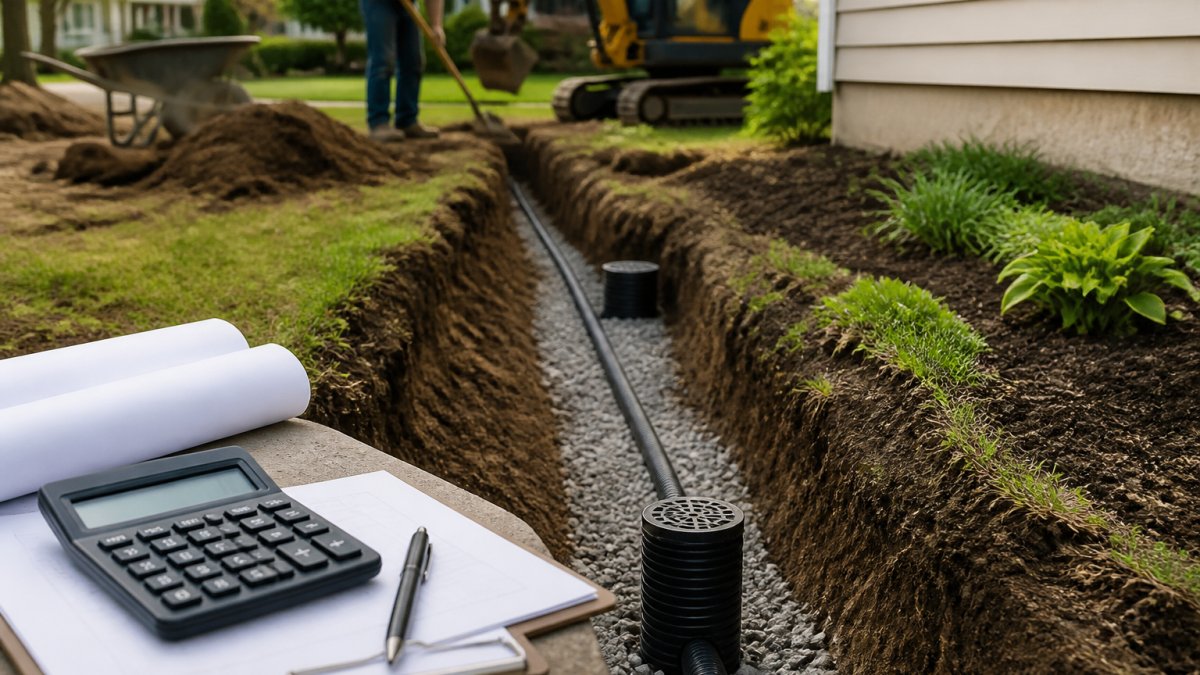
Estimate quantities in cubic yards, not weight, when planning bin sizes, because haulers price and schedule by volume. A full gut of a 1,500-square-foot home generates roughly 20 to 40 cubic yards; a kitchen or bath remodel produces 5 to 15. Size your first container from those ranges, then adjust after the first haul.
Step 2: Assign a Destination to Every Material
For each material, write down one of four destinations: source-separated recycling, mixed C&D recycling facility, reuse or donation, or landfill. This forces the decision before the debris pile forms. A simple plan table works:
| Material | Destination | Container | Responsible party |
|---|---|---|---|
| Concrete | Crushing facility | Dedicated 20-yard | Excavation sub |
| Clean wood | Mulch or biomass | Separate pile | Site foreman |
| Metal | Scrap yard | Locked bin | GC |
| Drywall | Gypsum recycler | Covered bin | Drywall sub |
| Mixed debris | C&D MRF | Roll-off | Hauler |
If you cannot name a destination for a material, it defaults to the mixed-debris container, a signal to call your hauler or local solid waste district before the project starts.
Step 3: Set Up Bins and Collection Points Before Demolition
Bins should be in place before the first wall comes down. Place source-separated containers within 50 feet of active work areas, workers will not walk across a site to sort.
For small residential jobs, one roll-off plus a separate metal pile and a concrete pile is often enough.
Step 4: Coordinate With Your Hauler Up Front
Ask your hauler three questions before signing: where each load will be tipped, whether they provide weight tickets per load, and whether they offer separate pickups for source-separated materials. Haulers serving C&D recycling facilities can usually provide diversion documentation; landfill-only haulers cannot.
Step 5: Track Loads and Document Diversion
Keep a simple log for every load leaving the site: date, material type, container size, hauler, tipping facility, and weight ticket number. Weight tickets are the backbone of any diversion claim; if your hauler does not provide them, ask for facility receipts.
Step 6: Review and Adjust Weekly
A plan that is not reviewed becomes wallpaper. Hold a five-minute tailgate talk each week: which containers are contaminated, which materials are piling up, and whether the pickup schedule matches the project phase. Most diversion shortfalls are caught here, not at the end of the job.
Understanding Construction Dumpster Accepted Materials
Not everything goes in a standard construction dumpster. Rental companies have rules about what they'll accept, and hazardous materials are prohibited by law.
Non-Hazardous Materials You Can Recycle
Most dumpster services accept these common materials:
- Concrete and cement-based products
- Asphalt and roofing shingles
- Lumber, plywood, and wood framing
These can go to a recycling facility or be sorted for reuse, keep them clean and free from contamination.
Materials That Cannot Go in a Dumpster
Your dumpster rental agreement will specifically prohibit these items:
- Asbestos-containing materials (insulation, floor tiles, roofing)
- Lead-based paint and lead-contaminated debris
- Batteries and electronic waste
These require special handling through licensed facilities; mixing them with regular construction debris creates legal liability and safety hazards.
Recycling Concrete and Asphalt on Your Jobsite
Concrete and asphalt make up a large portion of construction waste, and both are highly recyclable.
Crushing and Aggregate Reuse
Concrete can be crushed into aggregate (gravel-sized pieces) and reused immediately as base material for new concrete pours, gravel for driveways and parking areas, landscaping fill and erosion control, or road base and subgrade material.
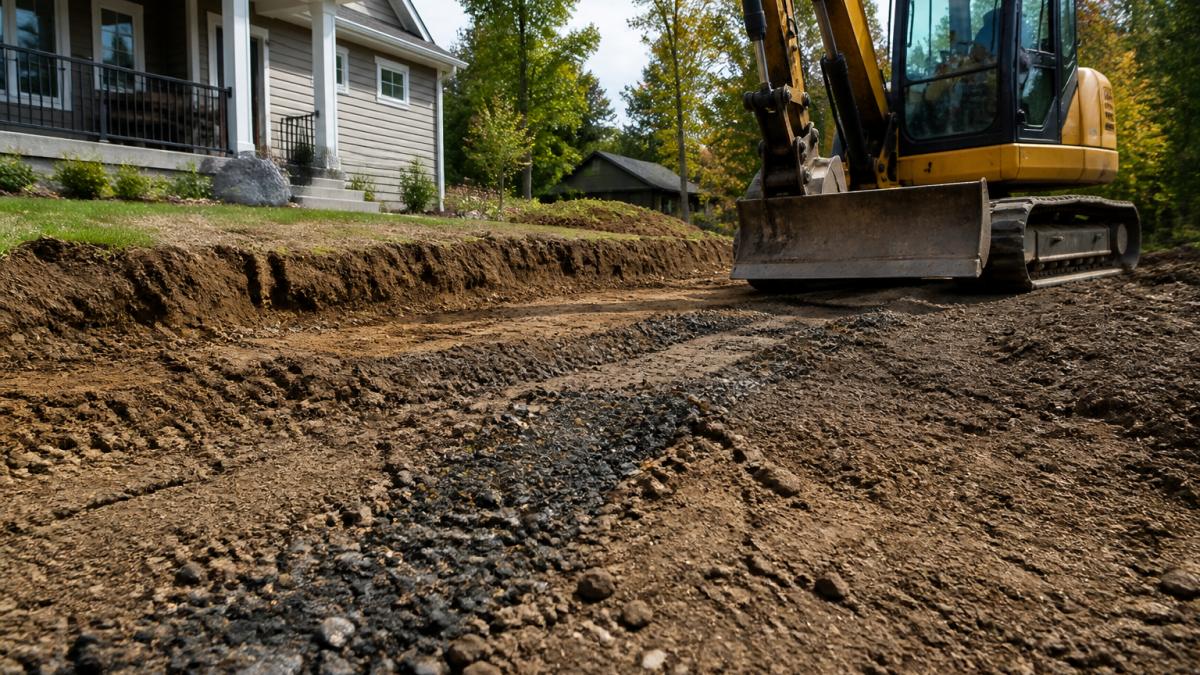
Asphalt follows the same principle. Recycled asphalt pavement (RAP) can be mixed into new asphalt or used as a base layer. Many paving contractors automatically recycle asphalt from old driveways and parking lots.
Finding Local Concrete Recycling Facilities
If on-site crushing isn't practical, concrete recycling facilities exist in most areas. Search "concrete recycling near me" or contact your local solid waste management district for a directory.
When you call a facility, ask:
- Do they accept concrete from residential projects?
- What size pieces do they accept?
- Is there a minimum or maximum load?
Most facilities crush concrete into aggregate and sell it back to contractors and landscapers.
Salvaging Building Materials for Reuse
Some materials are too valuable to crush. Architectural salvage, vintage hardware, solid wood, and intact fixtures can be reused or sold.
Identifying High-Value Materials
Before demolition starts, walk through and identify materials worth salvaging:
- Solid wood doors, trim, and flooring
- Vintage hardware (hinges, handles, locks)
- Intact windows and glass doors
Take photos and document condition. Some items can be cleaned and reused directly. Others can be sold to salvage dealers or architectural reclamation centers.
Donation and Reuse Centers
Organizations like Habitat for Humanity ReStores accept building materials and resell them at discounted prices. They take doors, windows, hardware, flooring, roofing, cabinets, vanities, fixtures, appliances, HVAC equipment, and lumber. Contact your local ReStore before your project starts. They may pick up materials from your site or ask you to deliver them, either way, your materials get a second life and you get a tax deduction.
Step-by-Step Material Sorting and Separation
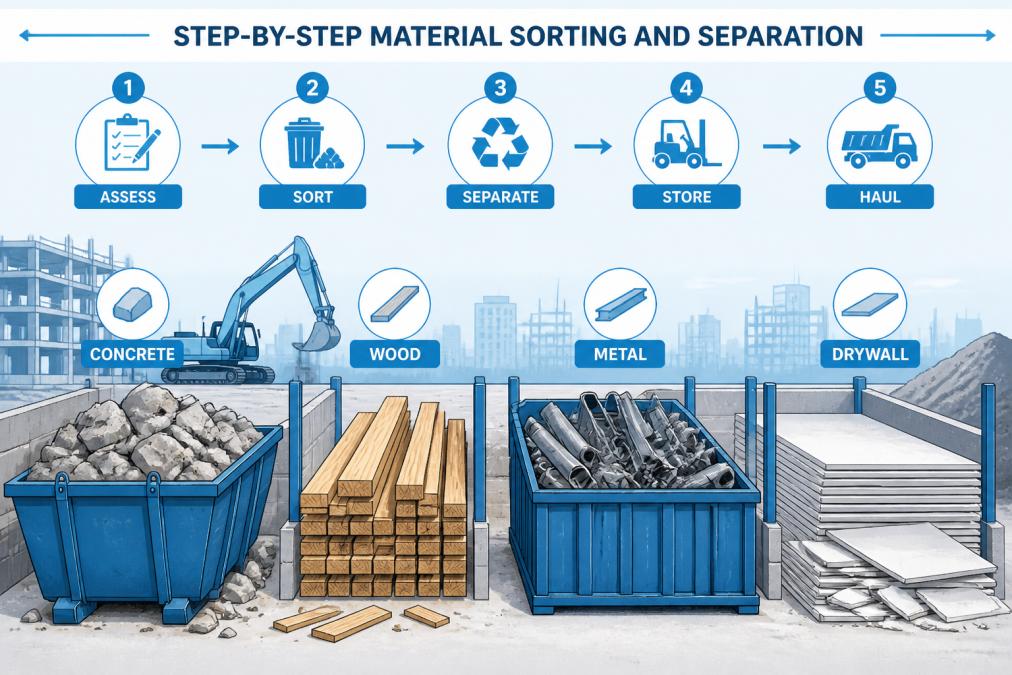
Proper sorting prevents contamination and makes recycling easier. Set up your site so materials naturally flow into the right bins.
Preparing Materials to Prevent Contamination
Contamination ruins recyclability: wood with embedded nails can't be processed, concrete with protruding rebar creates hazards, and drywall mixed with insulation becomes unusable.
Before placing materials in collection areas:
- Remove nails, screws, and fasteners from wood
- Cut or bend rebar flush with concrete surfaces
- Separate drywall from insulation and other materials
This extra step makes the difference between materials that get recycled and materials that end up in landfills.
Setting Up Dedicated Collection Areas
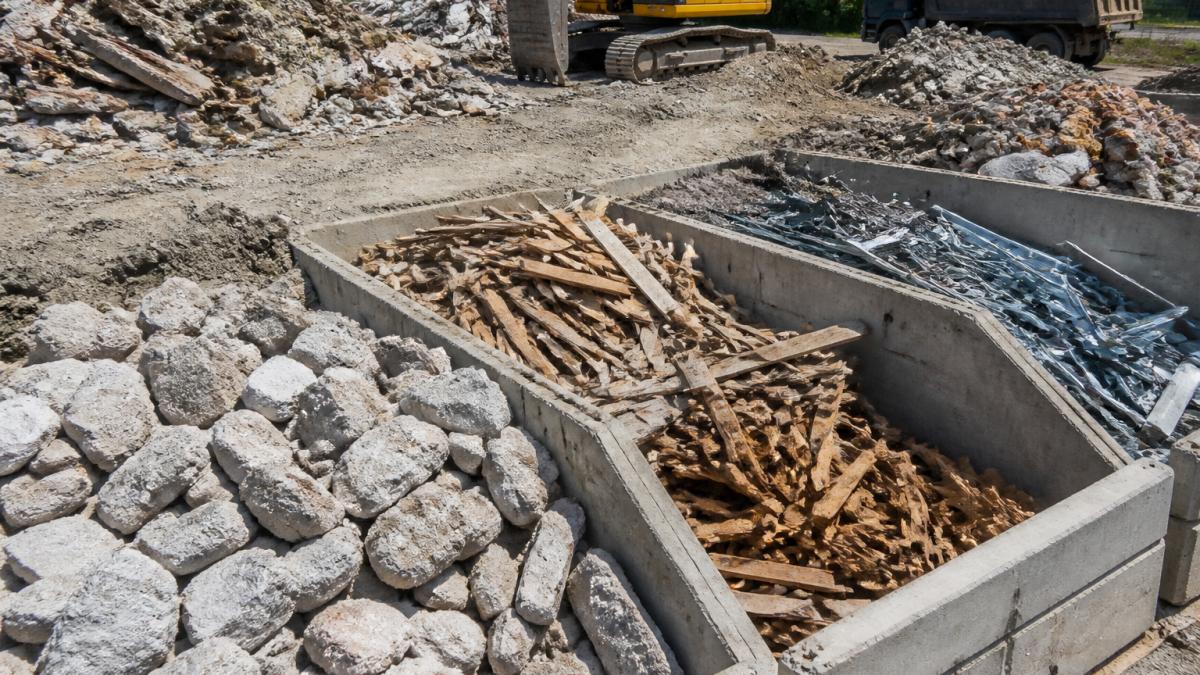
Designate specific zones for each material type using clearly labeled bins, pallets, or marked ground areas, the goal is making it easy for workers to put materials in the right place.
Typical setup:
- Concrete pile (separate from rebar)
- Wood lumber (sorted by size if possible)
- Metal scrap (copper and aluminum separated if valuable)
Place collection areas near where work is happening, workers won't sort if bins are far away. Update signage weekly.
Hauling and Disposal: What to Expect
Hauling is where recycling plans either pay off or quietly turn into landfill trips. The cost difference between a mixed-debris roll-off and source-separated loads depends on local tipping fees, container sizes, and how clean your loads are. Understanding the cost structure lets you choose the cheapest route that still meets your diversion goal.
The Four Cost Components
Every debris load carries some combination of these costs:
- Container rental and delivery: a roll-off container typically rents for a daily or weekly rate plus a delivery and pickup charge. A 20-yard container is the most common size for residential remodels; 30- and 40-yard containers are used for larger demolition.
- Haul or transportation charge: the cost to move the container to the tipping facility and back. This is often bundled into the rental or billed per pull.
- Tipping or disposal fee: charged per ton at the facility. Landfill tipping fees are generally higher than C&D recycling facility fees in most markets, and clean source-separated loads (concrete, clean wood, metal) often tip at lower rates or, for scrap metal, generate revenue.
Mixed Debris vs. Source-Separated Loads
A single mixed-debris roll-off is the simplest option and often the cheapest per pull for small jobs, because you pay for one container and one haul.
Source-separated loads cost more in logistics, more containers, more pickups, more coordination, but they usually tip at lower rates and produce cleaner diversion numbers.
When Hauling Directly to a Facility Makes Sense
For small loads or single-material projects, self-hauling to a recycling facility or transfer station can be cheaper than renting a container.
Call the facility first and ask about minimum loads, accepted piece sizes, and whether they charge by weight or by volume.
Salvage Value and Donation Offsets
Some materials are worth more reused than recycled. Architectural salvage dealers and nonprofit reuse centers may accept doors, windows, cabinets, fixtures, and dimensional lumber, and some offer pickup for large donations.
Scrap metal is the most reliable revenue stream on most jobsites. Copper, brass, aluminum, and clean steel are bought by scrap yards by the pound.
What to Ask Before You Sign
Before renting a container, confirm the following in writing:
- The tipping facility for each material type and whether it is a landfill or a C&D recycling facility
- The per-ton tipping fee and any contamination surcharge
- Whether weight tickets are provided for each load
A hauler who cannot answer these questions will send your debris to the nearest landfill. The cheapest container is not always the cheapest project, rejected loads, extra pulls, and landfill tips add up quickly.
Measuring Your Waste Diversion Rate
Your diversion rate is the percentage of construction waste that doesn't go to a landfill.
Calculate it this way:
- Record the total weight of all debris leaving your site
- Record the weight of materials sent to landfills
- Subtract landfill weight from total weight
- Divide recycled weight by total weight
- Multiply by 100 to get a percentage
Example math: 10 tons total debris minus 3 tons to landfill equals 7 tons recycled. 7 divided by 10 equals 0.70.
Most residential projects can realistically achieve 50-75% diversion.
Managing construction waste properly requires planning, sorting, and knowing your local options.
OCAS Residential offers professional, efficient, and reliable property solutions, specializing in comprehensive land leveling, precision grading for new construction, and complete site cleanup with debris hauling. Our custom fence and gate installation, repair, and replacement services provide secure residential fencing, making us the trusted choice for transforming and enhancing your outdoor space from start to finish. Schedule a free estimate
Frequently Asked Questions
What materials can you recycle in a construction dumpster?
Most construction dumpsters accept concrete, asphalt, wood, metal, drywall, and mixed building materials. However, hazardous materials like paint, solvents, asbestos, and treated lumber cannot be thrown in standard dumpsters. Always confirm with your local recycling facility or service provider about their specific construction dumpster accepted materials list, as rules vary by location.
How do you create a construction waste management plan?
Start by identifying all materials your project will generate, estimate quantities, and research local recycling facilities. Set a waste diversion goal (aim for 50-75% for residential projects). Designate collection areas for each material type on your jobsite, train workers on sorting, and schedule regular pickups. Document what gets recycled versus landfilled to track your construction waste management plan's success.
Can concrete and asphalt be recycled?
Yes. Concrete and asphalt are among the most recyclable construction materials. Crushed concrete becomes aggregate for new concrete, road base, or landscaping gravel. Asphalt is ground and reused in new pavement. Most recycling concrete and asphalt requires professional crushing equipment, so contact local processing facilities to arrange drop-off or pickup for large quantities from your project.
What's the best way to salvage building materials for reuse?
Carefully remove materials like doors, windows, trim, and fixtures before demolition begins. Clean and inspect items for damage. Contact local reuse centers, salvage shops, or donation organizations to find homes for usable materials. Salvaging building materials reduces landfill waste and can offset project costs through sales or tax deductions. Keep records of donated items for tax purposes.