 how-to
Debris Hauling After Construction: 2026 How-To Guide
Table of Contents
- What You'll Need Before Debris Hauling Begins
- Post-Construction Site Cleanup Checklist
- Dumpster Rental vs Junk Removal Service
- Construction Waste Disposal Costs: What to Expect
- How to Calculate Debris Volume for Hauling
- Hazardous Materials: Identification and Safe Handling
- Conclusion
- Frequently Asked Questions
Last Updated: September 13, 2026
What You'll Need Before Debris Hauling Begins
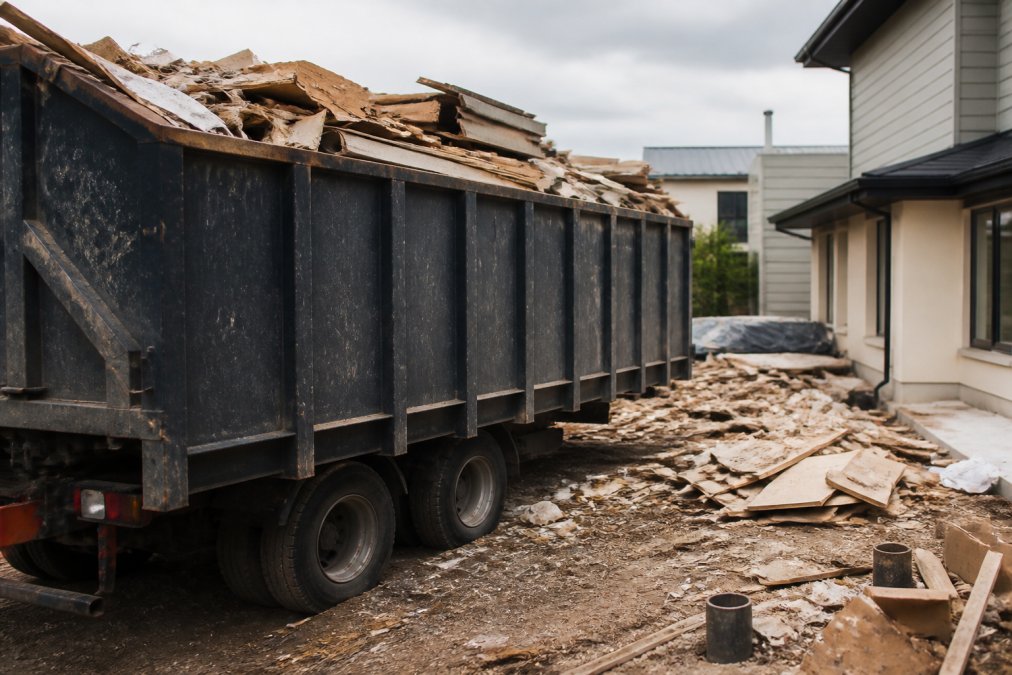
Debris hauling after a construction project is the organized removal and disposal of leftover building materials, packaging, and site waste once the major work is finished. At OCAS Residential, smooth jobs start with preparation, not muscle.
Before a single load leaves the property, line up three things: safety gear, the right tools, and a clear picture of what your local jurisdiction requires. Skipping this is the most common reason a cleanup stalls.
Safety Gear and Basic Tools
You need protection before you need a truck. Construction debris cuts, punctures, and crushes, so treat every pile as hazardous until sorted.
- Gloves: Cut-resistant work gloves for handling wood, metal, and broken masonry
- Eye protection: Safety glasses or goggles, especially when breaking down drywall
- Footwear: Steel-toe boots rated for puncture resistance
- Respirator: N95 or better for dust from sheetrock, mortar, and insulation
- Tools: Pry bar, hammer, flat shovel, wheelbarrow, and heavy-duty contractor bags
A common mistake is hauling in a standard pickup bed without a tarp or tie-downs. Loose debris blows out at highway speed, creating a safety hazard and a fine.
Permits and Utility Checks
Many jurisdictions require a permit for bulky waste disposal or for placing a container on a public street. Call your local waste authority before scheduling, and confirm whether your load needs a specific disposal site.
Utility checks matter too. Before staging a dumpster or digging near the foundation, confirm no buried gas, water, or electrical lines run through the area. A utility locate request is free in most areas and takes a few days (call811.com).
Post-Construction Site Cleanup Checklist
A post-construction site cleanup checklist moves debris from scattered piles to sorted, haulable loads. Clearing walkways first reduces injury risk, and sorting before hauling cuts disposal costs.
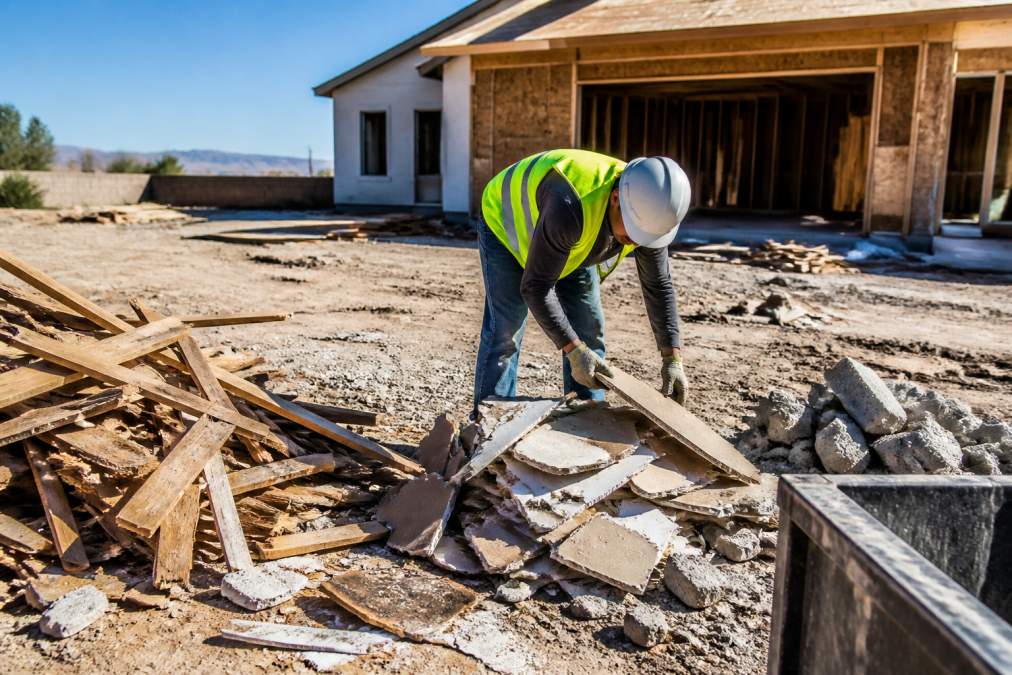
Work through these steps in order:
- Clear all walkways and driveways of loose debris
- Remove nails and screws from scrap wood
- Separate hazardous materials from general debris
- Sort recyclables (metal, clean concrete, cardboard) into their own piles
- Bag or bundle light materials so they don't scatter in transit
- Confirm load size against your container or truck capacity
- Photograph the cleared site for your records
The last step protects you. If a dispute arises over site condition at handoff, dated photos settle it.
Debris Categories and Sorting
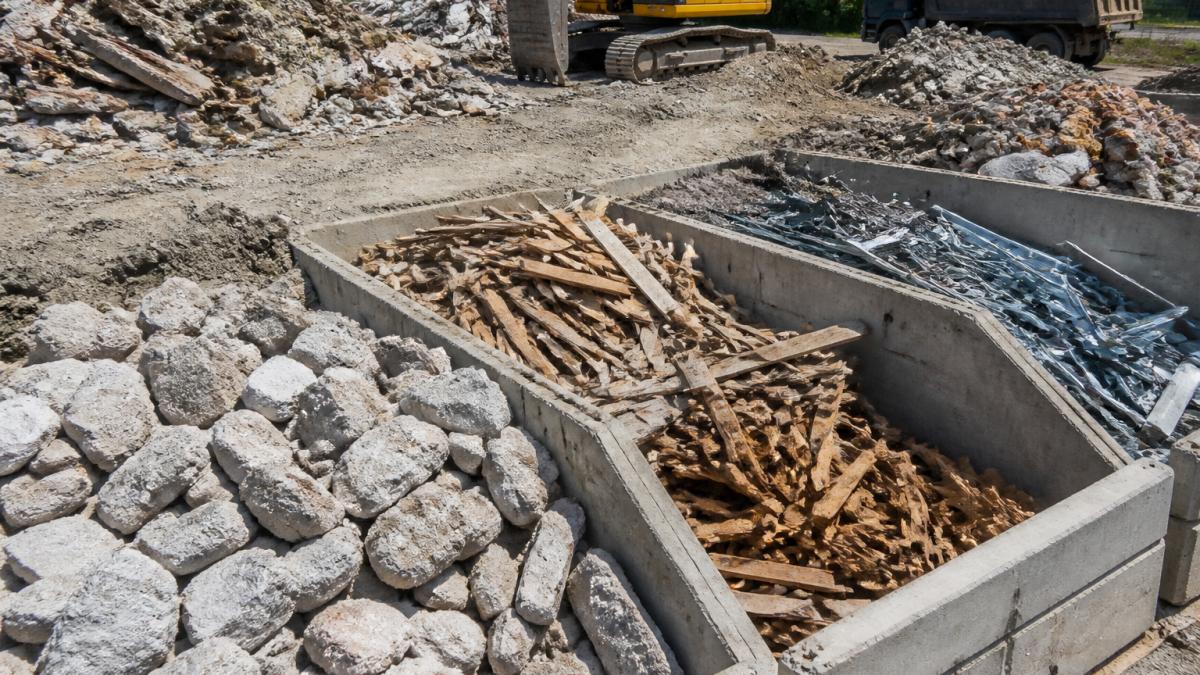
Sorting is where you save money. Disposal sites charge differently by material type, and mixing recyclables into general waste means paying landfill rates for material that could go elsewhere.
- Clean wood: Untreated lumber and pallets, often accepted for recycling
- Drywall and sheetrock: Gypsum-based, sometimes recyclable but often restricted
- Masonry: Concrete slabs, brick, mortar, and stone, frequently accepted as bulk
- Metal: Scrap metal, rebar, and framing offcuts, usually recyclable
- General waste: Packaging, insulation, and mixed material with no recycling path
Keep hazardous items completely separate. We cover that in detail further down.
Dumpster Rental vs Junk Removal Service
Choosing between dumpster rental vs junk removal service comes down to who does the labor, but the real decision is driven by volume, weight, and how much you care about what happens to the material. A dumpster rental gives you a container you fill yourself; a junk removal service sends a crew that loads and hauls.
Pros and Cons of Each Option
Dumpster rental works well when you have time and hands on site. You control the pace and can keep adding debris as the project winds down. The tradeoff: you load everything yourself, overweight containers trigger extra charges, and you own the sorting decision, an advantage if you want to separate recyclables.
Junk removal service suits owners who want the site cleared fast without lifting anything. Crews arrive, load, and leave the same day. You pay for that convenience and have less control over sorting, which can mean recyclables end up in the landfill.
| Option | Best For | Watch Out For |
|---|---|---|
| Dumpster rental | Multi-day projects with on-site labor | Overweight fees, street permit rules |
| Junk removal service | Fast clearance, no labor available | Higher cost, less control over sorting |
The Volume and Weight Math That Actually Decides It
The labor question is easy. The harder one is whether your debris fits the container you're paying for, by volume and by weight.
- Small loads (under about 5 cubic yards): A junk removal crew is usually the better fit. The minimum charge for a dumpster delivery often exceeds the cost of a single crew visit for a small pile, and you avoid a container sitting in the driveway for days.
- Medium loads (roughly 5-20 cubic yards): Dumpster rental typically wins on cost if you have labor. This is the sweet spot where the container rate beats per-hour crew pricing.
- Large or heavy loads (20+ cubic yards, or dense material): Container size is not the only limit, weight is. Concrete, brick, and dirt can max out a container's weight allowance long before it is full by volume. Confirm the tonnage allowance before you commit.
A common pattern: a contractor orders a container sized for volume, then discovers the load is over the weight limit and pays an overage fee that erases the savings. If your debris is dense, size by weight first.
Waste Diversion: The Cost Angle Most People Miss
Sorting before you haul isn't just tidiness, it changes the bill and, on some projects, the certification outcome.
- Separated loads often cost less to dispose of. Clean concrete, scrap metal, and clean wood can go to recycling streams with lower tipping fees than mixed construction and demolition debris.
- Metal has scrap value. Rebar, framing offcuts, and copper wire can be sold or credited rather than landfilled. Even small amounts add up on a large project.
- Cardboard and clean wood are recyclable. Flattening and separating them keeps them out of the landfill and can reduce the volume you pay to dispose of.
- LEED and green-building programs reward diversion. Projects pursuing green-building certification often must document the percentage of waste diverted from landfill. Separating materials and keeping the weight tickets is how that percentage is proven. If you mix everything, you cannot document diversion later.
If your project has a green-building goal, tell the hauler up front so the crew separates materials rather than tossing everything into one truck.
Construction Waste Disposal Costs: What to Expect
Construction waste disposal costs depend on load size, material type, and distance to the disposal site. There is no single national rate, and anyone quoting a flat number without seeing the load is guessing. What separates a well-managed haul from an overpriced one is understanding how you're billed, and how you document it.
How You Are Actually Billed
Disposal facilities use one of three billing mechanisms, and the one your load falls under determines whether you overpay:
- Per-ton tipping fee. The facility weighs your truck on a scale going in and coming out. The difference is your tonnage. This is the most common method at municipal solid waste landfills. Heavy, dense debris, concrete, brick, dirt, roofing shingles, hits tonnage limits fast, so a small-looking pile can cost more than a bulky one.
- Per-cubic-yard rate. Common for clean loads like yard debris, cardboard, or separated wood at transfer stations. You pay for space, not weight, which favors heavy materials and penalizes light, fluffy ones.
- Flat rate per container. Dumpster rentals often quote a flat rate for a set container size with a weight allowance included. Exceed the allowance and you pay an overage fee per ton. This is where most surprise invoices come from.
Contractors commonly underestimate the weight of masonry and drywall. Gypsum drywall is dense, and a container that looks half full by volume can be at its weight limit. Ask the hauler for the weight allowance in writing before the container is dropped.
What Drives the Number Up or Down
- Material type: Clean, source-separated loads (single material) usually cost less per ton than mixed construction and demolition debris, because the facility can process or resell them. Mixed loads often carry a higher tipping fee.
- Contamination: A recyclable load with trash mixed in can be reclassified as general waste and billed at the higher rate, or rejected outright.
- Access and labor: If debris sits far from the curb, behind a locked gate, or up a slope, loading takes longer. Junk removal crews bill by labor time plus disposal, so access directly moves the price.
- Distance: Fuel and drive time to the disposal site are built into every quote. A facility 30 miles away costs more to use than one 5 miles away, even at the same tipping fee.
- Special handling: Hazardous materials, tires, and appliances with refrigerants carry separate handling fees and often require a dedicated facility.
Documenting Disposal for Tax and Permit Compliance
This is the step most guides skip, and it's where you protect real money.
- Keep every weight ticket and disposal receipt. Facilities issue a scale ticket or receipt for each load. These are your proof of proper disposal and your paper trail if a project is ever audited or a dispute arises over site condition.
- Track disposal as a project cost. For a business or investment property, disposal fees are a deductible project expense. Itemized receipts let you separate disposal from other costs at tax time rather than lumping everything together.
- Confirm permit conditions. Some jurisdictions require proof of disposal, a receipt or manifest, before they will close out a demolition or building permit. Losing those receipts can delay a final inspection.
- Note the disposal site. Recording which facility received each load matters if a material is later questioned. A dated receipt with the facility name and tonnage answers that question immediately.
Rather than estimate, request a written quote based on your actual load, and ask which billing method applies. OCAS Residential provides free estimates so you know the number before work begins.
How to Calculate Debris Volume for Hauling
Estimating volume correctly prevents the two most expensive mistakes: ordering a container too small and paying for a second trip, or renting one too large and paying for empty space.
Measure each debris pile in feet, then apply the right formula:
- Rectangular pile: length × width × height, divided by 27 for cubic yards
- Irregular pile: break it into rough rectangles and add the results
- Loose vs. compacted: loose debris takes up roughly 1.5 times the space of compacted material
A pile measuring 9 feet long, 6 feet wide, and 3 feet high comes to 162 cubic feet, or 6 cubic yards. Add a 20% buffer for settling and uneven loading. That buffer is the difference between one haul and two.
Hazardous Materials: Identification and Safe Handling
Hazardous materials cannot go in a standard debris container. Mixing them into general waste is illegal in most jurisdictions and exposes you to serious liability.
Watch for these on a residential site:
- Asbestos: Common in older insulation, floor tile, and roofing. Suspect it in any home built before the 1980s.
- Lead paint: Chips and dust from pre-1978 structures.
- Solvents and adhesives: Leftover cans of paint thinner, contact cement, and sealants.
- Pressurized containers: Aerosol cans, propane cylinders, and fire extinguishers.
If you suspect asbestos or lead, stop work and bring in a certified inspector. The EPA guidance on asbestos in construction outlines handling requirements, and the OSHA construction standards for hazardous exposure set worker protection rules. Removal of these materials is a licensed job, not a DIY one.
For household hazardous waste like paint and solvents, many counties run dedicated drop-off days. Check your local solid waste authority for scheduling.
Conclusion
Debris hauling after construction goes wrong for predictable reasons: no permit, no sorting, and no accurate volume estimate. Fix those three and the rest is logistics.
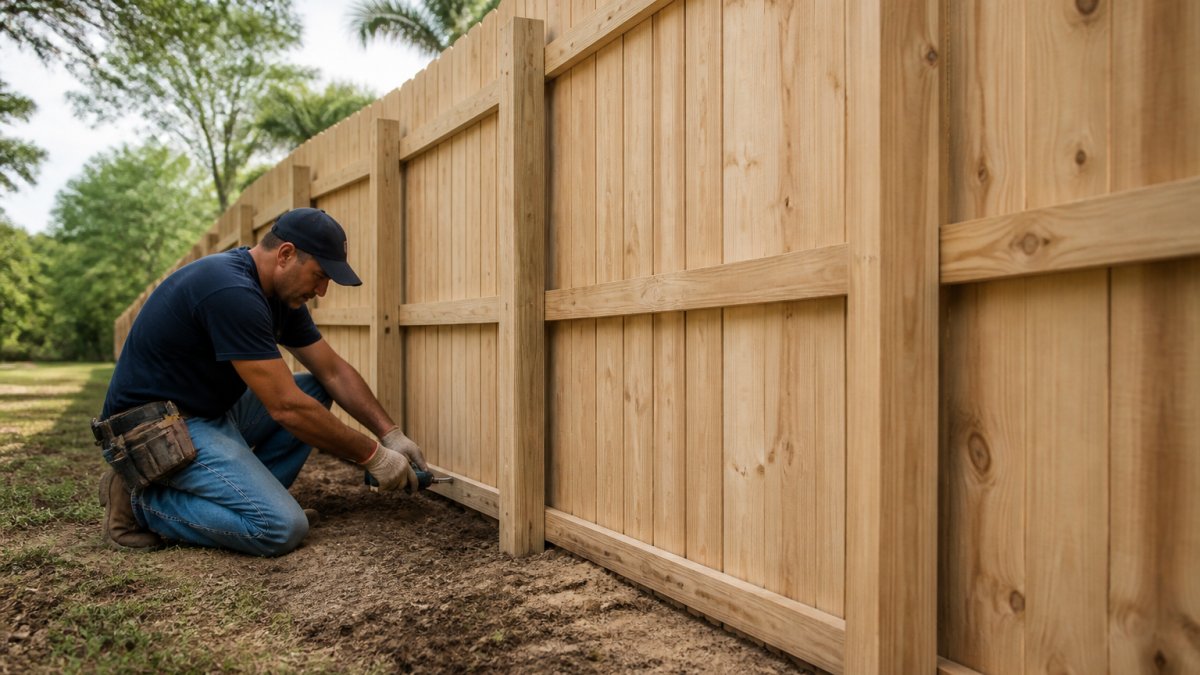
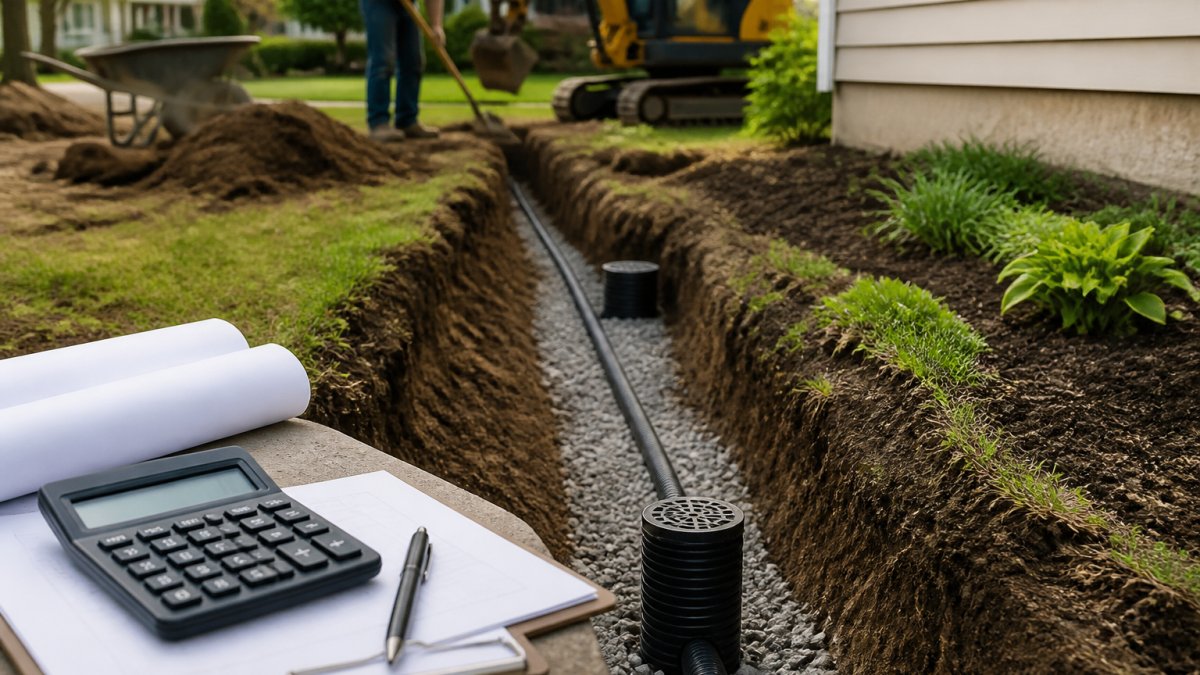
If you'd rather hand the whole stage off, OCAS Residential handles complete site cleanup and construction debris hauling for residential properties. We combine precision grading, land leveling, and drainage solutions with full post-construction clearing, so your site is ready for landscaping or final inspection in one pass. We also install custom fences and gates if you want the property secured at the same time.
Schedule a free estimate with OCAS Residential and get your site cleared, graded, and ready.
Frequently Asked Questions
Who is responsible for cleanup after a construction project?
The property owner or the general contractor typically handles cleanup, depending on your contract. For residential projects, homeowners often manage debris hauling themselves or hire a service. OCAS Residential provides complete site cleanup and debris hauling for homeowners in Southwest Ranches, Davie, Weston, and Cooper City, ensuring your property is restored and ready for use.
How much does professional construction debris removal cost?
Construction waste disposal costs vary based on volume, material type, and local landfill fees. Labor costs and disposal site charges also factor in. Because pricing depends on load size and debris composition, we recommend getting a custom quote. OCAS Residential offers free estimates to give you an accurate price for your specific project.
Is it better to rent a dumpster or hire a hauling service?
The dumpster rental vs junk removal service decision depends on your project size and timeline. Dumpster rentals work well for large, ongoing projects where you can sort debris over time. Hauling services are better for one-time cleanups or when you want the debris gone quickly without managing a dumpster. OCAS Residential handles post-construction site cleanup and debris hauling, so you can choose the option that fits your needs.
What materials are prohibited from standard construction debris hauling?
Hazardous materials like asbestos, lead paint, solvents, and certain chemicals cannot go in standard debris hauling. These require special disposal procedures. Other prohibited items include tires, batteries, and liquid waste. Always check with your local waste management facility before disposing of questionable materials.