 blog
Best Ground Cover for Muddy Backyard Spots
Last Updated: October 22, 2026
Quick Summary
The best ground cover for muddy backyard spots depends on matching plants to your specific conditions, sun exposure, moisture level, foot traffic, and desired speed to coverage, but drainage and grading must be corrected first or plants will fail. White clover works best for occasional-to-active traffic in sun to partial shade, while sedges and creeping Jenny suit shaded wet spots. Soil prep, proper spacing, and 4-6 weeks of watering ensure establishment.
- Proper grading slopes away from your house at a minimum 2% grade to move water away from muddy spots.
- White clover spreads by runners, tolerates partial shade and wet soil, and fixes nitrogen to improve compacted soil over time.
- Space clover and thyme 12-18 inches apart; sedges and shade plants 18-24 inches apart for faster canopy closure.
- Loosen compacted soil 4-6 inches deep and work in 2-3 inches of compost before planting ground cover.
- Gravel spread 2-4 inches deep over landscape fabric provides immediate usability while plants establish over one to three seasons.
Table of Contents
- Why Your Backyard Stays Muddy: Diagnosing the Real Problem
- How to Fix a Muddy Backyard: Drainage and Grading First
- Ground Cover Plants for Wet Soil and Shade
- Temporary Ground Cover for Muddy Backyard Spots
- Gravel for Muddy Yard: Installation and Long-Term Performance
- Comparing Living and Nonliving Ground Covers
- When to Call a Professional for Land Leveling and Site Prep
- Frequently Asked Questions
Why Your Backyard Stays Muddy: Diagnosing the Real Problem
A muddy backyard is a drainage failure, not just an aesthetic problem. The best ground cover for muddy backyard spots only works once you've addressed the cause.
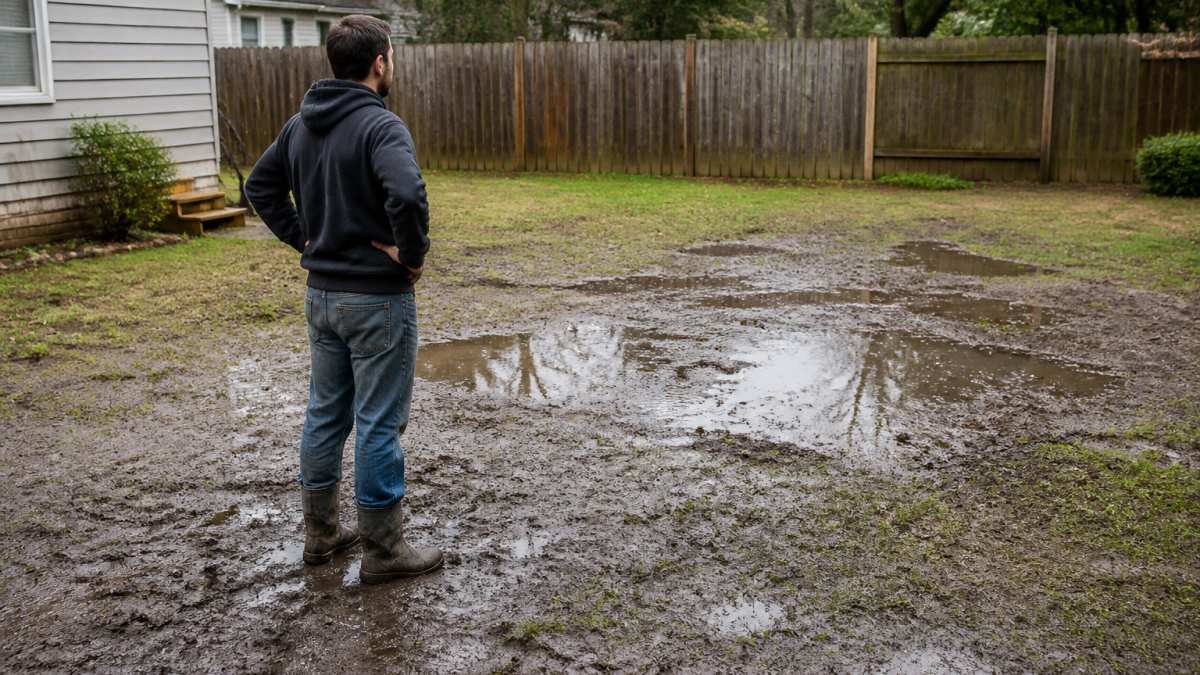
Standing water and drainage failure
Standing water collects in low spots where grading slopes toward the problem area instead of away.
The fix starts with slope. Water flows downhill; if your landscape is flat or slopes the wrong way, it has nowhere to go. Many properties were graded during construction without drainage planning, leaving permanent wet spots.
Compacted soil and poor grading
Compacted soil is essentially concrete. Construction equipment, years of foot traffic, and poor preparation compress the ground until water can't penetrate, so even light rain creates puddles.
Grading is your yard's slope and elevation. Proper grading directs water away from structures toward drainage areas; poor grading is the primary reason properties develop persistent muddy spots.
Foot traffic and soil erosion
High-traffic areas wear down grass and compact soil further. Repeated footsteps create ruts that channel water and prevent vegetation from establishing, turning worn areas into mud traps.
How to Fix a Muddy Backyard: Drainage and Grading First
Planting ground cover over a drainage problem is like bandaging a broken bone: the cover will fail, wash away, or stay muddy. OCAS Residential addresses grading and drainage before any landscaping begins.
Grading and slope correction
Proper grading slopes away from your house at a minimum 2% grade (roughly 2 feet of drop per 100 feet), subtle enough to look natural, steep enough to move water away.
If your yard is flat or slopes the wrong way, you need regrading, moving soil to create proper slope and elevation.
Drainage solutions before planting
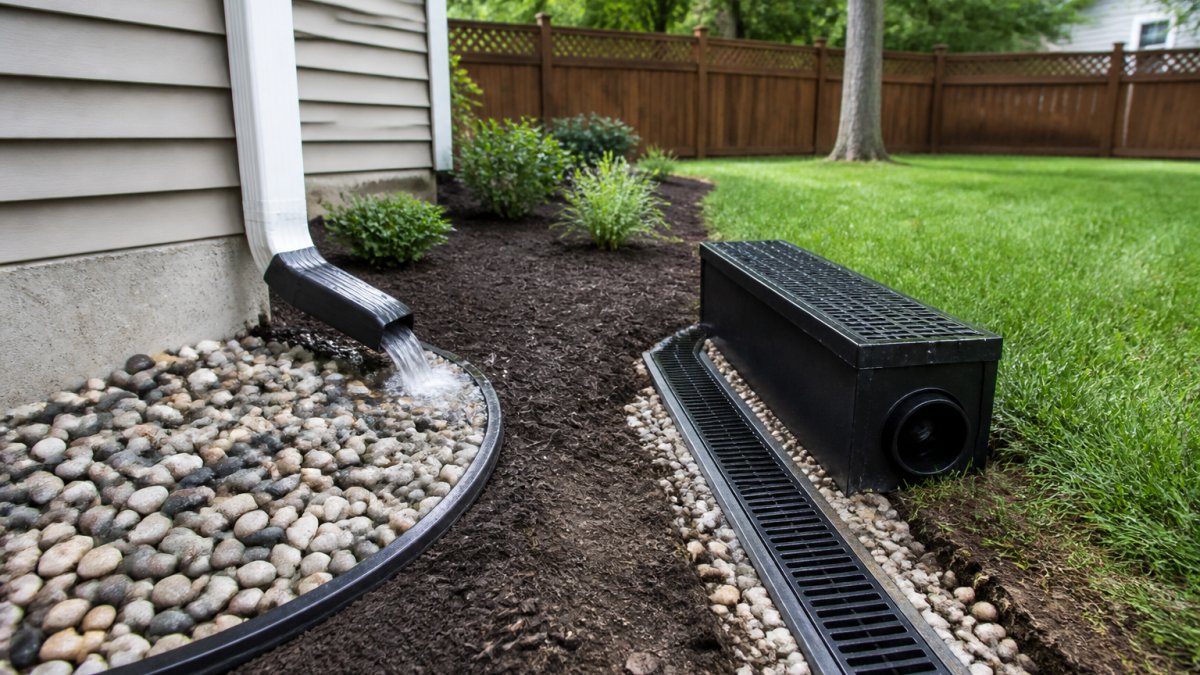
Subsurface drainage moves water underground before it pools. French drains, perforated pipes, and catch basins suit severe issues and are installed before any ground cover.
Surface solutions include swales (shallow ditches that guide water) and berms (raised areas that redirect flow). They're cheaper than subsurface systems and work well for moderate problems.
Ground Cover Plants for Wet Soil and Shade
Once drainage is corrected, plant selection is a matching exercise across four variables: sun, how long water stands after rain, foot traffic, and speed to cover. Most muddy-yard plant failures come from ignoring one of these, not from bad technique.
Match the plant to the spot: a four-variable framework
Rate each muddy spot on these four axes before choosing a species:
- Light: full sun (6+ hours), partial shade (3-6 hours), or heavy shade (under 3 hours).
- Moisture: briefly wet after rain (drains within a day), seasonally soggy (wet for days), or persistently saturated (standing water most of the year).
- Traffic: ornamental (rarely walked), occasional (weekly foot traffic), or active (daily use, pets, kids).
A wet-soil plant that demands full sun will fail in heavy shade, and a fast spreader that can't take foot traffic will turn to mud in a worn path. Score the spot first, then pick.
Fast-spreading, traffic-tolerant plants for sun to partial shade
These are the workhorses for worn, wet paths and lawn-replacement areas.
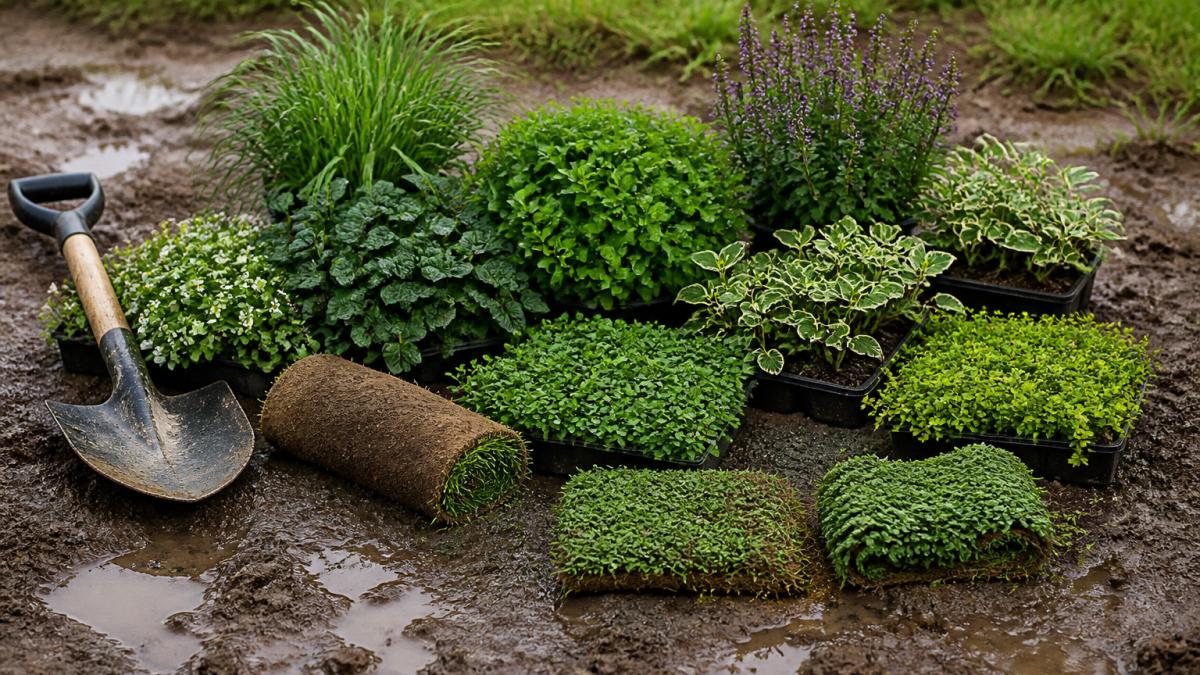
- White clover (Trifolium repens): grows 4-8 inches, spreads by runners, tolerates partial shade and wet soil better than most turfgrasses. Best for occasional-to-active traffic in sun to partial shade. It fixes nitrogen, which improves poor soil over time, but it does not tolerate heavy shade or standing water that lasts for weeks.
- Creeping thyme (Thymus serpyllum): stays under 6 inches, spreads slowly, and prefers well-drained soil but handles occasional wet feet. Best for occasional traffic in full sun. It is a poor choice for persistently saturated spots, it rots in standing water.
- Creeping Jenny (Lysimachia nummularia): spreads aggressively in moist soil and tolerates partial shade. Best for ornamental or occasional-traffic areas where you want fast coverage. It is not a turf substitute for daily foot traffic, and it can escape beds, so edge it.
Shade-tolerant plants for soggy, low-light spots
Heavy shade plus wet soil is the hardest combination. Fewer species tolerate both, and most establish slowly. Plan for a longer timeline and denser planting.
- Sedges (Carex species): grass-like plants that handle wet soil and dense shade. They establish slowly but form stable, low-maintenance cover once mature. Best for ornamental and occasional-traffic areas in partial to heavy shade.
- Shade-tolerant ferns: useful for ornamental cover in consistently moist shade, but they are not traffic-tolerant and should be kept off paths.
- Creeping Jenny: as noted above, it spreads well in moist shade and tolerates poor soil, making it one of the few fast spreaders for shaded wet spots, with the caveat that it needs containment.
A common pattern in heavily shaded, saturated spots is to combine a slow, stable sedge matrix with a faster spreader like creeping Jenny to fill gaps while the sedges mature.
Establishment: soil prep, spacing, and watering
Ground cover fails when soil prep is skipped. Before planting:
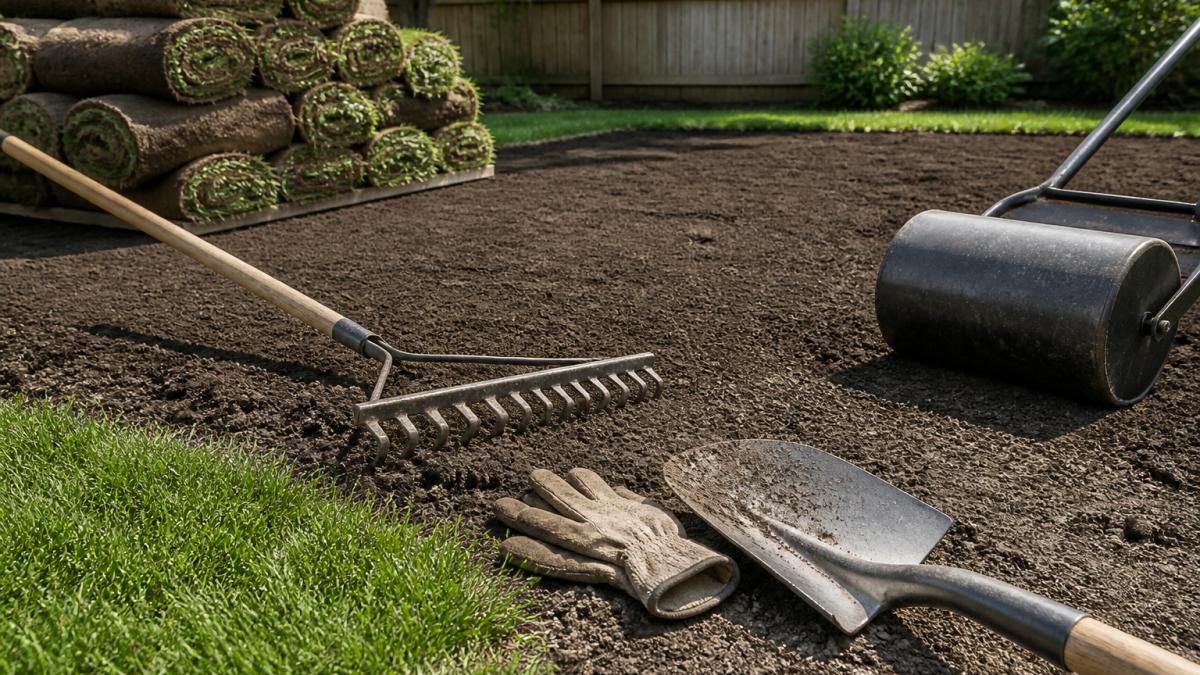
- Loosen compacted soil 4-6 inches deep with a fork or tiller.
- Work in 2-3 inches of compost or aged bark to improve drainage.
- Space by mature width: clover and thyme 12-18 inches apart; sedges and shade plants 18-24 inches apart. Denser spacing costs more but closes the canopy faster and shades out weeds.
- Water for the first 4-6 weeks; after that, only during extended dry periods.
Temporary Ground Cover for Muddy Backyard Spots
If you need immediate relief while drainage work is underway or plants establish, temporary solutions buy time, reducing mud, preventing erosion, and improving usability.
Gravel and river rock solutions
River rock and gravel are the fastest way to create a usable surface over mud. River rock (smooth, rounded) looks more finished than angular gravel, but both work; spread 2-4 inches deep over landscape fabric.
Landscape fabric stops gravel from sinking into mud; without it, gravel disappears within a season. Install fabric first, then spread gravel evenly for an immediate, walkable surface.
Straw and mulch for quick coverage
Straw and wood mulch give temporary coverage for muddy seeded areas, reducing erosion while plants establish.
Straw works best as a 2-3 month bridge. It decomposes quickly, adding organic matter that slightly improves drainage, and should be removed once plants establish so it doesn't smother new growth.
Preventing washout in wet conditions
Heavy rain washes away loose gravel and straw. Create slight berms or swales to channel water away from temporary covers; if water consistently flows through an area, fix the underlying drainage first or it will keep moving material.
Anchor landscape fabric with stakes or staples to keep gravel from shifting in heavy rain; overlap straw layers and water them down to settle. These techniques buy time while permanent solutions go in.
Gravel for Muddy Yard: Installation and Long-Term Performance
Gravel is a practical muddy-yard solution when properly installed: affordable, free-draining, and immediately usable. Long-term success depends on material selection and installation.
Material selection and sizing
Gravel size matters. Pea gravel is comfortable but shifts easily; river rock (3/4 to 1.5 inches) compacts better and stays put longer; angular gravel compacts tighter than rounded rock but is less comfortable underfoot.
For muddy yards, use a two-layer system: 2-3 inches of larger river rock or crushed stone on the bottom for drainage and compaction, topped with 1-2 inches of smaller pea gravel or river rock for appearance and comfort.
Hardscape alternatives: paths and walkways
Permanent hardscape, pavers, stepping stones, or gravel paths, provides long-term usability with little maintenance. Permeable pavers drain water while creating a solid surface; stepping stones create paths without covering the whole space.
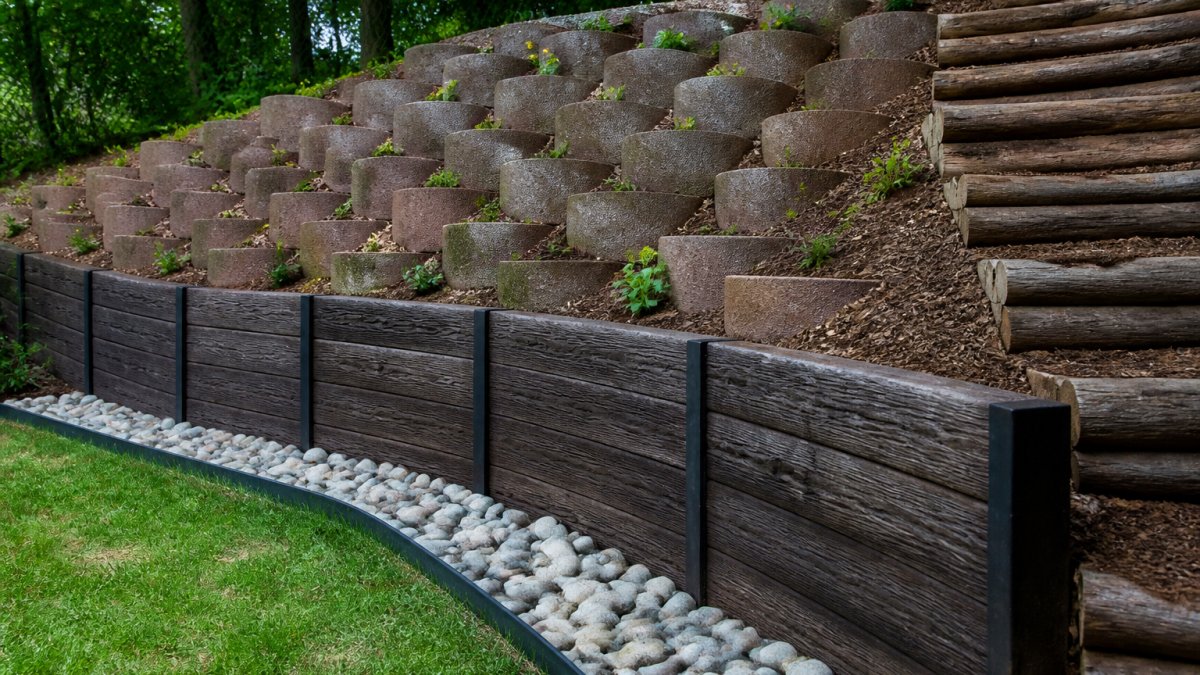
Gravel paths work well when edged with wood, metal, or plastic borders that contain the material. A well-edged path stays stable for years and can be refreshed with new gravel as needed.
Comparing Living and Nonliving Ground Covers
Living cover and hardscape solve the same problem in different ways, and the right choice depends on how fast you need the area usable, how much upkeep you will accept, and what you want to spend. The comparison below adds the practical specifics, establishment time, material quantities, and realistic durability, that a simple feature table leaves out.
Side-by-side comparison
| Factor | Ground cover plants | Gravel / river rock | Hardscape pavers | Temporary straw / mulch |
|---|---|---|---|---|
| Time to usable | One to three seasons | Same day | Several days to a week | Same day |
| Establishment effort | Soil prep, planting, watering for 4-6 weeks | Fabric, edging, 2-4 inches of stone | Base prep, compaction, setting | Spread 2-3 inches deep |
| Ongoing maintenance | Moderate: watering, weeding, occasional trimming | Low: occasional raking, top-off every few years | Low: occasional cleaning, re-sanding joints | High: replace every 2-3 months |
| Traffic tolerance | Low to moderate (species-dependent) | High | High | Low |
| Drainage behavior | Improves over time as roots and organic matter build | Permeable; water passes through stone | Permeable only if permeable pavers are used | Slows surface flow; decomposes |
| Realistic lifespan | 5+ years with care | 3-5 years before top-off | 10+ years | 2-3 months |
| Relative cost | Medium | Low | High | Very low |
| Best for | Natural look, long-term soil improvement | Quick coverage, drainage, large areas | High-traffic paths and patios | Bridging until a permanent fix |
Material quantities and installation specifics
Estimates below are for planning; confirm against your actual square footage.
- Gravel or river rock: spread 2-4 inches deep over landscape fabric. A two-layer system works best, 2-3 inches of larger river rock or crushed stone on the bottom for drainage and compaction, topped with 1-2 inches of smaller pea gravel or river rock for comfort. Landscape fabric keeps stone from sinking into soft soil; without it, gravel disappears within a season.
- Edging: contain gravel with wood, metal, or plastic edging. Unedged stone spreads into beds and lawn within a season.
- Straw: apply 2-3 inches deep and replace every few months as it decomposes. It works best as a 2-3 month bridge while seed or plants establish, and it adds organic matter as it breaks down.
Pet-friendly, child-safe, and budget considerations
Clover and creeping thyme are non-toxic and safe for pets and children, and they need no chemical treatments. Gravel can be uncomfortable for pets with sensitive paws and tracks into the house; it is also easily scattered in high-use pet areas.
For budget-conscious homeowners, gravel is the lowest-cost way to cover a large muddy area, and clover is the lowest-cost living cover that improves soil as it spreads.
When to Call a Professional for Land Leveling and Site Prep
DIY solutions work for small muddy spots, but persistent problems across larger areas require professional grading and drainage work. OCAS Residential handles comprehensive land leveling, precision site preparation, and drainage installation for residential properties.
Call a professional when muddy problems cover significant yard area, when standing water persists after rain, or when you're unsure about your property's grading. Incorrect DIY grading can make problems worse.
Muddy backyard spots don't have to be permanent. Our team assesses your specific conditions, corrects slope and drainage, and ensures your yard is ready for the ground cover solution you choose. Schedule a free estimate to discuss how we can transform your muddy yard into a usable, attractive outdoor space.
Frequently Asked Questions
What is the best ground cover for a muddy backyard?
The best choice depends on your yard's conditions. For high-traffic areas with wet soil, clover and creeping thyme tolerate both moisture and foot traffic well. In heavily shaded spots, shade-tolerant ground-covering plants like mondo grass or liriope perform better than sun-loving varieties. If you need an immediate solution, gravel or river rock provides instant coverage. For long-term usability, combine proper drainage and grading with the right plant or hardscape choice for your specific soil, shade, and foot traffic level.
Should I fix drainage before planting ground cover for wet soil?
Yes. Addressing drainage and grading first prevents ground cover failure and saves money long-term. Standing water indicates poor drainage or inadequate slope; planting over these conditions causes plants to rot and nonliving covers to shift or wash away. Professional grading and drainage correction ensure water moves away from the muddy area, allowing your chosen ground cover to establish and perform as intended.
What can I put over mud in my yard right away?
Temporary solutions include gravel, river rock, or straw for immediate coverage without installation complexity. These options control mud and foot traffic within days. However, they are not permanent fixes if standing water persists. Gravel may shift in heavy rain; straw breaks down over time. For lasting results, combine temporary coverage with professional grading and drainage solutions to address the root cause of the mud.
Will gravel or mulch stop a muddy yard permanently?
Gravel and mulch reduce mud and improve walkability but do not eliminate standing water or poor drainage. If your yard has persistent soggy areas or runoff problems, these materials will eventually sink, shift, or wash away without underlying drainage correction. Professional land leveling and proper grading create the slope needed to direct water away, making gravel or mulch more effective as a long-term solution when combined with drainage work.