 comparison
Cost of Land Clearing for New Construction: 2026 Guide
Table of Contents
- What Land Clearing for New Construction Actually Costs
- Land Clearing Cost Per Acre: What the Ranges Tell You
- What Changes Your Land Clearing Estimate
- Comparing Clearing Methods and Their Costs Side by Side
- Site Preparation Costs for New Construction Beyond Clearing
- Permits, Protected Trees, and Environmental Restrictions
- How to Compare Contractor Bids Without Getting Burned
- Conclusion
- Frequently Asked Questions
Last Updated: October 18, 2026
What Land Clearing for New Construction Actually Costs
The cost of land clearing for new construction depends on acreage, vegetation density, terrain, and how much debris has to leave the site. Nationwide, published estimates put professional clearing somewhere between roughly $1,400 and $6,200 per acre, with most homeowners paying a few thousand dollars for a standard residential lot.
Those numbers are a starting point, not a quote.
Below, we break down how the estimates work, what drives your number up or down, and how to compare bids so you are not paying for someone else's guesswork.
Land Clearing Cost Per Acre: What the Ranges Tell You
Per-acre pricing is the standard way contractors quote clearing, and the spread is wide because the work is not uniform. OwnRops reports a range of $1,500 to $6,000+ per acre, while Angi lists professional clearing at $1,397 to $6,174 per acre and identifies terrain and vegetation density as the two biggest cost drivers.
Read those ranges as brackets, not averages:
- Light brush and open ground: the low end, where a dozer or mulcher moves fast and debris is minimal.
- Mixed vegetation with scattered trees: the middle of the range, where stump removal and root removal add machine hours.
- Heavily wooded acreage with large hardwoods: the top of the range, where tree removal, hauling, and dump fees stack up.
LawnStarter frames the same work differently, at $1.18 to $2 per square foot, which helps when your lot is a fraction of an acre. A quarter-acre lot is about 10,890 square feet, so the per-square-foot math gives you a second way to sanity-check a bid.
What Changes Your Land Clearing Estimate
Site conditions move your project estimate more than lot size does. A flat, sandy acre clears quickly; a sloped, wooded acre with poor site access can take three times the machine hours.
The factors that matter most:
- Vegetation density. Heavily wooded lots mean more tree removal, root removal, and stump removal, plus more material to haul.
- Terrain and slope. Steep ground slows heavy equipment and can require cut-and-fill work before grading begins.
- Site access. If a dozer or backhoe cannot reach the lot easily, expect mobilization charges and slower work.
- Debris volume and disposal. Hauling and dump fees are often billed separately, and brush piles do not disappear on their own.
- Soil conditions. Soft or wet ground may need stabilization before equipment can work without rutting the site.
- Cleared acreage. Contractors price by the acre cleared, not the acre owned. Leave a tree line intact and you pay less.
Comparing Clearing Methods and Their Costs Side by Side
No single method wins everywhere. The right choice depends on what is growing, what you plan to build, and whether you want the debris gone or worked into the ground.
| Method | Best For | Relative Cost | Watch Out For |
|---|---|---|---|
| Forestry mulching | Brush, small trees, erosion-sensitive sites | Moderate | Leaves mulch on site; not for large stumps |
| Bulldozing | Heavy vegetation, full lot clearing | Higher | Pushes topsoil into piles; needs root removal after |
| Excavation | Stump and root removal, foundation prep | High | Slow on large acreage; costly hauling |
| Chainsaw clearing | Selective tree removal, tight access | Lower for small jobs | Labor-heavy; debris still needs disposal |
| Backhoe work | Drainage, trenching, spot clearing | Moderate | Not efficient for full-lot clearing |
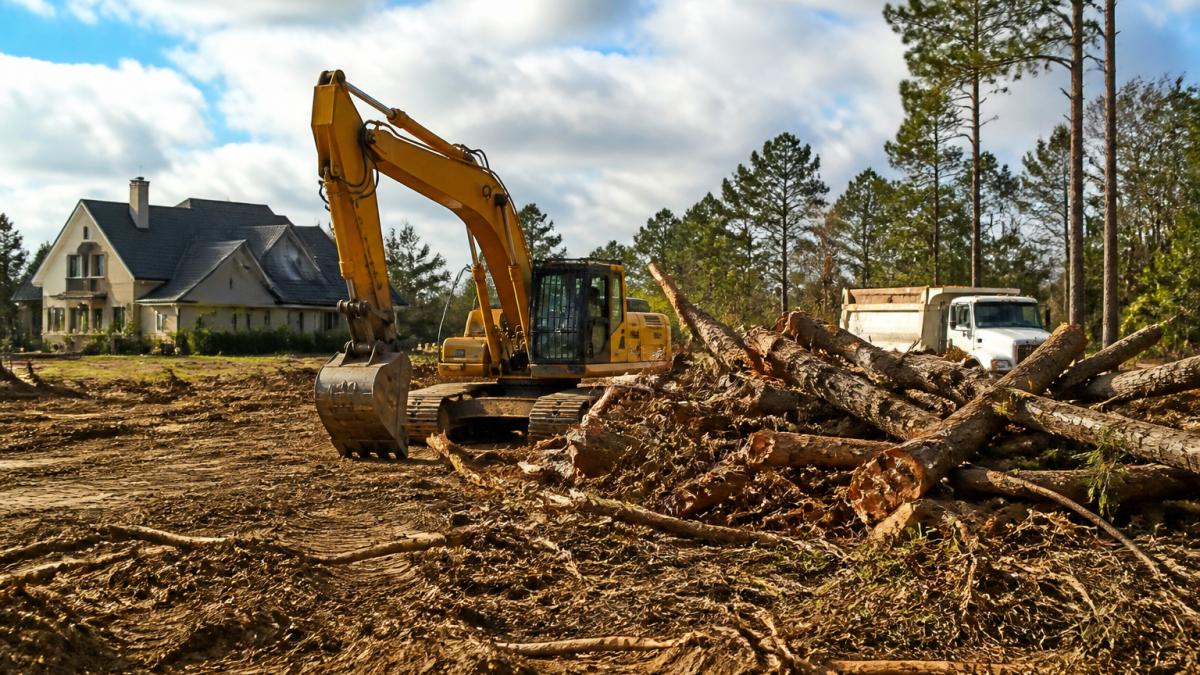
In practice, most residential projects combine two or three. A mulcher handles the brush, a dozer clears the heavy growth, and an excavator pulls stumps before grading starts.
Site Preparation Costs for New Construction Beyond Clearing
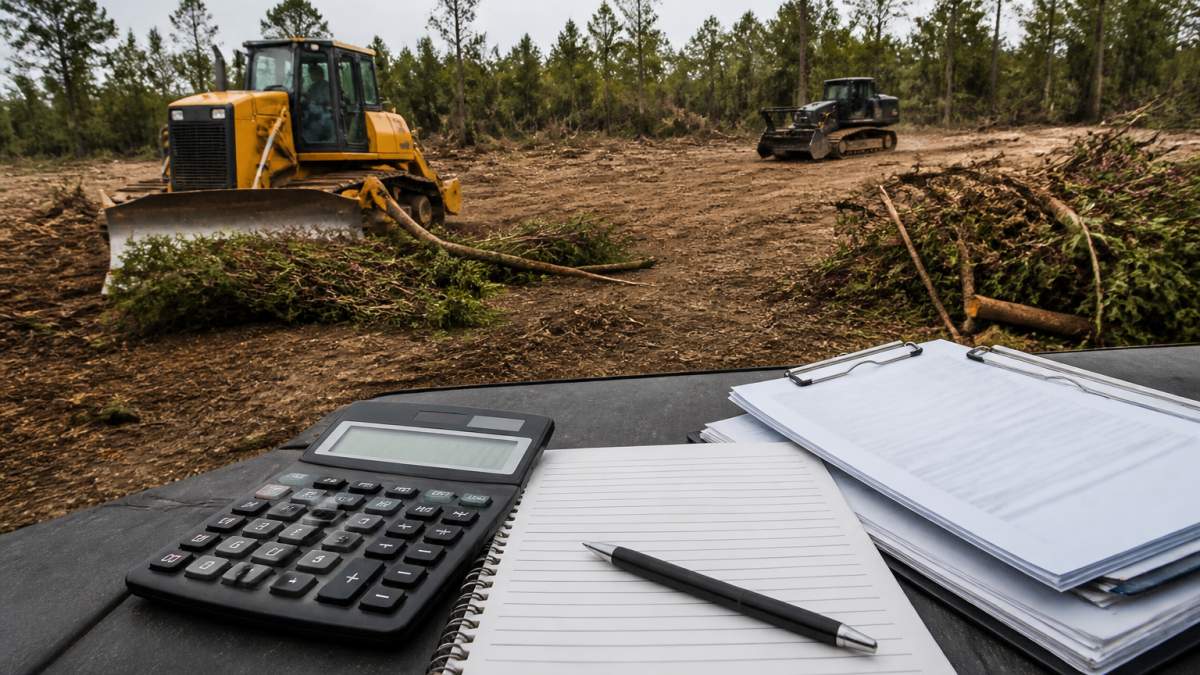
Clearing is only the first line item in a construction-site preparation budget.
A common pattern in residential bids is that clearing runs roughly 25% to 40% of the total preconstruction site-work budget, with grading, stump removal, hauling, and drainage making up the rest.
Expect these add-on categories in any full site preparation estimate, each with its own pricing mechanism:
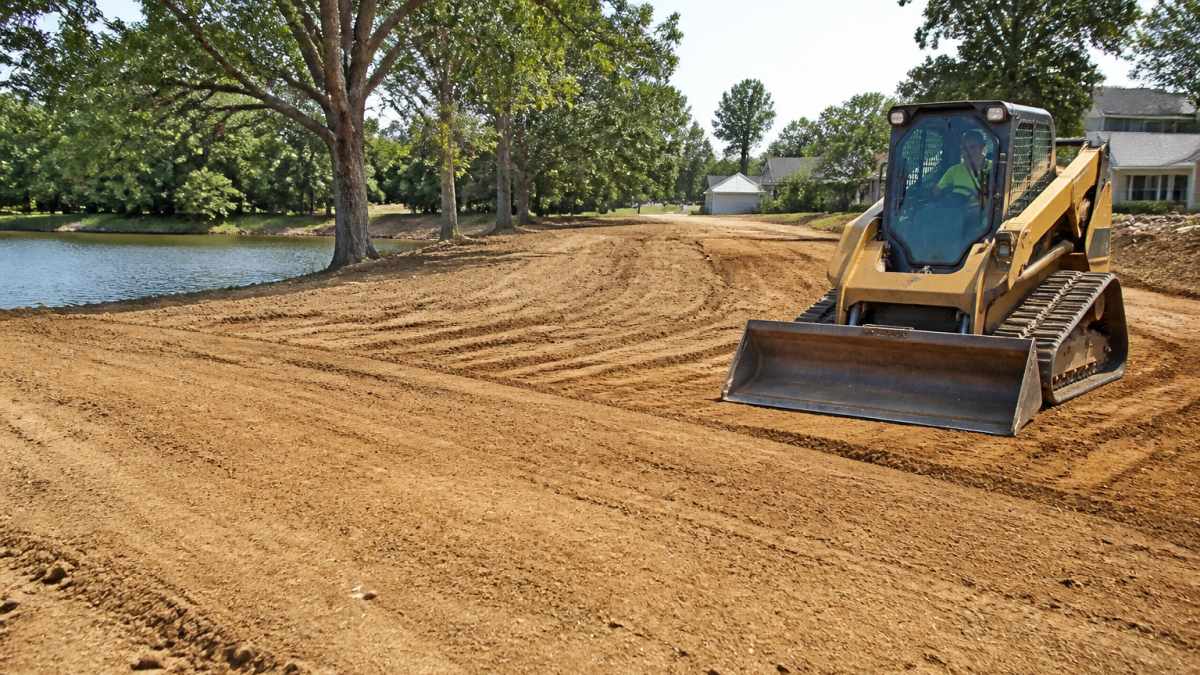
- Grading and leveling. Priced by the cubic yard of cut-and-fill moved or by the square foot of pad prepared. Precision grading creates a stable, level pad for the foundation and positive drainage away from the house. Rough grading is cheaper; finish grading to tight tolerance for a slab or driveway costs more because it takes more machine passes and more survey checks.
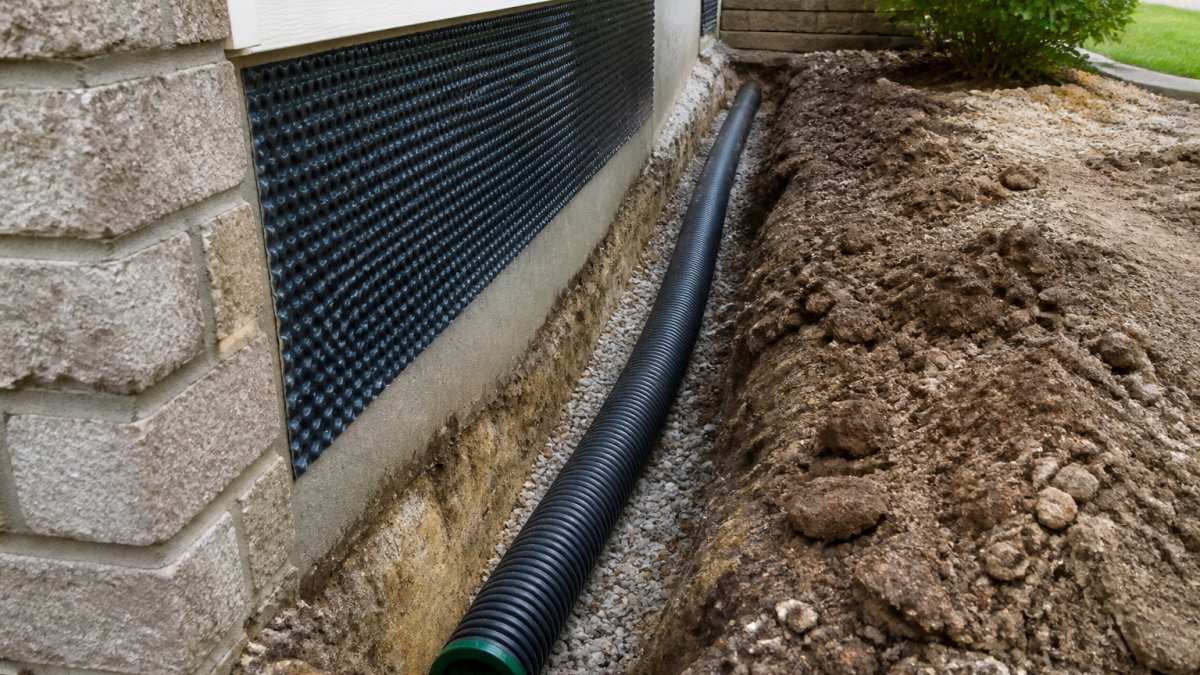
- Drainage and erosion control. Swales, grading slopes, silt fencing, and temporary sediment basins keep water moving and protect bare soil until landscaping takes hold. These are frequently billed as separate line items because they require different materials and, in many jurisdictions, inspection before earthwork continues.
- Stump and root removal. Roots left in a building pad decompose and settle, which is why removal is not optional under a foundation. Pricing depends on stump diameter and depth: grinding to 6-12 inches below grade is typical for landscape areas, while full root removal under a foundation pad is a deeper, slower operation.
- Debris hauling and site cleanup. Construction debris and leftover vegetation have to leave before framing begins. Hauling is usually priced per load, and dump fees vary by material, clean vegetative debris is often cheaper to dispose of than mixed debris with soil and rock.
- Access roads and utility preparation. A temporary construction entrance, gravel staging area, and utility trenching or stubbing are easy to overlook but routinely appear in builder budgets. If the lot has no frontage road or the utility run is long, this line can grow quickly.
- Final landscape preparation. Topsoil placement and finish grading prepare the lot for sod, planting, or hardscape. Topsoil is often stockpiled during clearing and re-spread later, confirm in the bid whether stockpiling and re-spreading are included or billed as a second operation.
This is where budgets usually break. Homeowners budget for clearing and forget that grading and drainage carry their own equipment costs, and that hauling is priced per load rather than folded into the acreage rate.
U.S. EPA guidance on stormwater runoff and erosion control at construction sites
Permits, Protected Trees, and Environmental Restrictions
Permits and tree protections can add cost and time before a single machine moves, and they are the most common reason a clearing schedule slips. Local rules vary by jurisdiction, and many municipalities require a clearing or grading permit, erosion control measures, and protection for designated trees.
What to check before you sign a contract:
- Clearing and grading permits. Ask whether the contractor pulls them or you do, and who pays the fees. Permit fees are usually modest relative to the work, but the review period can run days to weeks depending on the jurisdiction and the completeness of the submittal.
- Tree protection rules. Some jurisdictions restrict removal of heritage or protected species and require a tree survey and protection plan before cutting. Protection typically means fencing at the drip line, and work inside that zone may be limited to hand clearing, which is slower and more expensive per tree than machine clearing.
- Erosion and sediment control. Many local codes require silt fencing, stabilized construction entrances, and inspection before earthwork begins and again after significant rain. A failed inspection stops work until the measure is corrected, so build inspection days into the schedule.
- Wetlands and buffers. If any part of the lot is wet or near a regulated buffer, expect additional review. At the federal level, the U.S. Army Corps of Engineers administers wetland permitting under the Clean Water Act, and state or local buffers can be stricter than the federal line. A jurisdictional determination can add weeks before clearing is allowed.
- Disposal requirements. Some jurisdictions restrict burning of cleared vegetation and require it to be hauled to a permitted disposal site or mulched on site. Burning bans and hauling requirements change the debris line item in your budget.
We recommend confirming requirements with your local building department before approving any scope of work, and asking the contractor to state in writing which permits they will pull and which inspections apply.
U.S. Army Corps of Engineers wetland permit information
How to Compare Contractor Bids Without Getting Burned
Three bids on the same lot rarely look alike, because contractors scope the work differently. The fix is to force every bid onto the same page before you compare price.
Use this checklist when reviewing each contractor quote:
- Is the acreage to be cleared stated in writing?
- Are stump removal and root removal included, and to what depth?
- Is debris removal and disposal included, or billed separately?
- Are hauling and dump fees itemized?
- Is grading and leveling included, and to what tolerance?
- Are permits and erosion control in the scope?
- Is mobilization and equipment cost listed?
- Is there a written timeline and payment schedule?
- Can they provide references from nearby properties?
- Is the price fixed or subject to change if conditions differ?
A contractor who answers all ten items in writing is telling you they have done this before. One who waves off the questions with "we'll handle it" is telling you something too.
Conclusion
Land clearing is the least glamorous line in a construction budget and the one most likely to surprise you, because the published ranges only hold when the scope is clear. Get the acreage, stump depth, debris disposal, and grading tolerances in writing before you compare a single number.
OCAS Residential handles land leveling, precision grading for new construction, complete site cleanup with debris hauling, and drainage solutions as one coordinated scope, so your clearing, grading, and hauling are priced together instead of negotiated piecemeal.
Frequently Asked Questions
What factors affect the cost of clearing land for new construction?
The biggest drivers are acreage cleared, vegetation density, and terrain. Heavily wooded lots with large trees and stumps cost more than brush-covered or already-cleared ground, and slopes or poor site access slow equipment down. Debris removal and hauling, dump fees, and any required permits or protected-tree restrictions add to the total. Because these variables swing widely from lot to lot, a land clearing estimate built from your specific property is far more reliable than a generic per-acre number.
Does land clearing include grading and debris removal?
Not always. Basic clearing removes trees, brush, and stumps, but grading, leveling, and hauling debris off site are often priced separately. Some contractors leave cut material on site or burn it where allowed, which costs less than hauling. For a construction-ready lot, budget for grading and drainage work on top of clearing. Ask every bidder to list exactly what is included so you can compare quotes on equal terms.
Do I need a permit to clear land on my property?
It depends on your local rules and what you plan to remove. Many jurisdictions require permits for clearing above a certain acreage or for removing protected trees, and some have erosion control or stormwater requirements during site work. Clearing without approval can lead to fines or stop-work orders. Before signing a contract, confirm the permit requirements with your local building department and ask your contractor who is responsible for pulling them.
How do contractors estimate land clearing costs?
Most contractors walk the property, measure the area to be cleared, and assess vegetation, terrain, and access before quoting. They then price labor, equipment time, debris hauling, and dump fees, plus any grading or site preparation you need. A written land clearing estimate should itemize these pieces rather than give one lump sum. Get at least two or three itemized bids and compare scope, not just the bottom line.