 how-to
What Is a Curtain Drain and How It Works
Table of Contents
- What Is a Curtain Drain
- How a Curtain Drain Works: Step-by-Step
- Curtain Drain Installation: Materials and Process
- How Deep Should a Curtain Drain Be
- Curtain Drain vs French Drain: Key Differences
- Curtain Drain Cost and When to Call a Professional
- Maintenance and Long-Term Performance
- Frequently Asked Questions
Last Updated: October 12, 2026
What Is a Curtain Drain
A curtain drain is a shallow, sloped trench filled with gravel and a perforated pipe that intercepts groundwater before it reaches your home or landscape. Think of it as a barrier that catches water moving downhill and redirects it safely away from your property.
Curtain drains work best on slopes or hillsides where water naturally flows toward your house. They're called "curtain" drains because they hang like a curtain across the slope, blocking water's path. Unlike French drains, which sit deeper and handle water already pooling in your yard, curtain drains stop the problem upstream.
This approach solves a specific problem: water traveling downhill toward your foundation, basement, or landscaping. If your property sits below neighbors' yards or on sloped terrain, groundwater migrates toward the lowest point. That's usually your house. A curtain drain intercepts that flow before it becomes a drainage crisis.
How a Curtain Drain Solves Water Problems
Standing water, wet basements, and eroded landscaping often trace back to one cause: groundwater flowing downhill onto your property. A curtain drain stops that flow at its source.
Here's what it prevents:
- Basement seepage, Water no longer seeps through foundation walls
- Muddy yards, Soggy ground becomes usable space
- Foundation cracks, Hydrostatic pressure eases when water is diverted
- Erosion damage, Soil stays in place instead of washing away
- Landscaping failure, Plants thrive without constant waterlogging
When water flows down a slope unchecked, it pools where your property sits lowest. A curtain drain intercepts that water in a trench uphill from your house and channels it safely downhill or toward a drainage outlet. The result is dry ground where water once pooled.
Positioning the drain line correctly and using the right materials to handle seasonal water flow are key. Done right, a curtain drain solves drainage problems for decades.
How a Curtain Drain Works: Step-by-Step
A curtain drain operates on a simple principle: gravity pulls water downhill through a permeable trench. The perforated pipe captures that water and channels it to an outlet.
Here's the flow:
- Water enters the trench, Groundwater seeps into gravel surrounding the drain pipe
- Pipe collects the water, Perforations in the pipe allow water inside
- Gravity moves it downhill, The sloped pipe directs water away from your property
- Water exits at the outlet, It emerges at a safe distance from your home or into a drainage system
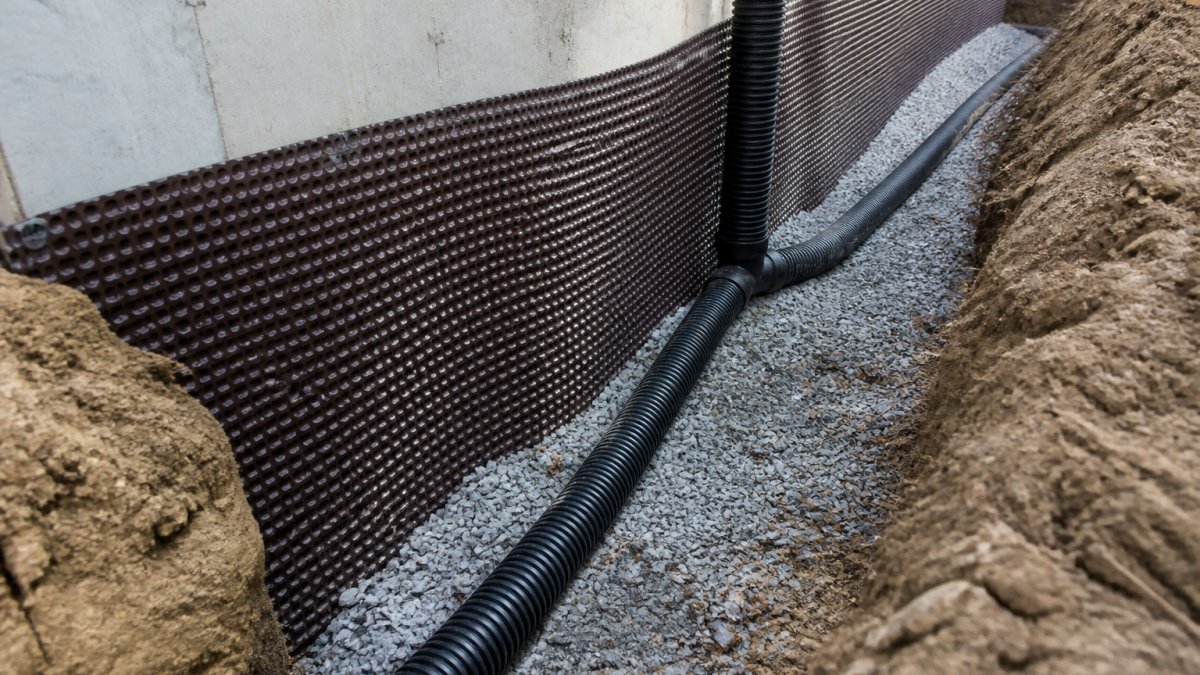
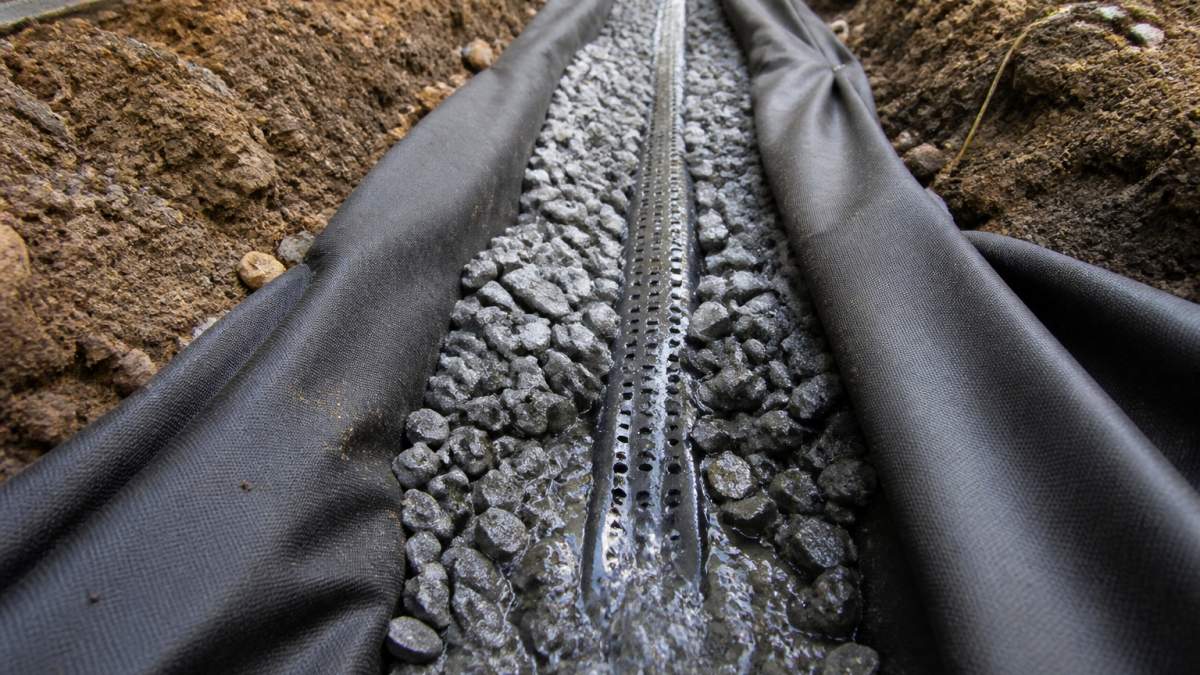
The trench itself is shallow, typically 12 to 24 inches deep. It runs across the slope at an angle, intercepting water before it reaches your house. The perforated pipe sits at the trench bottom, surrounded by gravel that filters soil while allowing water through.
Water Collection and Flow
Water doesn't sit in a curtain drain. It moves through the system continuously, driven by gravity and the slope of the terrain.
Groundwater enters the gravel layer around the pipe. The landscape fabric prevents soil from clogging the gravel. Water passes through the fabric, into the gravel, and through the perforations into the pipe.
The slope is critical. A proper curtain drain slopes at least 1 percent, meaning it drops 1 foot in elevation for every 100 feet of length. This gentle slope keeps water moving without requiring a pump. Steeper slopes work even better.
In heavy rain or spring thaw, water moves faster through the system. During dry periods, flow slows but doesn't stop if the water table remains high. The pipe acts as a permanent channel, always ready to move water away from your property.
Directing Water Away From Your Property
The outlet determines where water goes once it leaves the curtain drain. Common options include:
- Daylight outlet, Pipe emerges at grade level downhill from your house, water flows into landscape or drainage swale
- Catch basin or dry well, Water collects in a gravel-filled pit downhill, then percolates into soil
- Storm drain connection, Pipe connects to municipal drainage system (requires permits)
- Downhill swale or ditch, Water flows into a shallow channel that guides it further away
The outlet must be positioned so water flows away from your home and neighbors' properties. Local grading and drainage codes often specify outlet requirements. Outlets must comply with local regulations and prevent water from creating new problems downhill.
Curtain Drain Installation: Materials and Process
Installing a curtain drain requires specific materials, proper technique, and attention to slope. DIY installation is possible on small projects, but professional installation ensures the drain works as designed.
Essential Materials and Tools
A complete curtain drain installation requires:
- Perforated drain pipe, 4-inch PVC or corrugated plastic, typically 100+ feet for residential applications
- Landscape fabric, Geotextile that filters soil while allowing water through
- Gravel, 3/4-inch clean stone, 4 to 6 inches deep in the trench
- Outlet pipe or catch basin, Directs water safely away
- Shovel and wheelbarrow, For excavation and material transport
- Level and measuring tape, To verify slope and depth
- Trenching tool or small excavator, For larger projects
Material quantities depend on trench length and width. Small yards may need less; larger properties may need significantly more.
Excavation and Trench Preparation
The trench is the foundation of a working curtain drain. It must be the right depth, width, and slope.
Steps for trench preparation:
- Mark the trench line, Run a string uphill from where you want water to exit, ensuring the line crosses the slope perpendicular to water flow
- Excavate to depth, Dig 12 to 24 inches deep, typically 18 inches for most residential applications
- Check the slope, Use a level on a long board or measure elevation drop to verify at least 1 percent slope (1 foot drop per 100 feet)
- Compact the trench bottom, Firm soil prevents pipe settling
- Remove rocks and roots, A smooth bottom protects the pipe
The trench width depends on pipe size and gravel depth. For a 4-inch pipe with 6 inches of gravel on each side, the trench is typically 18 to 24 inches wide.
Installing the Drain Pipe and Gravel
Once the trench is ready, pipe and gravel installation follows:
- Lay landscape fabric, Line the trench bottom and sides, leaving excess to fold over the gravel
- Place the drain pipe, Lay perforated pipe in the trench with perforations facing down (some installers prefer facing down initially, then rotating after gravel is added)
- Add gravel, Cover the pipe with 4 to 6 inches of clean 3/4-inch stone
- Fold fabric over gravel, Overlap fabric to prevent soil migration
- Backfill with soil, Cover the fabric with topsoil or existing excavated soil
- Compact backfill, Tamp soil gently to prevent settling
The landscape fabric is essential. It allows water through while blocking soil particles that would clog the gravel and pipe. Without it, the drain clogs within a few years.
How Deep Should a Curtain Drain Be
Shallow drains (12 inches) work on slopes where water moves quickly and doesn't accumulate deeply. They're easier to install and cost less but may miss deeper groundwater flow.
Deep drains (24 inches) intercept water traveling deeper underground. They're necessary where groundwater is sluggish or where the water table sits lower. They cost more to install but handle more water.
The key is positioning the drain below the water table or below the depth where water typically accumulates on your property.
Evaluating specific site conditions, slope, soil type, water table depth, and rainfall patterns helps determine the optimal depth. Too shallow and the drain misses water. Too deep and you've wasted money and effort.
Curtain Drain vs French Drain: Key Differences
Both curtain drains and French drains move water away from your property, but they solve different problems and work in different locations.
| Feature | Curtain Drain | French Drain |
|---|---|---|
| Location | Uphill, on slopes | Around foundation or in wet areas |
| Purpose | Intercepts groundwater flowing downhill | Collects water pooling around foundation |
| Depth | 12-24 inches | 18-36 inches, often below foundation |
| Slope | Follows natural slope | Requires engineered slope to outlet |
| Best for | Hillside properties, water flowing toward house | Wet basements, standing water in yards |
| Installation | Easier, less excavation | More intensive, deeper digging |
A curtain drain stops water before it reaches your property. A French drain handles water that's already there. If your house sits on a slope and water flows downhill toward your foundation, install a curtain drain uphill. If water pools in your basement or yard, a French drain around the foundation is the answer.
Some properties need both. Uphill curtain drainage prevents new water from arriving. Downhill French drainage handles water already present. Assessing your site helps determine which solution, or combination, solves your specific drainage problem.
Curtain Drain Cost and When to Call a Professional
Curtain drain installation cost depends on trench length, soil conditions, material choices, and site access. Professional installation ensures proper slope, material selection, and code compliance.
Factors affecting cost:
- Trench length, Longer drains require more pipe, gravel, and labor
- Soil type, Rocky soil costs more to excavate; clay is faster
- Equipment needed, Hand digging costs less than excavator rental
- Outlet complexity, Simple daylight outlets cost less than catch basins or drain connections
- Site access, Steep terrain or obstacles increase labor
For pricing and a detailed estimate for your property, contact OCAS Residential. We provide a transparent quote based on your specific conditions.
DIY installation works for small, simple projects on accessible slopes with good soil. Professional installation is worth the cost when:
- Your property is steep or has difficult terrain
- Soil is rocky or compacted
- You need to connect to municipal drainage systems
- Your foundation or landscaping is at risk from water damage
- You want a warranty and long-term performance guarantee.
Maintenance and Long-Term Performance
A well-installed curtain drain works for 20 to 30 years with minimal maintenance. Regular checks keep it functioning.
Maintenance tasks:
- Inspect the outlet annually, Ensure water flows freely and the outlet isn't blocked
- Check for settling, Look for low spots in the trench line where water might pool
- Clear debris, Remove leaves, branches, or soil that accumulates at the inlet
- Verify slope, After heavy rain or settling, confirm water still flows toward the outlet
Most curtain drains fail because the outlet clogs or the slope settles over time. Both problems are preventable with occasional inspection.
Landscape fabric degrades slowly over 10 to 15 years. When it fails, soil enters the gravel and eventually clogs the pipe.
If water stops flowing or pooling returns, the drain may need cleaning or replacement.
Water damage to your foundation, basement flooding, or eroded landscaping are expensive to fix after the fact. A properly installed curtain drain prevents these problems. At OCAS Residential, we design and install curtain drains tailored to your property's slope, soil, and water flow patterns. Our precision grading and drainage solutions ensure your residential property stays dry and stable.
Frequently Asked Questions
What is a curtain drain and how does it work?
A curtain drain is a shallow, sloped trench filled with gravel and a perforated pipe that intercepts water before it reaches your home or low-lying areas. Water enters the perforations in the pipe, flows downslope through the gravel layer, and exits at a discharge point away from your property. This system prevents water pooling, erosion, and foundation problems by redirecting surface and subsurface water away from vulnerable areas.
How deep should a curtain drain be?
Most residential curtain drains are installed 18 to 36 inches deep, depending on the water problem and soil type. Shallower drains work for surface water management, while deeper installations address subsurface water issues. The key is positioning the drain at or above the water table in your yard. An assessment of your property's grading and drainage patterns helps determine the optimal depth for your situation.
What's the difference between a curtain drain and a French drain?
A curtain drain is installed on slopes to intercept water before it reaches a target area, typically positioned uphill. A French drain is usually placed around a foundation or in low spots to collect and redirect water that's already pooling. Curtain drains use a sloped trench design, while French drains often surround structures. Both use perforated pipe and gravel, but their placement and purpose differ based on your drainage needs.
Can I install a curtain drain myself, or should I hire a professional?
Small curtain drains in simple terrain can be DIY projects if you have basic excavation tools and understand proper grading. However, professional installation ensures correct slope, material selection, and discharge planning, especially on larger properties or complex drainage problems. Improper installation can redirect water to neighboring properties or create new problems. For most homeowners, professional installation provides reliability and avoids costly mistakes.