 how-to
Why Property Grading Prevents Erosion: A Homeowner's Guide
Table of Contents
- How Proper Grading Directs Water Away From Your Foundation
- Signs of Poor Yard Drainage You Should Never Ignore
- Step-by-Step: How to Fix Backyard Muddy Spots With Grading
- Understanding Residential Land Grading Cost and Value
- DIY vs. Professional Grading: When to Call a Site Prep Expert
- Soil Composition and Erosion Resistance: What Your Ground Needs
- Long-Term Maintenance to Keep Your Grading Effective
- Frequently Asked Questions
Last Updated: October 1, 2026
How Proper Grading Directs Water Away From Your Foundation
Water is the number one enemy of a home's foundation, and why property grading prevents erosion comes down to one simple idea: you control where water goes before it controls your house. Property grading is the practice of shaping the ground around a home so it slopes away from the structure at a steady pitch. This guide from OCAS Residential explains how that slope protects your home, how to spot drainage problems, and what it takes to fix them.
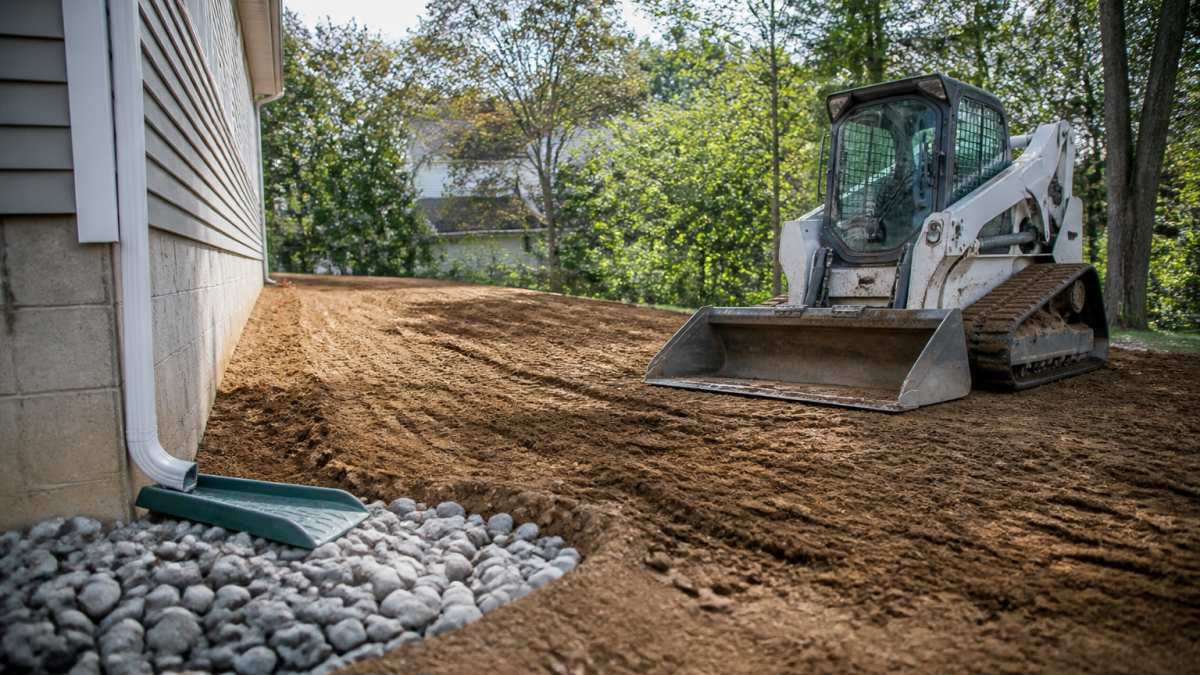
The math is not complicated. A finished grade should drop about 6 inches over the first 10 feet from your foundation, according to FEMA guidance on grading and drainage. That gentle drop, often called the grading pitch, keeps surface runoff moving away from the walls instead of soaking in next to them.
When soil sits flat or slopes toward the house, water pools against the foundation. Over time, that water builds hydrostatic pressure and pushes against basement walls and slabs. Grading removes the problem at the source.
Signs of Poor Yard Drainage You Should Never Ignore
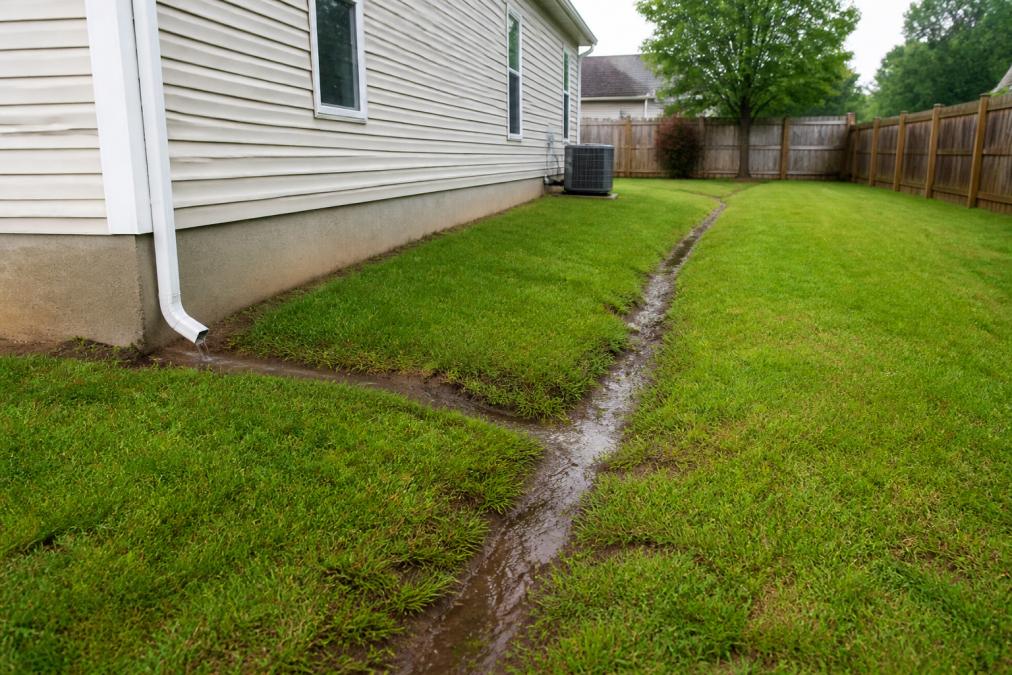
The clearest sign of poor yard drainage is standing water that lingers more than a day after rain. If you see it, the ground around your home is not shedding water the way it should.
Watch for these warning signs:
- Water pooling near the foundation or along the base of walls
- A damp or musty smell in the basement or crawl space
- Soft, spongy spots in the lawn that never dry out
- Soil stains or mud lines on the lower siding
- Cracks in the driveway, walkway, or foundation
- Mosquitoes that swarm in one spot all summer
Each of these points to the same root cause: water has nowhere to go. Fixing the grade usually solves several of them at once.
Step-by-Step: How to Fix Backyard Muddy Spots With Grading
Learning how to fix backyard muddy spots starts with redirecting water, not adding dirt at random. Follow these steps in order.
- Find the low spots. Walk the yard after rain and mark every place water collects.
- Check the slope. Use a level and a straight board to measure the drop from the house outward.
- Clear the path. Remove debris, rocks, and anything blocking the natural flow of water.
- Add soil to build up low areas. Use clean fill, not just topsoil, so the ground holds its shape.
- Pack the soil in layers. Compact each layer before adding the next one.
- Shape a swale if needed. A shallow, grassy channel carries water to a safe spot.
- Extend downspouts. Route roof water at least 5 feet from the foundation.
- Recheck after the next rain. Adjust any spot where water still sits.
The goal is a finished grade that sheds water in every direction, not just one.
Understanding Residential Land Grading Cost and Value
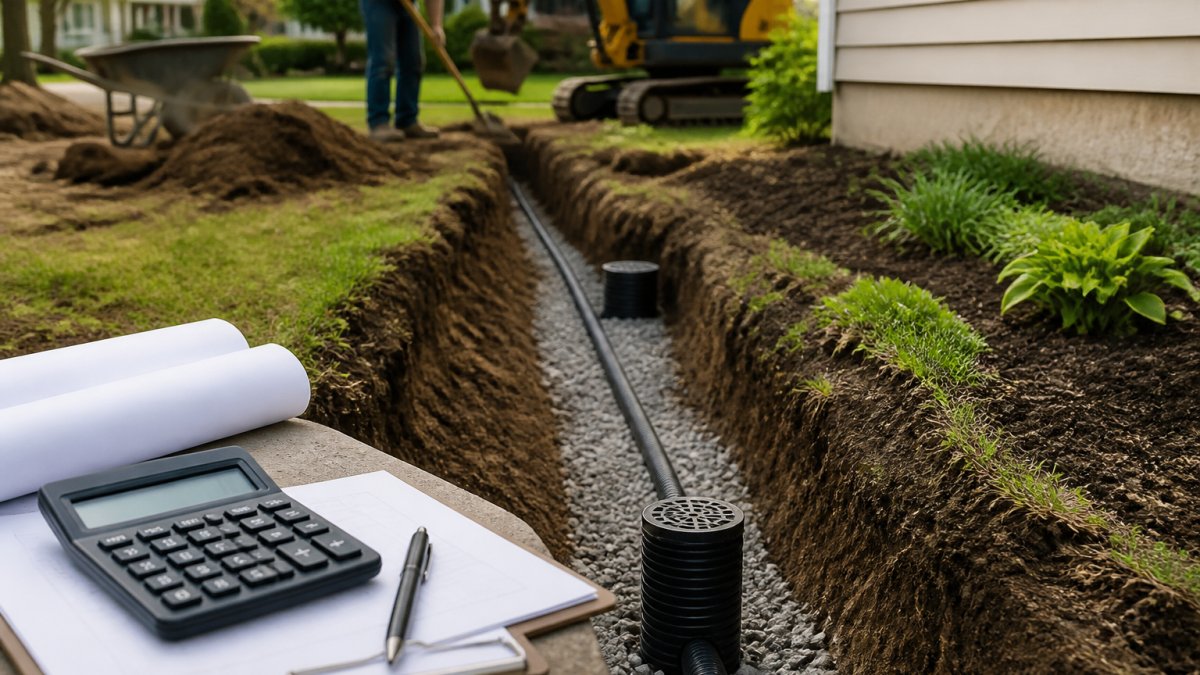
Residential land grading cost depends on the size of the yard, the volume of soil needed, and how much excavation the job requires. There is no flat rate, because a small corner fix and a full-acre leveling job are very different projects.
Pricing factors include:
- Square footage of the area to be graded
- Volume of fill dirt and topsoil required
- Access for equipment and hauling
- Whether drainage features like swales or culverts are added
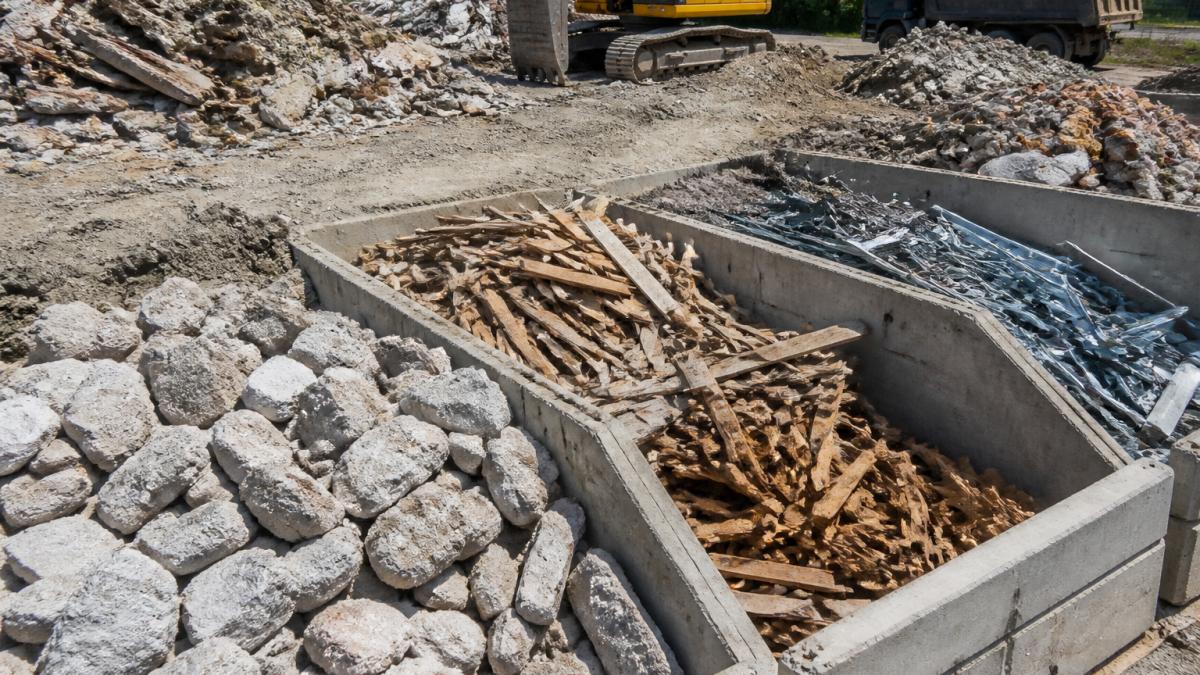
- Site cleanup and debris removal
- Whether permits or engineering review are required by the local jurisdiction
Most contractors price grading by the cubic yard of soil moved or by the square foot of finished grade, and the two numbers rarely agree because soil volume depends on compaction. A job that looks like 10 cubic yards of fill on paper can require 15 cubic yards of loose soil once you account for settling. That is why a written scope matters more than a phone quote.
The value side is easier to see. Good grading protects the foundation, stops soil erosion, and saves you from repeat repairs. That is money kept in your pocket over the life of the home. Foundation repair from chronic water intrusion routinely costs many times what a preventive regrade would have cost, and the repair does not fix the water problem, it only fixes the damage. Grading fixes the cause.
There is also a resale angle. A home with visible drainage problems, mud lines on siding, or cracks in walkways invites inspection findings that a buyer can use to negotiate. A documented grading and drainage plan is a small asset that answers a big question before it is asked.
The honest answer is that pricing depends on your specific site. The best move is to request a free estimate so the scope is measured in person.
DIY vs. Professional Grading: When to Call a Site Prep Expert
Small fixes are reasonable to handle yourself. Large or structural problems are not. The hard part is knowing where the line falls, and most advice on this topic stays vague. Here is a more concrete way to decide.
| Situation | DIY or Pro | Why |
|---|---|---|
| Minor low spot in open lawn, under 1 cubic yard of fill | DIY | Simple fill and compact by hand |
| Downspout extension or splash block | DIY | Low cost, low risk |
| Re-seeding a bare patch on an existing slope | DIY | Surface work only |
| Slope toward the foundation | Pro | Affects foundation integrity |
| Standing water near the house | Pro | Needs proper drainage design |
| Any grade change within 10 feet of the foundation | Pro | Must hit the 6-inch drop target precisely |
| Large acreage leveling | Pro | Requires heavy equipment |
| Grading for new construction | Pro | Must hit exact finished grade |
| Any job requiring a permit or stormwater plan | Pro | Legal and engineering requirements |
The DIY threshold in practice. A homeowner can reasonably handle a job when three things are true: the work is more than 10 feet from the foundation, the total soil moved is under about 1 cubic yard (roughly 20 to 25 wheelbarrow loads), and no water is currently touching the structure.
Soil Composition and Erosion Resistance: What Your Ground Needs
Not all soil resists erosion equally, and the type of ground under your yard shapes how well grading holds up. Clay holds water and drains slowly. Sandy soil drains fast but washes away easily. Silt sits in between and erodes with the slightest runoff.
Key points to remember:
- Clay soil needs added drainage to avoid pooling
- Sandy soil needs ground cover to stop sediment transport
- Silt needs reinforcement to resist water velocity
- Topsoil preservation keeps the surface able to support grass
Long-Term Maintenance to Keep Your Grading Effective
Grading is not a one-time job. The slope that works today can shift after a heavy storm, a new planting, or a settling season.
Keep your grading working with a simple routine:
- Inspect the yard after major storms for new low spots
- Keep gutters and downspouts clear so water flows away
- Recheck the slope near the foundation each spring
- Replant bare patches before they become gullies
- Watch for cracks in walkways and driveways that signal movement
Frequently Asked Questions
What time of year is best to regrade your yard?
The best time for property grading depends on your soil and weather. In most regions, late spring or early fall works well because the ground is workable and not frozen. Avoid grading during heavy rainy seasons, as wet soil is difficult to compact and shape properly. If you are fixing drainage issues, aim for a dry period so you can see how water flows. For new construction, grading happens after the foundation is set, before landscaping.
How should I grade my property for drainage?
The goal is to create a gentle slope that moves water away from your foundation. A common guideline is a 6-inch drop over the first 10 feet from the house, then a 2% slope continuing outward. Use a level or laser to check the grade. Fill low spots with compacted soil, and ensure downspouts extend at least 5 feet from the foundation. If your yard is flat, you may need a swale or dry creek to channel water to a safe discharge point.
Does poor grading lead to foundation damage?
Yes. When water pools near your foundation, it creates hydrostatic pressure that can crack walls, cause basement leaks, and lead to settlement. Poor grading also increases soil erosion, which undermines footings. Over time, this can result in costly structural repairs. Proper grading directs surface runoff away from the house, reducing moisture against the foundation and preventing the soil from washing away.
How much does it cost to grade a 1 acre lot?
Residential land grading cost varies based on your location, soil conditions, access, and the amount of work needed. For a 1-acre lot, quotes depend on whether it's rough grading or finish grading, and if drainage features like swales or culverts are required. OCAS Residential provides free estimates for land leveling and grading. Contact us for a personalized quote based on your property's specific needs.
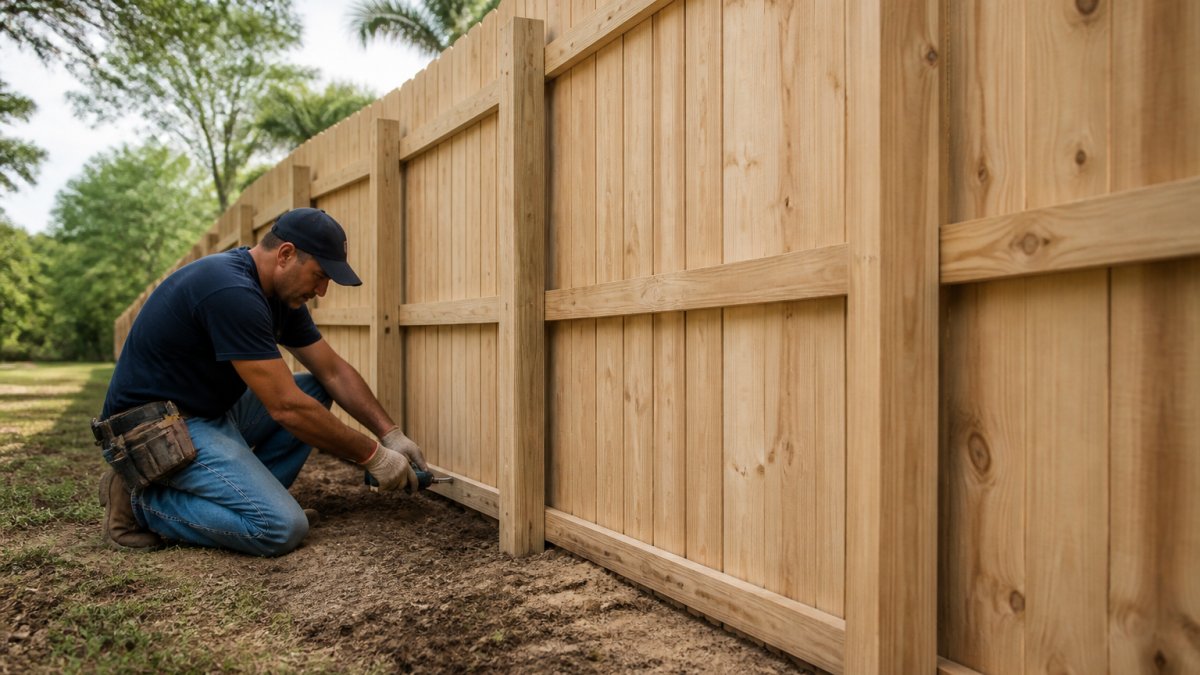
Water that pools against your foundation will not fix itself, and the damage adds up quietly until it becomes a major repair. OCAS Residential handles land leveling, precision grading, drainage solutions, and site cleanup so your property sheds water the way it should. Our team also installs custom fences and gates, so you can prepare your land and secure it in one project. Schedule a free estimate and let us put the right slope on your property before the next storm.