 how-to
What Is Precision Land Grading? A 2026 Guide
Table of Contents
- What Is Precision Land Grading and How Does It Work?
- How to Fix Backyard Muddy Spots With Precision Grading
- The Benefits of Site Drainage Solutions for Your Property
- Residential Land Grading Cost: What Affects the Price
- Precision Land Grading for New Construction and Foundations
- DIY vs. Professional Grading: What You Need to Know
- Soil Composition, Compaction, and Why They Matter
- Frequently Asked Questions
Last Updated: September 14, 2026
What Is Precision Land Grading and How Does It Work?
Precision land grading is the process of shaping a property's surface to exact elevations using laser or GPS-guided equipment, so water drains away from structures and the ground sits level enough to build on. This guide from OCAS Residential breaks down how it works, what it costs, and when to call a professional.
Most homeowners first notice a grading problem the same way: water pooling against the foundation after a heavy rain. Precision land grading solves that at the source by adjusting the slope, not patching the symptom.
The process moves through a clear sequence:
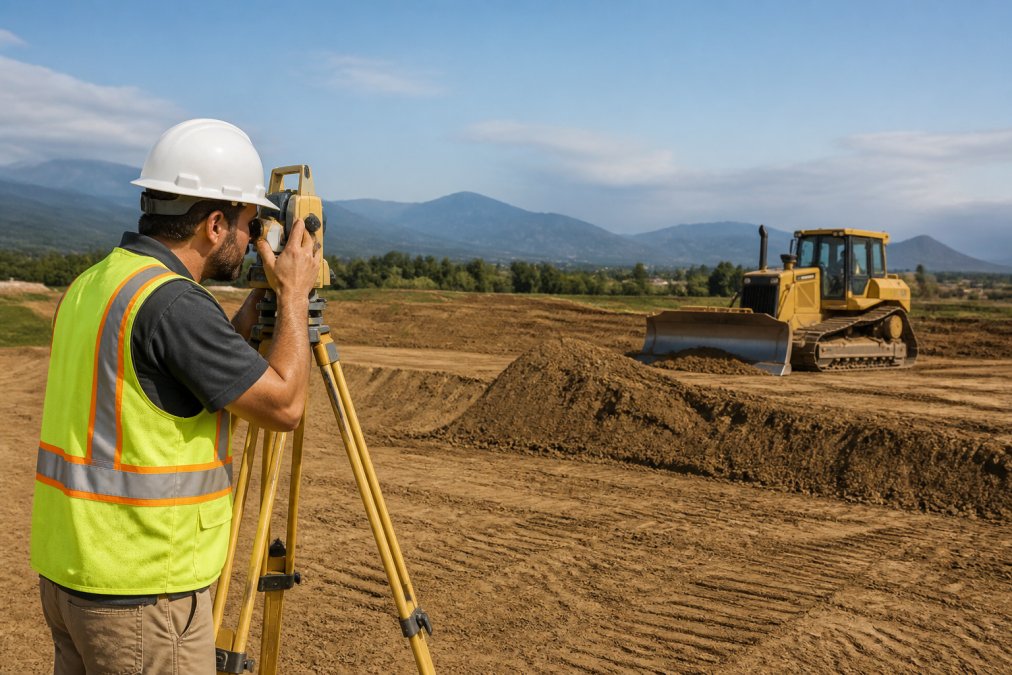
- Survey the site and establish existing elevations
- Map the target finished grade and drainage path
- Clear debris and strip unsuitable topsoil
- Cut high spots and fill low spots with compacted material
- Verify elevations against the plan before final landscaping
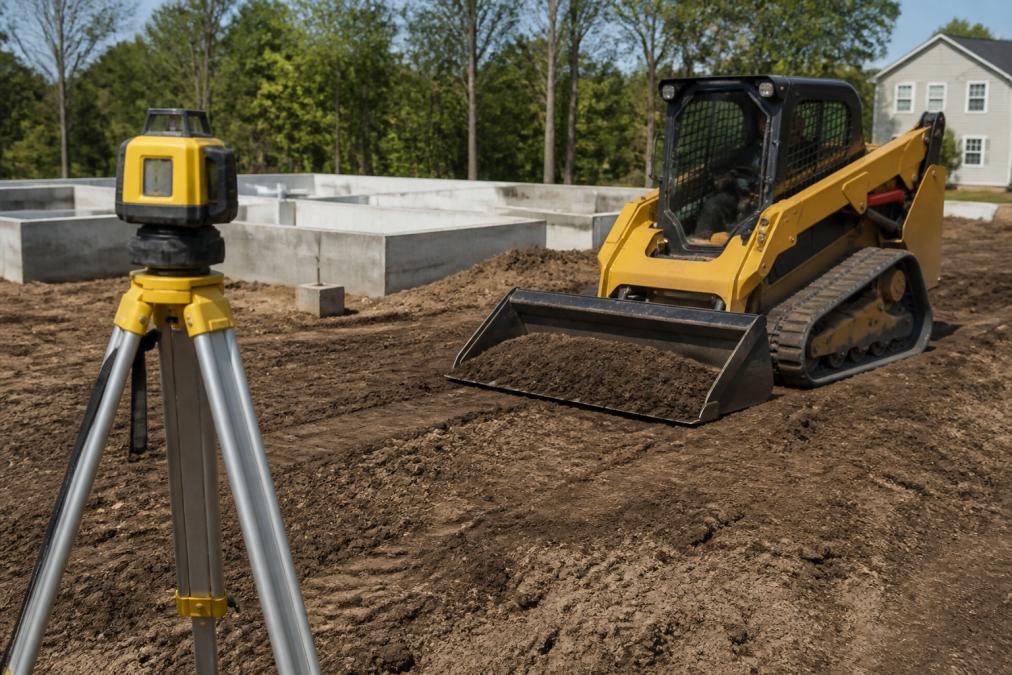
Precision Grading vs. Land Leveling: What's the Difference?
Land leveling flattens a surface to a single elevation, while precision grading shapes a surface to a specific slope and drainage pattern. Leveling suits a flat lawn or a pad; grading handles the pitch that moves water where it needs to go. Most residential projects need both: a builder levels a foundation pad, then grades the surrounding yard so runoff travels away from the house.
Key Terms You Should Know
- Finished grade: The final elevation of the soil surface after all grading is complete.
- Rough grade: The initial cut-and-fill pass, done before topsoil and landscaping go down.
- Subgrade: The compacted soil layer beneath a foundation, driveway, or slab.
- Contouring: Shaping the ground into gentle swales and slopes to direct water.
- Elevation: The measured height of a point relative to a fixed reference.
How to Fix Backyard Muddy Spots With Precision Grading
Muddy spots almost always trace back to a low point where water collects instead of draining. Fixing them means re-contouring that area so it slopes toward a proper outlet, not simply adding dirt on top.
A common mistake is dumping fill into the wet spot without checking where the water will go next. That just moves the problem a few feet away.
Here's the practical sequence:
- Identify the low point and where water currently pools
- Trace the natural drainage path away from the structure
- Remove standing water and soft, saturated soil
- Add and compact fill to build a consistent slope
- Confirm the new grade sheds water during a test rain or hose run
For a single muddy corner, the fix can be a small, targeted job. OCAS Residential handles both full-lot grading and smaller drainage corrections, so a single problem area doesn't require a full site overhaul.
The Benefits of Site Drainage Solutions for Your Property
Proper site drainage protects the foundation, prevents erosion, and keeps landscaping from washing out. The benefits extend well beyond a drier yard:
- Reduced risk of foundation cracks and settling
- Less topsoil loss on sloped areas
- Healthier grass and plants that aren't sitting in saturated soil
- Fewer mosquito and mold issues from standing water
Grading and drainage work together: too steep causes erosion, too flat causes pooling. The right grade moves water at a controlled pace toward a safe outlet.
Residential Land Grading Cost: What Affects the Price
Residential land grading cost depends on lot size, slope, soil conditions, access, and how much earthwork is required, which is why a site visit matters more than a phone quote.
The biggest cost drivers are:
- Total square footage to be graded
- How much cut and fill the terrain requires
- Soil type and how easily it compacts
- Equipment access and any clearing needed
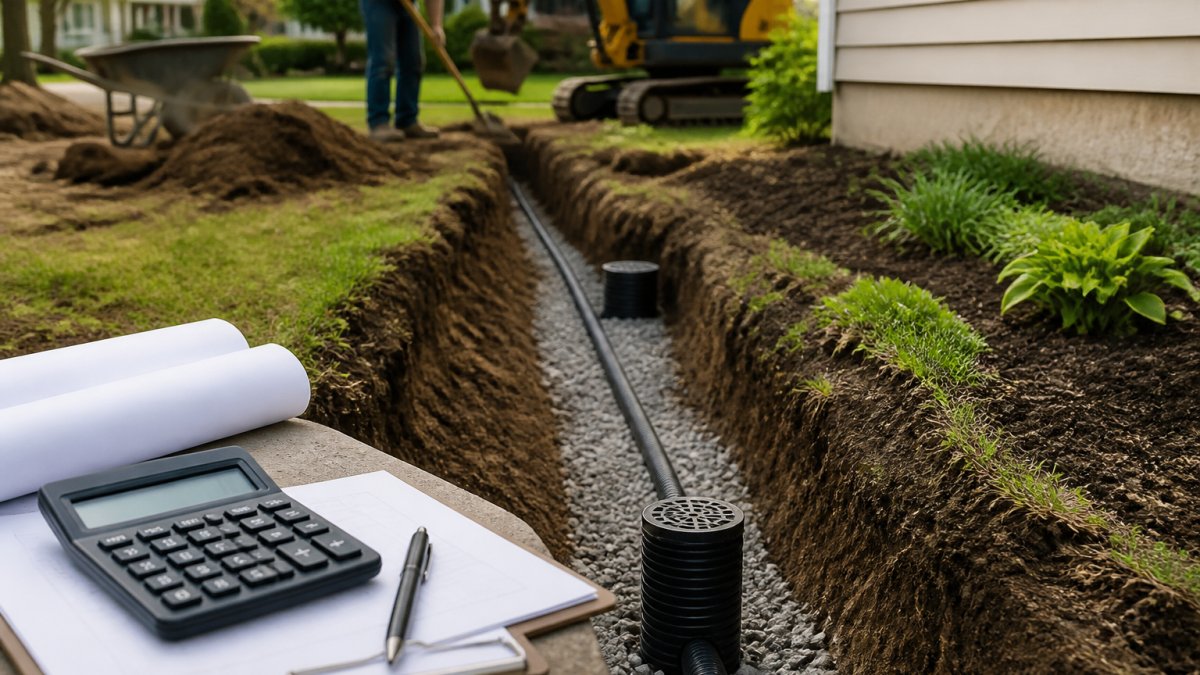
- Whether drainage features like swales or French drains are added
- Permitting, inspection, and stormwater compliance fees
How Contractors Actually Price the Work
Most grading bids are built from three line items: mobilization, earthwork, and finish work. Mobilization covers hauling the machine to your lot and setting up the laser or GPS base station. Earthwork is priced by the cubic yard of soil cut, moved, and compacted, not by the square foot, because a flat lot and a sloped lot of the same size can differ by hundreds of yards of material. Finish work covers final grading, topsoil replacement, and seeding or sod. Contractors often quote a per-square-foot "ballpark" for simple regrades and switch to a cubic-yard or hourly basis once the cut-and-fill volume is unknown, which is why two neighbors with similar lots can receive very different numbers.
What Drives the Number Up or Down
- Slope: A lot with more than a few feet of fall across the building pad usually requires retaining structures or terraces, which add cost beyond simple grading.
- Soil: Clay that must be moisture-conditioned before it will compact to spec takes more machine hours than sandy loam that compacts easily.
- Access: A narrow driveway or a fenced backyard forces smaller equipment and more trips, raising the labor component.
- Haul-off vs. on-site balance: If the site can balance cut and fill, you avoid trucking soil off-site, one of the largest single cost variables.
- Drainage additions: Swales, French drains, dry wells, and downspout extensions are priced separately from the grade itself.
The Regulatory Cost Most Quotes Leave Out
Grading that disturbs soil beyond a threshold acreage typically triggers a stormwater permit under the federal Clean Water Act's Construction General Permit, administered in most states by a delegated environmental agency (the EPA). That permit requires a Stormwater Pollution Prevention Plan (SWPPP), inspection logs, and best management practices like silt fence and stabilized construction entrances, real costs often omitted from a verbal quote (the EPA). Local jurisdictions add their own layer: many require a grading permit, a site plan stamped by a licensed engineer, and a final inspection before a certificate of occupancy is issued. Grading without a required permit can result in stop-work orders and rework, far more expensive than pulling the permit up front.
Pricing depends on your specific site, dates, and scope. For an accurate figure, request a free estimate rather than relying on a generic per-square-foot number you found online.
Precision Land Grading for New Construction and Foundations
For new construction, precision land grading prepares the pad and surrounding lot so the foundation sits on stable, correctly sloped ground. The subgrade must be compacted to a consistent density; if it isn't, the foundation can settle unevenly, leading to cracks in walls and floors. Grading also sets the drainage plane so stormwater moves away from the structure from day one. Builders typically sequence this as site preparation, land clearing, rough grade, then finished grade around the completed foundation, skipping a step, especially compaction, tends to surface months later as a structural problem.
DIY vs. Professional Grading: What You Need to Know
Small, cosmetic regrading is doable for a confident homeowner with a shovel and a level. Anything involving a foundation, significant slope, or drainage correction is a job for professional equipment and know-how. The harder question is where the legal line falls between the two.
When DIY Is Genuinely Fine
DIY makes sense when:
- The area is small and the fix is surface-level
- You're adjusting a flower bed or a single low spot
- No structure or utility lines are involved
- You are not changing the volume or direction of stormwater leaving your property
A homeowner can typically re-contour a planting bed, add a few inches of topsoil to a settled spot, or rake a lawn back toward a swale without a permit, the work is cosmetic and does not alter where water goes.
When the Law Requires a Professional
Several triggers move a grading project out of DIY territory and into regulated territory:
- Disturbance thresholds. Many states and local jurisdictions require a grading or land-disturbance permit once you move more than a set volume of soil or disturb more than a set area, commonly around one acre at the federal level, with stricter local thresholds that can be far smaller (the EPA). Exceeding the threshold without a permit is a code violation, not a gray area.
- Stormwater discharge. If your regrade changes the rate or direction of runoff leaving your lot, you may fall under local stormwater ordinances that require an engineered plan and post-construction controls.
- Foundation and structural work. Any grading that supports a foundation, retaining wall, or driveway subgrade generally requires a design by a licensed engineer and inspection by the local building department.
- Utility and easement conflicts. Grading over a sewer lateral, gas line, or drainage easement without locating it first can damage infrastructure and void your homeowner's coverage for the resulting repair.
- Slope and retaining structures. Walls over a certain height, often around four feet, though it varies by jurisdiction, typically require engineered design and a permit.
The Practical Test
Before you rent a skid steer, ask three questions:
- Will this change where stormwater leaves my property?
- Am I moving enough soil to cross my local disturbance threshold?
- Does any part of this touch a foundation, wall, or utility?
If the answer to any is yes, the job needs a professional, not because DIY is impossible, but because the permit, engineering stamp, and inspection are legal requirements. A licensed grading contractor and, where required, a licensed land surveyor or civil engineer can sign off on the plan.
What a Professional Brings That a Skid Steer Doesn't
Even on a job a homeowner could legally do, a professional brings three things hard to replicate: a laser or GPS grade control system that holds tolerances tighter than the eye can judge, compaction equipment matched to the soil, and a paper trail, permits, inspections, and a written scope, that protects you if the work is questioned during a sale or insurance claim.
Soil Composition, Compaction, and Why They Matter
Soil type determines how well a graded surface holds its shape. Sandy soil drains fast but erodes easily; clay holds water and expands when wet, which makes it tricky to compact.
Compaction is the step most DIY attempts skip. Loose fill settles over time, undoing the slope you just built. Proper compaction in lifts, using the right equipment, keeps the grade where you put it.
A quick reference for how soil behaves:
| Soil Type | Drainage | Compaction Behavior | Grading Note |
|---|---|---|---|
| Sand | Fast | Compacts easily | Erodes on slopes |
| Clay | Slow | Expands when wet | Needs careful moisture control |
| Loam | Moderate | Good balance | Ideal for landscaping |
| Silt | Moderate | Prone to washing out | Stabilize before grading |
Knowing your soil before you grade saves rework. A professional assessment of soil stability and topography prevents the guesswork.
Frequently Asked Questions
How much does residential land grading cost?
Residential land grading cost depends on several factors: the size of the area, how much earthwork is needed, soil conditions, and whether drainage solutions like French drains or swales are required. Properties with steep slopes or heavy clay soil take more time and equipment. The best way to get an accurate number is to schedule a free estimate where a grader can walk your property and assess the specific conditions.
Can you grade land yourself, or should you hire a professional?
Small touch-ups like filling a low spot with a few wheelbarrows of topsoil are reasonable DIY projects. But precision land grading requires surveying equipment, skid steers, compactors, and an understanding of slope percentages and drainage patterns. Getting the slope wrong can make water pool against your foundation, which costs far more to fix than the original grading would have. For anything beyond a minor surface fix, professional grading is the safer investment.
What is the difference between land leveling and precision grading?
Land leveling flattens an area to a uniform elevation, which is useful for patios, driveways, or sports courts. Precision grading goes further: it shapes the entire property to a specific slope and contour so water flows away from structures at a controlled rate. Precision grading accounts for topography, soil compaction, and drainage paths. Leveling is one tool within the grading process, not a replacement for it.
How does precision grading improve residential drainage?
Precision grading creates a finished grade that directs stormwater away from your foundation and toward appropriate drainage points like swales, catch basins, or the street. A typical residential lot needs a slope of at least 2% to 5% away from the house for the first 10 feet. When that slope is accurate, water moves off the property instead of pooling in your yard. This prevents muddy spots, erosion, and the kind of prolonged soil saturation that damages foundations over time.