 ultimate-guide
Residential Land Grading Cost 2026: Pricing Guide
Table of Contents
- How Much Does Residential Land Grading Cost in 2026?
- What Drives the Price Per Square Foot
- Cost Per Square Foot vs. Per Acre: Which Estimate Fits Your Project
- Site Preparation for New Construction: Grading, Excavation, and Foundation Prep
- How to Fix Backyard Muddy Spots With Regrading and Drainage
- Residential Drainage Solutions Cost: French Drains, Swales, and Retaining Walls
- Small Spot Leveling vs. Full Lot Grading: Matching Scope to Budget
- Permits, Inspections, and Stormwater Rules for Grading Projects
- Conclusion
- Frequently Asked Questions
Last Updated: September 16, 2026
How Much Does Residential Land Grading Cost in 2026?
Residential land grading cost in 2026 depends on lot size, slope, soil condition, drainage needs, and site preparation. At OCAS Residential, we quote grading work every week in Southwest Ranches, Davie, Weston, and Cooper City, and two lots of identical size can land thousands of dollars apart once topography and access enter the picture.
Grading reshapes a lot to a planned elevation so water drains away from the structure and the surface is stable enough to build on. Unlike simple leveling, a correctly graded lot slopes at a controlled pitch toward a drainage point.
| Cost Factor | What It Covers | Typical Impact on Price |
|---|---|---|
| Lot size | Square footage or acreage graded | Larger area, higher total cost |
| Slope and elevation change | Cut and fill volume | Steep lots cost more per acre |
| Soil condition | Fill dirt, compaction, hauling | Poor soil adds import and hauling |
| Drainage work | Swales, French drains, grading pitch | Adds a separate line item |
| Site accessibility | Equipment reach, clearing | Tight access slows the crew |
| Permits and inspections | Stormwater and grading permits | Fixed fees plus review time |
What Drives the Price Per Square Foot
The biggest cost driver is how far the existing grade sits from the target elevation, because that gap decides how much soil moves.
A lot needing a few inches shaved off the high side is a light job; one needing cut on one end and fill on the other is heavy, pulling in excavation, backfill, compaction, and hauling. A high water table or rocky subgrade pushes equipment hours higher.
Grading contractors rarely price purely by area. They price by machine hours plus materials, then divide by square footage. That is why a cheap per-square-foot quote often hides a thin scope that skips compaction or drainage.
- Cut and fill volume: how much dirt moves, measured in cubic yards
- Soil type: sandy soil drains fast but erodes; clay holds water and needs amendment
- Topsoil handling: stripping, stockpiling, and respreading adds labor
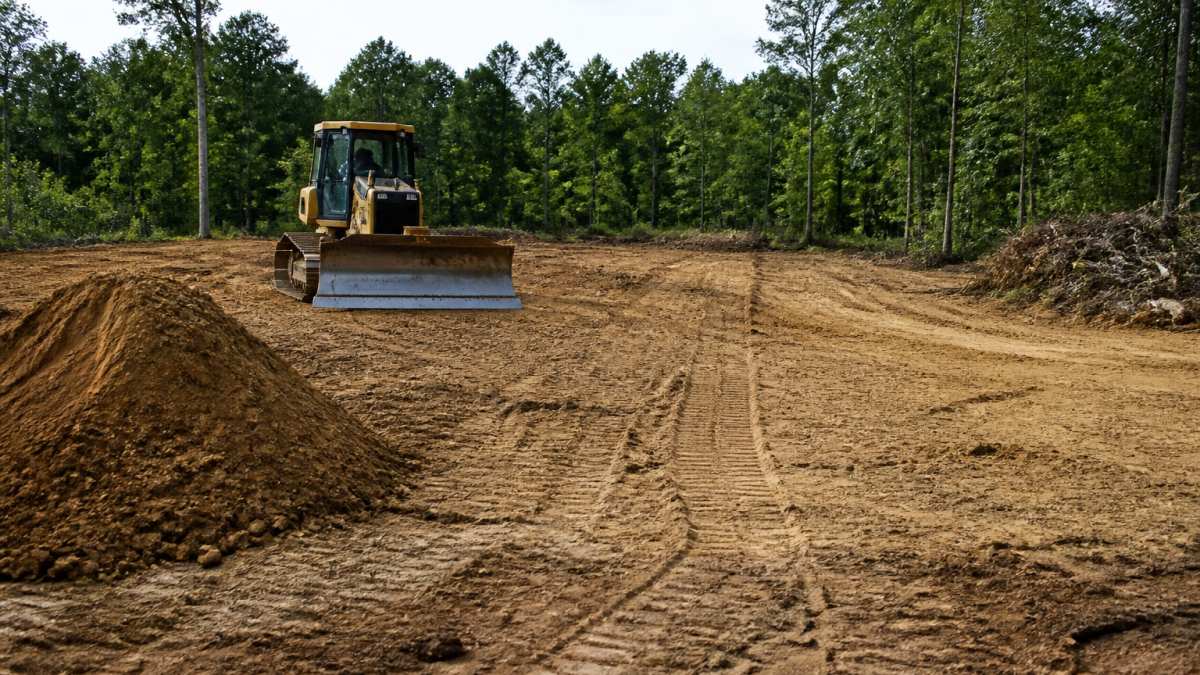
- Equipment needed: a skid steer for tight lots, a bulldozer for bulk earthmoving
Cost Per Square Foot vs. Per Acre: Which Estimate Fits Your Project
Per-square-foot pricing fits small, defined jobs. Per-acre pricing fits large lots where bulk earthmoving dominates.
For a single low corner or small backyard pad, ask for a square-foot number so you can compare bids directly. For an acre or more needing full lot grading, per-acre pricing is more realistic because it accounts for dirt moved across the whole site.
The trap is mixing the two: a per-acre bid on a quarter-acre drainage fix looks inflated, and a per-square-foot bid on a two-acre build site looks deceptively cheap until change orders arrive.
| Project Type | Best Pricing Basis | Why |
|---|---|---|
| Small spot leveling | Per square foot | Contained, easy to compare |
| Backyard regrading | Per square foot or flat rate | Limited scope, defined area |
| New construction pad | Per acre or per cubic yard moved | Volume-driven earthwork |
| Full acreage leveling | Per acre | Bulk cut and fill dominates |
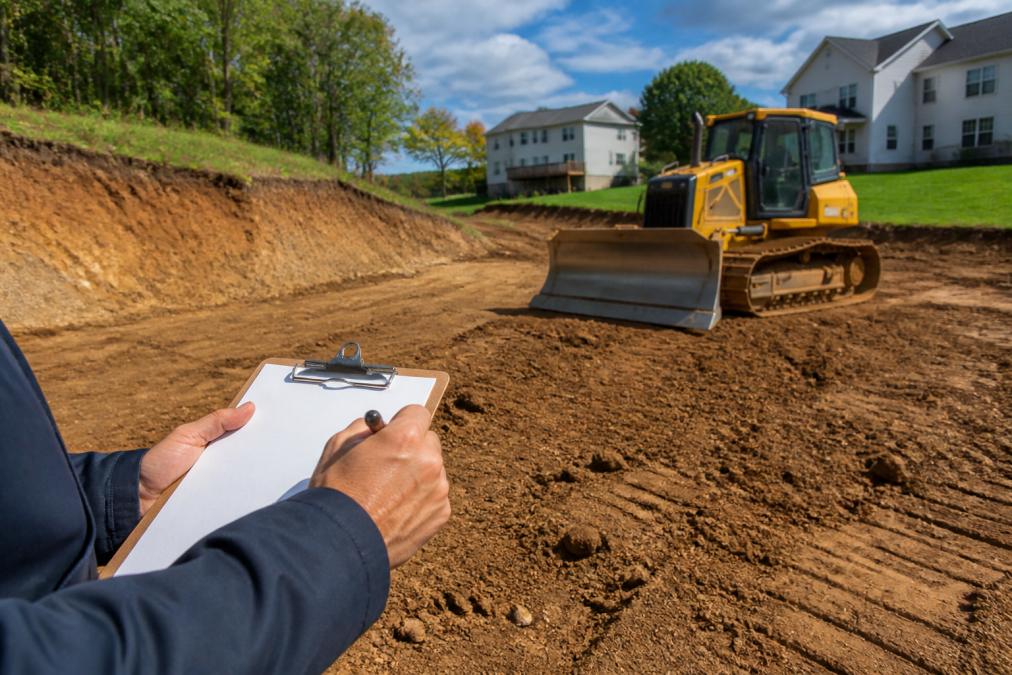
For an accurate estimate, give the contractor your lot dimensions, a rough slope reading, and photos of the problem area.
Site Preparation for New Construction: Grading, Excavation, and Foundation Prep
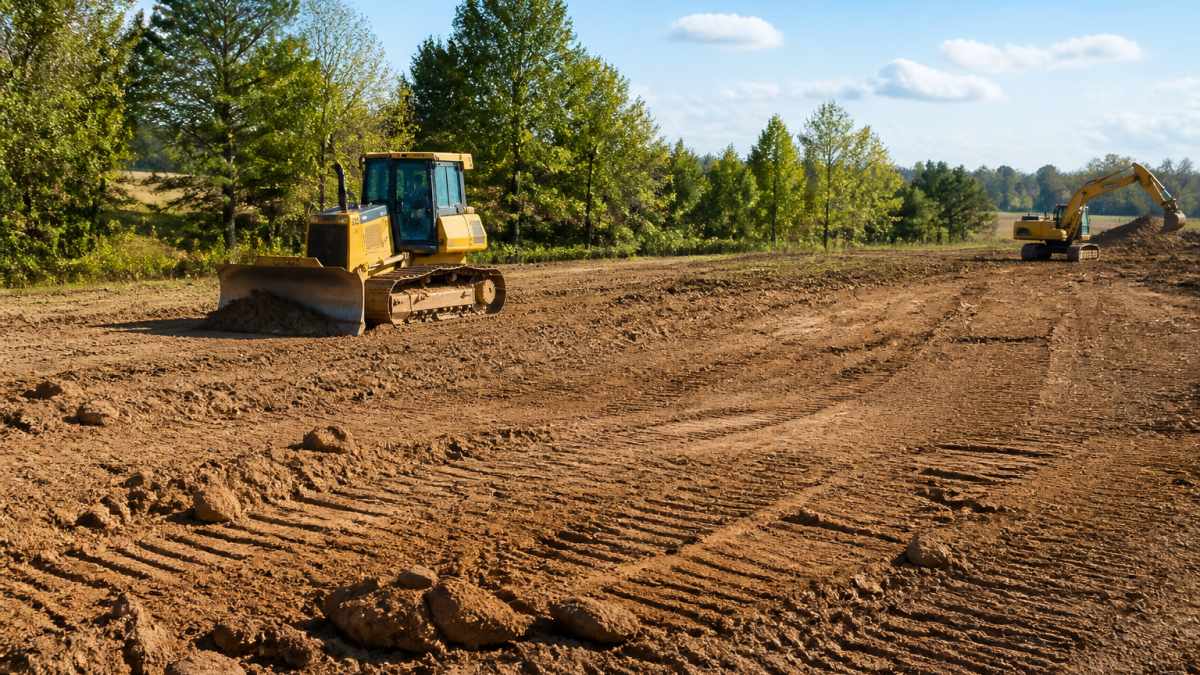
Site preparation for new construction is the sequence of clearing, excavation, grading, and compaction that turns raw land into a buildable pad. Get it right and the foundation sits on stable, drained ground; get it wrong and every trade after inherits the problem.
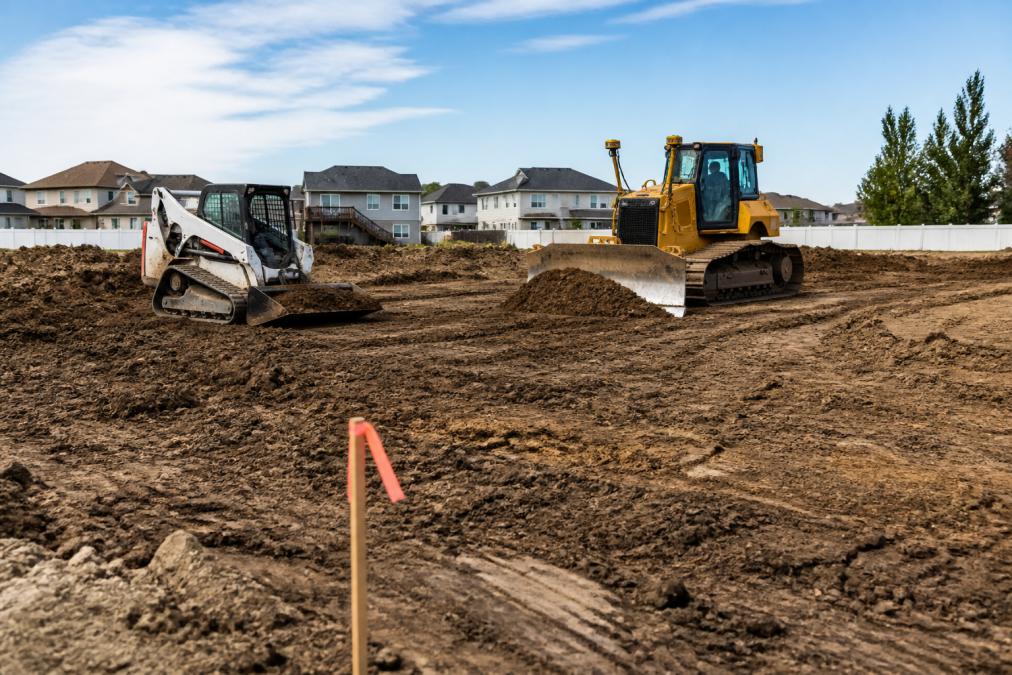
The work usually runs in this order:
- Land clearing removes vegetation, stumps, and debris
- Site survey confirms elevations and the building footprint
- Excavation cuts the high ground and removes unsuitable soil
- Fill dirt is placed in lifts and compacted to build up low areas
- Final grading shapes the subgrade to the target slope
- Stormwater management features are installed before landscaping
A common mistake is hiring grading and foundation work separately without a shared elevation plan: the grader finishes at one height, the foundation crew expects another, and someone eats the difference. OCAS Residential handles precision grading for new construction so the pad, drainage, and foundation prep follow one plan.
How to Fix Backyard Muddy Spots With Regrading and Drainage
Fixing backyard muddy spots starts with finding where the water actually goes. Most persistent mud is a drainage problem wearing a landscaping costume. Water pools because the grade slopes toward the house or a low spot, the soil is compacted clay that will not absorb, a downspout dumps roof water into the lawn, or the lot sits below surrounding grade.
Residential Drainage Solutions Cost: French Drains, Swales, and Retaining Walls
| System | Best For | Typical Pricing Basis | Maintenance Need |
|---|---|---|---|
| French drain | Subsurface saturation, downspout discharge | Per linear foot | Flush annually, inspect for clogging |
| Swale | Surface runoff across a large yard | Per linear foot or included in grading | Mow, re-grade as soil settles |
| Retaining wall | Steep slopes, elevation changes | Per square foot of face | Inspect weep holes, clear drainage gravel |
| Dry well or catch basin | Concentrated low points | Per unit plus excavation | Clean grate, pump or vacuum sediment |
Surface systems like swales are cheaper to install but need more ongoing attention, while subsurface systems like French drains cost more upfront but are largely invisible once covered. If you plan to sell soon, a documented drainage system with photos of the pipe and gravel before backfill is a selling point; if you plan to stay, a swale's maintenance burden may be worth the lower install cost.
Small Spot Leveling vs. Full Lot Grading: Matching Scope to Budget
For a new build, an acreage leveling project, or slope fixes across the whole yard, full grading is the honest answer. For one muddy corner, spot leveling solves it for far less. Ask the contractor to state which scope they are quoting, in writing.
Permits, Inspections, and Stormwater Rules for Grading Projects
Before you hire anyone, confirm:
- Whether your project needs a grading or site development permit
- What erosion and sediment control measures the inspector expects on site
- Where graded water is allowed to discharge, and whether an engineered plan is required
- Whether a site survey or engineered plan is required for the permit application
- What inspections happen before backfill and final grade sign-off
- Whether a post-construction stormwater maintenance agreement is required
One angle worth planning for: post-construction stormwater maintenance. Many jurisdictions require homeowners to maintain drainage features like dry wells, retention basins, and swales after sign-off, meaning periodic inspection, sediment removal, and re-vegetation, sometimes under a recorded maintenance agreement that runs with the property. Ask your contractor for as-built drawings and maintenance instructions for every drainage feature they install, because an inspector or future buyer will ask for them.
Conclusion
Grading prices swing widely because the true cost lives in the dirt you move, not the size of the lot, and guessing at scope is how budgets blow up. The right contractor measures your slope, checks your soil, and tells you plainly whether you need spot leveling or full lot grading before quoting a number.
Frequently Asked Questions
How expensive is residential land grading in 2026?
Costs depend on lot size, slope, soil conditions, and drainage needs. Small spot leveling runs less than full lot grading, and projects needing erosion control or retaining walls cost more. Because every property is different, pricing depends on your site's topography and accessibility. The most accurate way to get a real number is a free on-site estimate.
What factors increase the cost of land grading per square foot?
Steep slopes, rocky or clay-heavy soil, limited site accessibility for heavy machinery, and the need for fill dirt all raise the price. Projects requiring a site survey, soil compaction testing, or stormwater management features like swales and French drains also add cost. Grading near a foundation or existing landscaping takes more care and time.
Does land grading include drainage installation costs?
Not always. Basic grading reshapes the slope so water flows away from your foundation, but dedicated drainage systems like French drains, catch basins, or retaining walls are usually priced separately. If your yard has standing water or erosion, ask for a drainage assessment with your grading quote so both scopes are covered in one project.
How do I get an accurate quote for residential site grading?
Schedule an on-site evaluation so a contractor can measure square footage, check your site's elevation and slope, and identify drainage issues. Ask whether the quote includes land clearing, topsoil replacement, soil compaction, and debris hauling. A written estimate that breaks out labor, equipment, and materials helps you compare bids fairly.