 ultimate-guide
Benefits of Professional Site Preparation: 2026 Guide
Table of Contents
- What Professional Site Preparation Actually Includes
- How to Fix Backyard Muddy Spots Before They Become Foundation Problems
- The Structural Payoff: Load Distribution, Soil Compaction, and Settlement Prevention
- Site Drainage Solutions That Stop Water Runoff and Pooling
- Residential Land Grading Cost: What Drives the Number and How to Budget
- Permits, Regulations, and the Paperwork Most Homeowners Miss
- Risks of Skipping Professional Site Preparation
- Frequently Asked Questions
Last Updated: September 29, 2026
What Professional Site Preparation Actually Includes
Professional site preparation is the engineered process of transforming raw land into a stable, build-ready surface through clearing, excavation, grading, and compaction. This guide from OCAS Residential breaks down that work and how to spot a contractor who cuts corners.
The Seven-Step Process From Bare Lot to Build-Ready Pad
- Site assessment and survey, Establish property lines, easements, and existing grade using a licensed survey.
- Utility location, Mark buried gas, electric, water, and fiber lines before any digging begins.
- Lot clearing and debris removal, Remove trees, stumps, brush, and old structures; haul away the debris.
- Excavation and cut-and-fill, Move soil from high points to low points to create a level pad.
- Soil compaction, Compact lifts of soil in layers to a specified density, verified by testing.
- Rough and finish grading, Shape the surface to a precise slope that sheds water away from the structure.
- Erosion control and final inspection, Install silt fencing, stabilize slopes, and confirm the pad meets plan.
Skipping any step tends to surface later as a foundation crack, a soggy crawl space, or a failed inspection.
How to Fix Backyard Muddy Spots Before They Become Foundation Problems
The fix for a muddy backyard is almost never "add more dirt." Pooling water usually means the grade is flat or sloping the wrong way, and the soil beneath is too compacted to absorb rainfall.
The real solution combines three moves:
- Re-grade the surface so it slopes away from the house at a consistent fall.
- Break up compacted soil in the affected zone so water can infiltrate.
- Add drainage such as a French drain, swale, or catch basin if the yard has no natural outlet.
The Structural Payoff: Load Distribution, Soil Compaction, and Settlement Prevention
Structural stability starts with how evenly the soil beneath a foundation carries the load. Compacted in thin, tested lifts, the weight distributes predictably; if not, the soil settles unevenly and the foundation follows.
Site Drainage Solutions That Stop Water Runoff and Pooling
Drainage management is the most overlooked part of site preparation and the most expensive to retrofit. Water with no planned path creates its own, usually through your foundation, driveway, or neighbor's yard. The right fix depends on the soil beneath the surface.
Start With Soil, Not With the Puddle
Two yards can look identical after a storm yet need completely different fixes. The deciding factor is infiltration rate, which is why a professional prep plan begins with a soil evaluation, not a guess.
- Heavy clay. Clay particles are tiny and tightly packed, so water moves through them at a crawl. A clay yard that pools for days usually needs subsurface drainage, not more topsoil. A percolation test or jar test confirms how slowly the soil drains before anyone quotes a fix.
- Sandy soil. Sand drains fast, sometimes too fast. Water can disappear from the surface and still saturate the subgrade, undermining a slab or crawl space. Sandy sites often need grading that directs flow away rather than relying on absorption.
- Rocky or shallow bedrock. There may be nowhere for water to go. A dry well or designed discharge point matters more than a French drain, because the trench has no soil to infiltrate into.
- Fill soil. Previously placed fill is the wildcard. It may be compacted in some zones and loose in others, so it drains unevenly and settles unpredictably. Fill sites almost always warrant testing before a drainage design is finalized.
Matching the Solution to the Condition
| Solution | Best For | Typical Trigger |
|---|---|---|
| Surface grading and swales | Yards with a natural low outlet and moderate soil | Mild pooling after storms |
| French drain or trench drain | Yards with no outlet and heavy clay soil | Standing water for days |
| Catch basin and dry well | Driveway and patio runoff, tight lots | Water sheeting toward the house |
| Subsurface drain with discharge | High water table or saturated subgrade | Wet crawl space or soggy lawn year-round |
The right choice depends on topography, soil type, and where water can legally discharge. A contractor who skips a site survey is guessing with your foundation.
The Slope Number That Actually Matters
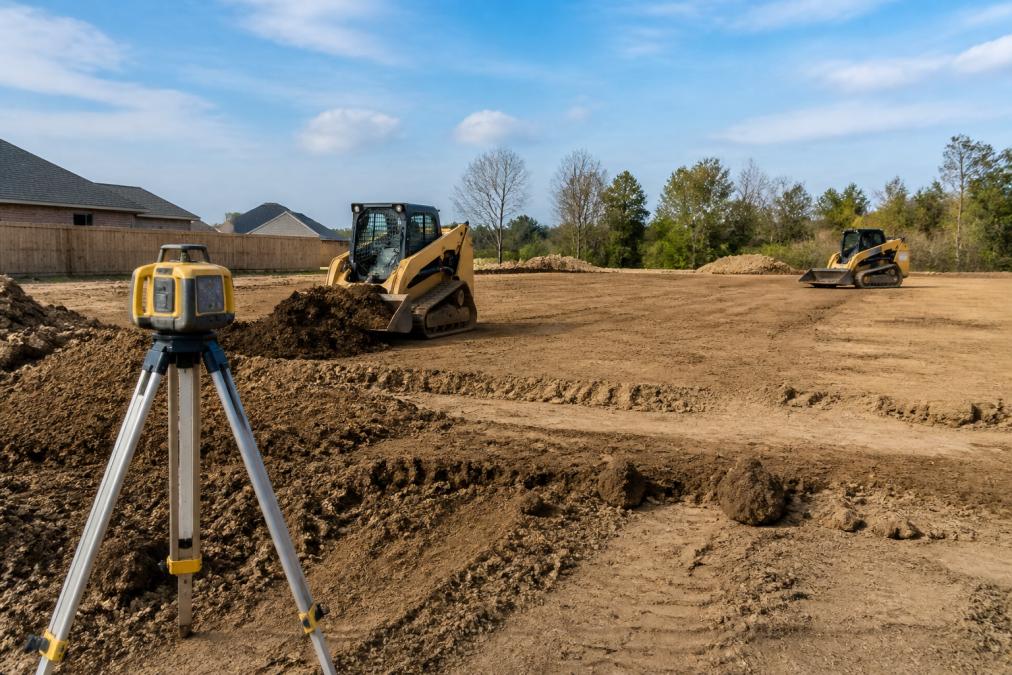
Grading is not just "make it slope away." Most residential codes call for a minimum fall of about six inches within the first ten feet from the foundation, continuing to drop outward, roughly a five percent grade near the house. Flatter and water lingers against the wall; steeper and you accelerate erosion. A laser level or transit, not a trained eye, confirms the number.
Erosion Control Is Part of Drainage
Drainage and erosion control are the same system at different speeds. A swale that sheds a storm cleanly can still carve a gully if the soil is bare and the slope long. Silt fencing, temporary seeding, and slope stabilization keep sediment on site during construction and the finished grade intact afterward. Sediment leaving a disturbed site is regulated, and inspectors can halt a job lacking controls, so erosion planning belongs in the drainage conversation from day one.
Residential Land Grading Cost: What Drives the Number and How to Budget
Residential land grading cost depends on acreage, soil conditions, access, and how much dirt must move. There is no standard per-square-foot figure, and any quote without a site visit is a placeholder.
The variables that move the number most:
- Lot size and slope, A flat half-acre costs far less to grade than a sloped two-acre parcel.
- Soil type, Heavy clay, rock, or fill soil requires more equipment time than clean, sandy loam.
- Access, Narrow gates and steep driveways slow equipment and add labor.
- Debris and vegetation, Mature trees, stumps, and old concrete all carry removal and hauling costs.
- Drainage scope, Adding French drains or catch basins is a separate line item from grading.
Permits, Regulations, and the Paperwork Most Homeowners Miss
Most site work requires at least one permit, and paperwork is where homeowners get caught. Grading permits, erosion control plans, and utility locate requests are the three most commonly missed items. Paperwork is also the record that protects you if the ground, the water, or a neighbor becomes a problem later.
The Environmental Side of Site Prep
Clearing and grading disturb soil, and disturbed soil moves. That is why sediment leaving a site is regulated at the federal, state, and often local level. The EPA stormwater and erosion control resources explain why a construction site needs a sediment and erosion control plan before earth is moved, and why inspectors can halt a job that lacks proper controls.
- Phase the clearing. Take down only what the build actually requires, and leave mature trees and root systems where they can hold soil in place.
- Stabilize exposed slopes quickly. Temporary seeding, mulch, or matting keeps rain from carving channels while the site is open.
- Keep clean water clean. Divert upslope runoff around the disturbed area so it does not pick up sediment on the way through.
- Stockpile and contain. Store excavated soil behind silt fencing, away from storm drains and property lines.
- Plan for dust. Water trucks or suppressants keep airborne soil down, which matters on larger lots and near neighboring homes.
The Insurance and Liability Angle Most Homeowners Never Hear
- Builder's risk and course-of-construction policies typically cover the structure and materials on site during the build. Poorly documented site work can complicate a claim if the loss traces back to grading or drainage.
- Homeowner's insurance generally excludes earth movement, settlement, and gradual water damage. If a foundation issue is traced to inadequate compaction or a missing drain, the claim may be denied because the cause is considered a construction defect, not a sudden event.
- Documentation is the defense. Compaction test results, as-built grades, drainage plans, and permit sign-offs are what show the work was done to standard. Without them, a dispute becomes your word against the builder's.
- Neighbor claims. Sediment or water diverted onto an adjacent property can trigger a civil claim. Erosion control records and a surveyed drainage plan are the evidence that the work was done correctly.
This part of site prep rarely shows up in a quote, yet it is often the most valuable thing a contractor hands you at the end of the job.
The Pre-Construction Site Checklist
Before any equipment arrives, confirm:
- A current survey showing property lines and easements
- A grading permit if your jurisdiction requires one
- An erosion and sediment control plan for disturbed areas
- Utility locate requests submitted and markings confirmed
- Tree removal approval if protected species are on the lot
- HOA architectural review sign-off, if applicable
- A written scope listing what is included and what is not
- A plan for compaction testing and who receives the results
- A drainage design with a defined discharge point
- Confirmation of who holds builder's risk coverage during the build
Work through this list before the first bucket of dirt moves. Every item exists because someone learned the hard way that it mattered.
Risks of Skipping Professional Site Preparation
Skipping professional site preparation trades a small upfront saving for a large downstream liability. The failures are predictable, and avoidable.
The most common consequences:
- Foundation settlement, Uneven compaction leads to cracking, sticking doors, and costly underpinning.
- Chronic drainage problems, Water pools where it was never meant to sit, damaging landscaping and hardscape.
- Failed inspections, Local inspectors reject pads that don't meet grade or compaction requirements.
- Insurance disputes, Carriers increasingly question claims tied to poor site work, and a documented scope protects you.
- Erosion and neighbor complaints, Sediment running onto adjacent property is a legal exposure, not just an eyesore.
Frequently Asked Questions
What does a site preparation contractor do?
A site preparation contractor handles the groundwork before construction or landscaping begins. That includes land clearing, debris removal, excavation, rough and fine grading, soil compaction, and drainage installation. They also locate utilities, manage erosion control, and coordinate with surveyors. On residential projects, they prepare the pad for a foundation, driveway, fence, or landscape. The goal is a stable, properly drained surface that supports whatever gets built on top.
How much does professional site preparation usually cost?
Pricing depends on lot size, soil conditions, access, and how much grading and drainage work is needed. A small drainage fix costs far less than full pad preparation for a new home. Because every property is different, the most accurate number comes from an on-site assessment. Request a free estimate from a certified contractor who can walk the lot, check soil and slope, and give you a written scope before any work starts.
Why is proper land grading essential for drainage?
Grading sets the slope of your lot so water flows away from the foundation and toward a safe discharge point. Without correct slope, water pools in low spots, saturates the soil, and increases hydrostatic pressure against foundations and retaining walls. Over time that leads to cracks, settlement, and basement or crawlspace moisture. A graded surface with a positive slope away from the structure is one of the cheapest forms of long-term water damage prevention.
How long does the site preparation process typically take?
Most residential site prep takes a few days to a few weeks. A single drainage correction or small regrade can finish in one or two days. Full preparation for a new home pad, including clearing, excavation, grading, and compaction, often runs one to three weeks depending on weather, soil, and permit timing. Wet seasons can extend the schedule because soil needs to be at the right moisture content to compact properly.
Can you actually guarantee that grading will solve my standing water problem?
A qualified contractor can't promise a result without seeing the property, but a proper site assessment identifies the cause: compacted soil, wrong slope, blocked flow, or a high water table. The fix may combine regrading, a French drain, a dry well, or a swale. When the diagnosis is correct and the system is sized properly, standing water is resolved in most residential yards. Ask for a written scope that names the specific cause and the remedy.
What are the risks of skipping professional site preparation?
Skipping site prep often leads to foundation settlement, cracked slabs, recurring drainage issues, erosion, and costly repairs later. Uncompacted fill can shift under a home's weight. Poor grading sends water toward the structure. Missing utility locates can cause dangerous strikes during excavation. In most cases, fixing these problems after construction costs several times more than doing the prep correctly the first time.