 how-to
Residential Gate Repair and Replacement Guide
Table of Contents
- What Residential Gate Repair and Replacement Actually Involves
- Common Problems With Automatic Gates and Driveway Gates
- Automatic Gate Troubleshooting Guide
- Residential Gate Maintenance Checklist
- Cost of Driveway Gate Replacement: What Affects Your Price
- The Residential Gate Repair and Replacement Process
- Access Control, Security, and Custom Gate Options
- Conclusion
Last Updated: August 26, 2026
What Residential Gate Repair and Replacement Actually Involves
Residential gate repair and replacement covers a wider range of work than most homeowners expect. Repair addresses specific component failures without disturbing the full system, while replacement means removing the existing gate structure, operator, or both, and installing new equipment built to current specifications. Understanding which path applies to your situation saves time, money, and frustration.
According to the American Fence Association's installation and repair guidance, proper gate system evaluation should always precede any repair or replacement decision, since underlying structural issues can make piecemeal repairs ineffective.
Repair vs. Replacement: How to Decide
Repair makes sense when the gate structure is sound and the failure is isolated, a burned-out circuit board, worn gate motor, broken remote transmitter, or misaligned photo eyes. Replacement becomes necessary when the gate structure has corroded beyond welding repair, when the operator is so outdated that replacement parts are unavailable, or when the gate no longer meets current safety sensor requirements. A gate that needs repair every few months is costing more in service calls than a new installation would.
Common Problems With Automatic Gates and Driveway Gates
Most gate failures follow recognizable patterns. Knowing what to look for helps you communicate clearly with a technician and avoid unnecessary work.
Mechanical Issues: Hinges, Rollers, and Gate Track
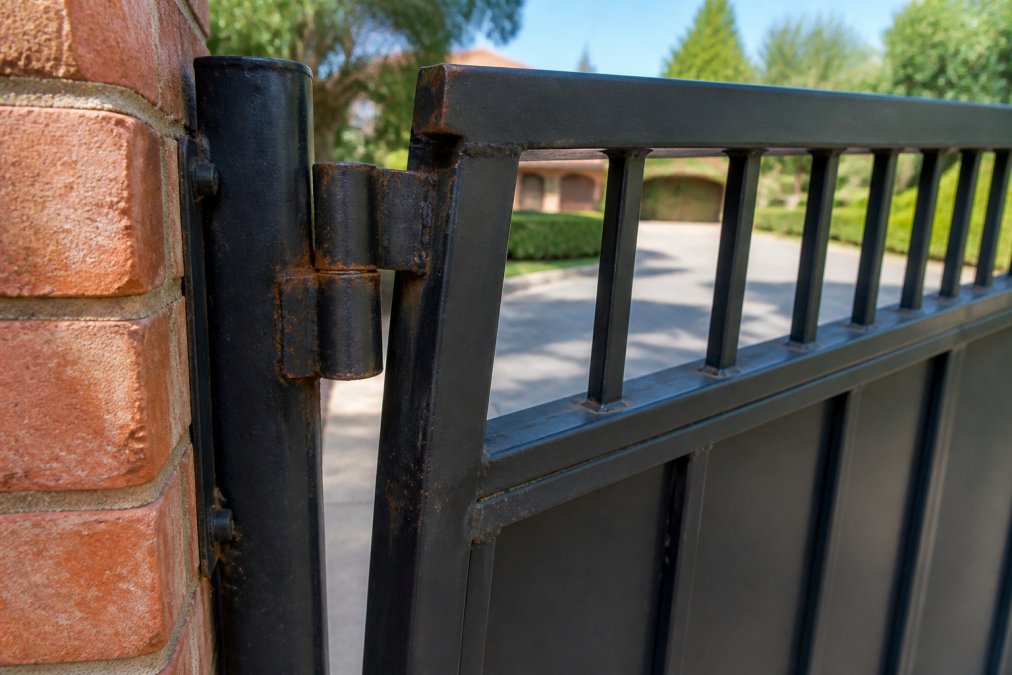
Swing gates fail at the hinges; slide gates fail at the rollers and gate track. Gate hinges carry the full weight of the panel through thousands of cycles. When hinges wear, the gate sags, drags on the ground, and puts lateral stress on the operator. Slide gates depend on rollers running cleanly inside a gate track. Debris accumulation, track warping, and roller wear cause the gate to bind, stall, or jump the track entirely. Gate alignment problems are often the first visible symptom of a larger mechanical issue.
Electrical and Opener Failures
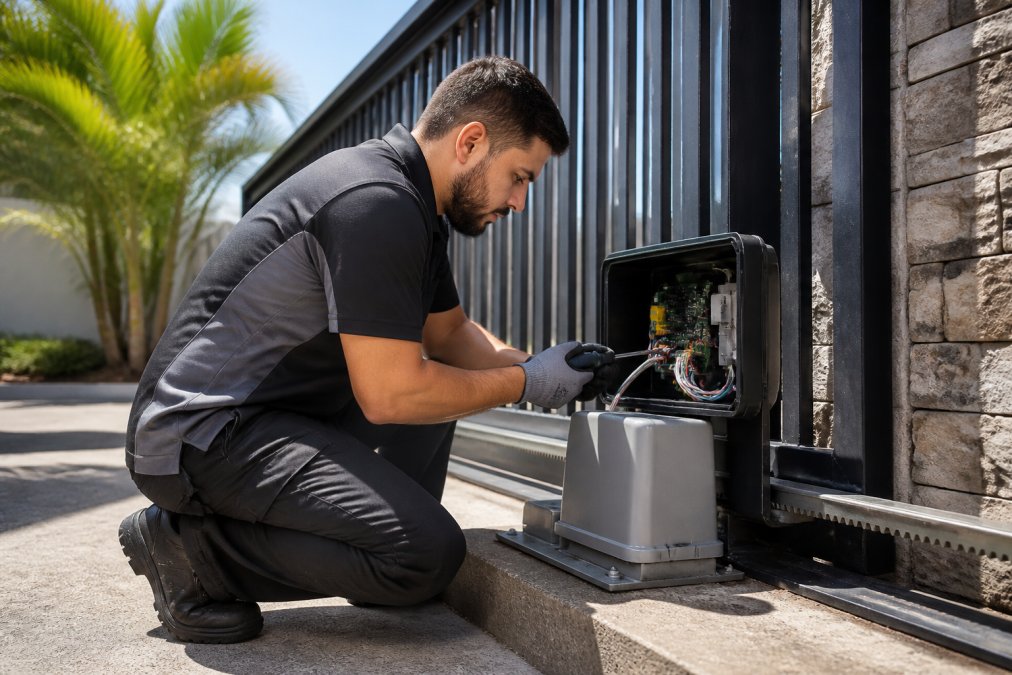
Automatic gate opener failures are the most common service call. The gate operator contains a motor, gearbox, circuit board, and power supply, any of which can fail independently. Common failure points include circuit board failures from power surges, gate motor burnout from operating a mechanically binding gate, remote transmitter pairing loss after power interruptions, photo eye misalignment, and gate loop detector failure. A gate that reverses immediately after closing usually has a photo eye obstruction or misalignment. A gate that operates intermittently often has a failing circuit board or corroded connection.
Automatic Gate Troubleshooting Guide
Automatic gate troubleshooting is the process of systematically identifying the source of a gate malfunction by testing components in a logical sequence. Most gate operators display error codes on a built-in LED panel that correspond to specific failure types.
Reading Error Codes on Your Gate Operator
Every major gate operator manufacturer documents error codes in the installation manual. The most useful thing you can do before calling for service is to note the exact error code your gate operator is displaying and write down what the gate was doing when the fault occurred. This information cuts diagnostic time significantly.
As documented in UL 325 standard for door, driveway, and gate operators, gate operators sold in the United States must include specific safety features and fault indication systems.
DIY Checks vs. When to Call a Professional
Safe DIY checks:
- Clearing debris from the gate track and roller path
- Wiping photo eye lenses with a clean cloth
- Checking that the remote transmitter battery is charged
- Verifying the gate operator power supply is live at the outlet
- Inspecting gate hinges for visible rust or looseness
Call a professional for:
- Any work involving the circuit board or internal wiring
- Gate motor removal or gearbox repair
- Welding services for structural gate repairs
- Resetting or reprogramming the gate loop detector
- Any issue involving the intercom system or access control panel
Residential Gate Maintenance Checklist
A residential gate maintenance checklist is the single most effective tool for extending gate system life and avoiding emergency repair costs. Most gate failures are preventable with routine inspection.
| Task | Frequency | Notes |
|---|---|---|
| Lubricate gate hinges and rollers | Every 3 months | Use a silicone or lithium-based lubricant, not WD-40 |
| Clean gate track and remove debris | Monthly | Pay attention after storms or heavy wind events |
| Test photo eyes and safety sensors | Monthly | Wave an object through the beam to confirm reversal |
| Inspect gate panel for rust or damage | Every 6 months | Address surface rust before it reaches structural steel |
| Check remote transmitter function | Monthly | Replace batteries annually as a baseline |
| Inspect gate hinges for wear or sag | Every 6 months | Tighten loose hardware before it causes misalignment |
| Test gate loop detector function | Every 6 months | Drive a vehicle over the loop and confirm gate response |
| Inspect intercom and access control wiring | Annually | Look for corrosion at connection points |
| Check gate operator mounting hardware | Annually | Vibration loosens fasteners over time |
| Test manual release mechanism | Every 6 months | Ensure gate can be opened manually during power outages |
Preventative maintenance typically takes under an hour and requires no specialized tools for inspection tasks.
Cost of Driveway Gate Replacement: What Affects Your Price
The cost of driveway gate replacement varies based on factors that interact with each other in ways that make generic price estimates misleading. The primary cost factors include:
Gate type and size. Slide gates require a gate track, rollers, and a different operator than swing gates. Larger and heavier gate panels require more powerful gate motors.
Gate material. Wrought iron, aluminum, steel, and wood all carry different material costs and maintenance profiles. Custom gate fabrication typically costs more upfront but requires less frequent replacement.
Operator and automation level. A basic residential gate operator costs less than a commercial-grade unit with advanced access control integration. Intercom systems, keypad entry, and vehicle loop detectors add to the total.
Site conditions. A level driveway with a straight gate track run is straightforward. A sloped driveway, curved approach, or existing concrete that needs to be cut for loop detector installation adds complexity and labor time.
According to the National Association of Home Builders' residential cost guidance, homeowners consistently underestimate the labor component of gate and fencing installation, which typically represents a substantial portion of total project cost.
The Residential Gate Repair and Replacement Process
The residential gate repair and replacement process at OCAS Residential follows a structured sequence designed to eliminate guesswork and deliver a system that operates correctly from day one.
Step 1: Site Assessment and Free Estimate
The site assessment is where the actual scope of work gets established. A technician evaluates the gate opening width, driveway slope, condition of existing posts and concrete, available power supply, and current state of any access control or intercom system. This assessment determines whether repair is viable or whether replacement is the correct recommendation.
Step 2: Gate Hardware and Component Selection
Component selection follows directly from the site assessment. The gate operator must be matched to the gate panel weight and frequency of use. Gate hardware selection covers hinges, rollers, the gate track for slide gates, and any access control components including remote transmitters, keypads, and intercom systems.
Step 3: Installation, Alignment, and Safety Testing
Installation begins with structural work: setting or verifying post positions, pouring concrete if needed, and installing the gate track or hinge hardware. The gate panel is then hung or set on the track and the operator is mounted. Gate alignment is the most detail-sensitive part of the process. Safety testing covers photo eye alignment, gate loop detector function, obstacle detection, and manual release operation. A gate system that passes safety testing meets the requirements established under UL 325 safety standard for residential gate operators.
Access Control, Security, and Custom Gate Options
A gate without a reliable access control system is only half a security solution. Remote transmitter systems are the baseline for most residential gates and provide reliable, low-maintenance operation. Keypad entry adds code-based access that works without a physical transmitter. Intercom systems allow two-way communication between a visitor and the homeowner, with video intercoms offering smartphone integration. Gate loop detectors installed in the driveway surface detect vehicle presence and trigger the gate to open or prevent it from closing on a vehicle.
Custom gate fabrication allows the gate panel to match the architectural character of the property. A custom-fabricated gate built to correct structural specifications will outperform a stock gate in both longevity and appearance. Security gates serve a dual function: they control access and signal that access is managed, providing a meaningful deterrent effect for properties where perimeter security matters.
Keeping a residential gate system operational requires the right diagnosis at the start. Most gate failures are predictable, and most emergency repairs could have been avoided with routine maintenance and timely component replacement. OCAS Residential handles the full scope of residential gate repair and replacement, from site assessment through custom fabrication, operator installation, and access control integration. Schedule a free estimate with the OCAS Residential team and get a clear picture of exactly what your gate system needs.
Frequently Asked Questions
Q: What are the signs that a gate needs replacement rather than repair?
A: A gate typically needs replacement when structural damage is widespread, such as a severely bent frame, extensive rust through the metal, or a gate panel that has been struck by a vehicle. Recurring failures on the same component, like a gate motor or circuit board that keeps failing, also signal it is time to replace rather than patch. Because these variables vary widely by property, the best approach is to request a free estimate so pricing reflects your specific setup.
Q: What are the most common mechanical issues with automatic gates?
A: The most frequent problems with automatic gate openers include worn gate rollers on slide gates, misaligned or damaged gate hinges on swing gates, failed safety sensors or photo eyes that prevent the gate from closing, and a faulty remote transmitter or circuit board. Gate track debris and damaged loop detectors are also common culprits. Most of these issues are caught early with routine preventative maintenance before they cause a full system failure.
Q: How much does driveway gate replacement cost?
A: The cost of driveway gate replacement depends on gate type (swing vs. slide), material (wrought iron, aluminum, wood, or steel), gate width, and whether a new automatic gate opener and access control system are included. Custom gate fabrication, welding services, and any needed concrete work add to the total. Because these variables vary widely by property, the best approach is to request a free estimate so pricing reflects your specific setup.
Q: Is it safe to attempt residential gate repair yourself?
A: Minor tasks like cleaning photo eyes, clearing gate track debris, or replacing a remote transmitter battery are generally safe for homeowners. However, work involving the gate motor, gearbox, circuit board, high-tension springs on swing gates, or any electrical wiring should be handled by a licensed professional. Improperly repaired gate operators can fail without warning and cause serious injury. UL 325 sets the safety standard for residential gate operator installations in the United States.
This article was written using GrandRanker