 ultimate-guide
Professional Grading Services: Complete Guide
Table of Contents
- What Is Site Grading and Why It Matters for Residential Properties
- Drainage Solutions for Residential Properties
- Site Preparation and Debris Removal for New Construction
- Residential Land Leveling Costs and What Affects Pricing
- Grading for Equestrian Properties and Large Acreage
- Permitting and Compliance for Grading Projects
- Choosing the Right Professional Grading Contractor
- Frequently Asked Questions
Last Updated: September 1, 2026
What Is Site Grading and Why It Matters for Residential Properties
Site grading is the process of reshaping and leveling land to achieve proper drainage, foundation stability, and usable outdoor space. It's about creating the right topography so water flows away from your home, your foundation stays protected, and your property functions as intended.
Most homeowners don't think about grading until problems appear: standing water after rain, soil shifting around the foundation, or stalled construction. Professional grading ensures your property is built on solid ground, literally and figuratively. The difference between amateur and professional site preparation is precision: proper equipment, experience, and understanding of local soil conditions allow contractors to grade to exact specifications.
Drainage Solutions for Residential Properties
Proper drainage is the single most important outcome of professional grading. Water that pools in your yard weakens your foundation, kills landscaping, creates mosquito breeding grounds, and eventually causes structural damage. Drainage design in Southwest Ranches is not one-size-fits-all, the unique soil composition of this area fundamentally changes how water moves and how your grading plan must be engineered.
Understanding Southwest Ranches Soil Composition and Its Impact on Drainage
Southwest Ranches sits in an area with highly variable soil composition. The subsurface typically consists of layers of muck (organic soil with high water retention), sand, and limestone. This layering creates drainage challenges that generic grading advice doesn't address.
Muck soil, common in upper layers of many Southwest Ranches properties, retains water like a sponge and has low permeability. Sand layers below drain quickly but can create a perched water table, water sits on top of the sand layer because it can't penetrate the muck above. Limestone bedrock, found at varying depths, is impermeable and forces water laterally rather than downward.
This soil profile means standard residential drainage slopes may not be sufficient. A professional grading contractor working in Southwest Ranches must account for these soil layers by creating steeper slopes to move water across muck, installing French drains or subsurface drainage systems to intercept perched water, designing swales that concentrate water, and sometimes removing or replacing upper muck layers in critical areas.
How Proper Grading Prevents Standing Water in Muck-Based Soils
Standing water in Southwest Ranches properties often stems from the muck layer's water-holding capacity. Even with proper surface slope, water can accumulate in the muck and create boggy conditions that persist for days or weeks after rain.
The solution requires understanding the soil profile beneath your property. A competent grading contractor will assess soil composition through test pits, design slopes that account for soil permeability, install subsurface drainage where needed, and create designated drainage zones where water concentrates and can be managed without creating permanent wet spots. For equestrian properties and pastures, this is especially critical, a paddock built on muck without proper drainage becomes unusable in wet weather.
Slope Management and Erosion Control in Sandy and Muck Soils
Slopes that are too steep cause erosion, but in Southwest Ranches, the erosion pattern differs from areas with clay or rocky soil. Muck erodes differently than sand, and the combination creates unique challenges.
Muck is soft and easily displaced by water flow. A slope cut into muck can slump or erode rapidly if not stabilized. Sand can be steep without slumping but is prone to surface erosion and gullying. Professional grading contractors use soil-specific techniques: gentler slope angles (1:3 or 1:4 ratio) on muck with rapid vegetation establishment, steeper angles (1:2 ratio) on sand with surface erosion control, and extra attention at transitions between soil types where erosion often initiates.
Drainage Design for Equestrian Properties in Muck Soils
Equestrian properties face particular drainage challenges in Southwest Ranches because paddocks and arenas must remain usable in wet weather, yet muck's water-holding capacity works against this goal.
A properly graded paddock requires a subsurface drainage layer of sand or gravel beneath the surface, perimeter swales to intercept water and direct it away, a slight slope (1:50 or less) that moves surface water to swales, and sand or engineered footing placed over the drainage layer. Without this layered approach, paddocks become unusable within days of heavy rain.
| Soil Condition | Drainage Challenge | Professional Solution | Expected Outcome |
|---|---|---|---|
| Muck layer with high water table | Standing water persists for weeks | Subsurface drainage + steeper slopes | Water moves through muck layer to designated drainage areas |
| Sand over muck (perched water) | Water trapped on sand layer | French drain or perforated pipe intercepts water | Water directed to swales, no saturation |
| Muck paddock | Unusable in wet weather | Subsurface drainage layer + footing material | Paddock remains usable year-round |
| Transition zones (muck to sand) | Erosion and slumping | Slope angle matched to soil type + vegetation | Stable slopes that shed water without damage |
Site Preparation and Debris Removal for New Construction
New construction requires precise site preparation that accounts for where your home will sit, where utilities will run, and how water will move across the property.
Excavation and Subgrade Preparation
Subgrade preparation is the foundation of everything that comes after. Before any building, driveway, or landscaping goes in, the subgrade, the layer of earth immediately beneath the final surface, must be properly prepared and compacted.
This involves excavating to the correct depth, removing unsuitable soil, adding engineered fill if needed, and compacting everything to specification. Inadequate compaction leads to settling, cracking, and structural problems years down the road. Professional excavation contractors use compaction testing to verify that each layer meets specifications and understand soil mechanics and how different soil types behave under load.
Land Clearing and Site Accessibility
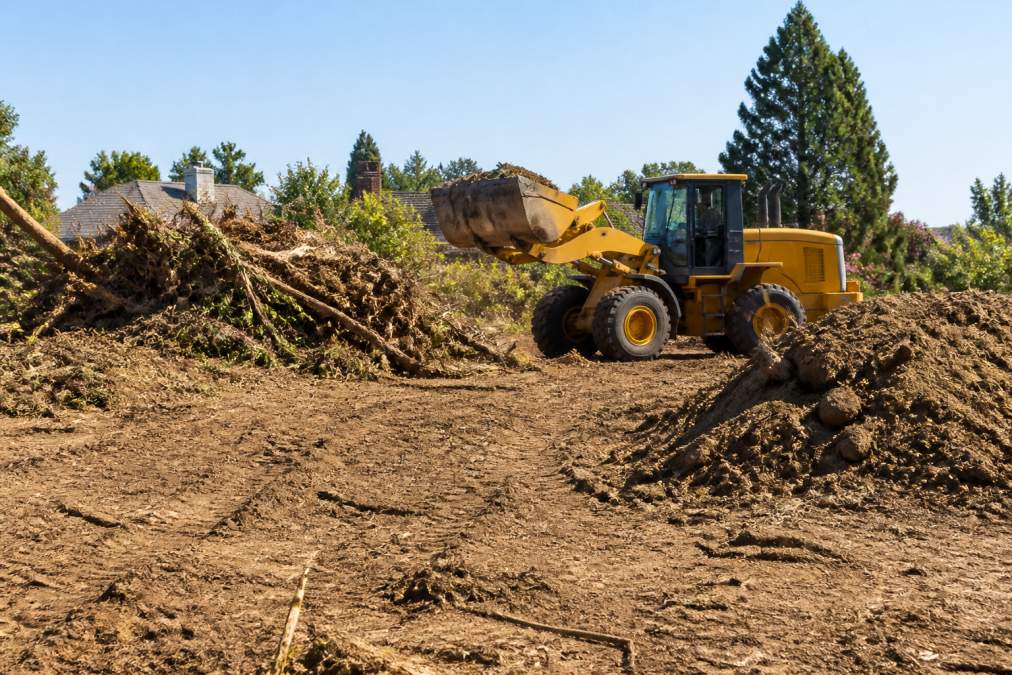
Before grading can begin, the site must be cleared of vegetation, debris, and obstacles. Land clearing requires careful removal of vegetation, grinding or hauling of debris, and site cleanup. Stumps need to be removed below grade so they don't interfere with grading or future construction.
Site accessibility matters too. Your contractor needs clear access for heavy machinery. Professional site preparation includes assessing access routes and sometimes creating temporary roads to get equipment where it needs to be. OCAS Residential handles complete site clearing and debris removal, ensuring your property is ready for the next phase of work.
Residential Land Leveling Costs and What Affects Pricing
Land leveling costs vary dramatically based on property size, soil conditions, equipment needed, and complexity of the grading plan. Property size is obvious, but soil type matters significantly, sandy soil is easier to move than clay or rocky soil. Existing vegetation density, site accessibility, and how much material needs to be moved all affect cost.
The distance material must be hauled is another major factor. If you're removing fill dirt, where does it go? Hauling it off-site costs more than redistributing it on your property. Equipment requirements vary too, a small residential lot might need just a compact track loader, while a large property might require excavators and dozers working in coordination.
Rather than guessing at costs, get a professional assessment. A qualified grading contractor will evaluate your property, understand your goals, and provide an accurate quote based on actual site conditions. OCAS Residential offers free estimates so you know exactly what you're investing in before work begins.
Grading for Equestrian Properties and Large Acreage
Equestrian properties have unique grading requirements. Paddocks need to be level and well-drained. Riding arenas require specific slopes and footing preparation. Pastures need drainage swales to manage water without creating boggy areas.
Large acreage properties present their own challenges with more complex topography, potentially multiple drainage zones, and the need to balance natural landscape preservation with functional property development. Professional grading for equestrian use requires understanding how horses use the land. A riding arena needs firm, level footing with proper drainage underneath. Paddocks need to shed water while remaining usable in wet weather.
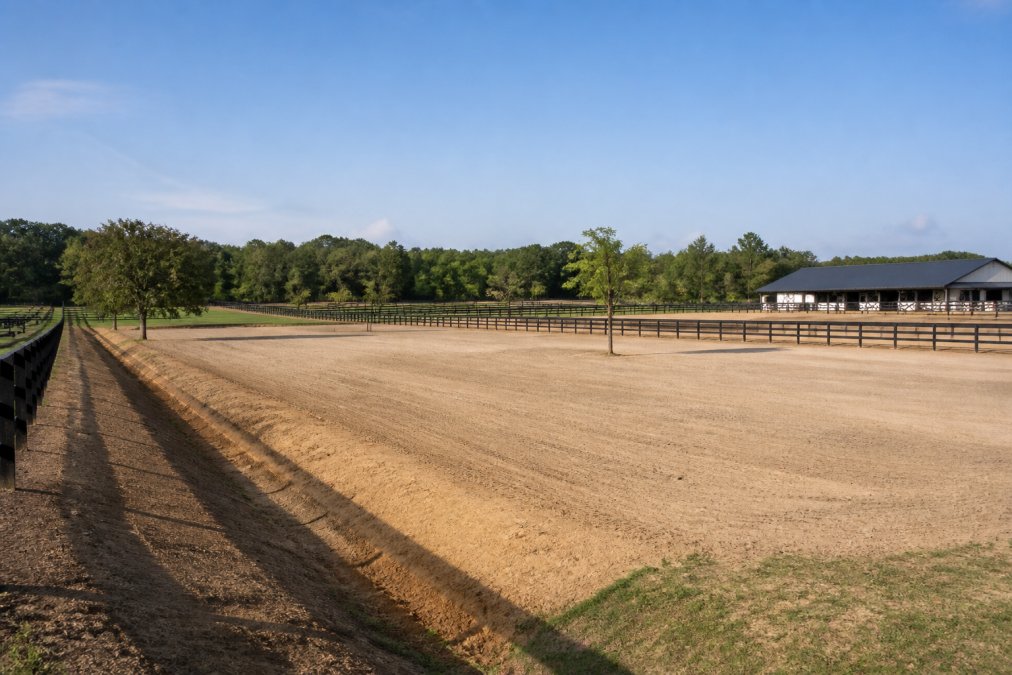
The investment in proper grading for equestrian properties pays dividends in usability, horse health, and property longevity. Poorly drained paddocks become unusable in wet weather. Level arenas prevent injuries. Properties that drain well maintain their value and functionality for years.
Permitting and Compliance for Grading Projects
Grading projects in Broward County are subject to multiple permitting layers. Understanding which ones apply to your property is critical to avoiding delays and fines.
Broward County Grading Permit Requirements
Broward County requires a grading permit for any land disturbance project involving excavation, fill placement, or site preparation on properties larger than one-quarter acre or in designated environmental areas (broward.org). To obtain a grading permit, you'll need to submit a site plan showing existing and proposed grades with elevations marked, an erosion and sediment control plan, stormwater management details if the project disturbs more than one acre, and environmental assessment if the property is near wetlands or other protected habitat.
The Broward County Environmental Resource Management division reviews these applications. Processing typically takes 10-15 business days for standard residential projects, longer if environmental concerns are flagged (broward.org).
Stormwater and Environmental Regulations
Broward County's stormwater regulations require that grading projects maintain or improve stormwater runoff quality. For residential properties, this often translates to erosion control measures during construction, swales or retention areas designed to slow runoff, and vegetated buffers if your property is near surface water.
If your property is within 500 feet of a wetland or mangrove area, additional environmental review is required (broward.org). Southwest Ranches has significant wetland areas, so many properties trigger this requirement. The review process can add 3-4 weeks to permitting.
Timeline and Cost Implications
Permitting delays directly impact project cost. A typical residential grading permit takes 2-3 weeks from application to approval, assuming no environmental flags or incomplete submissions. Permit fees in Broward County are based on project cost. A residential grading project valued at $5,000-$25,000 typically costs $200-$500 in permit fees.
The real cost of permitting delays is schedule impact. If your contractor has equipment scheduled and the permit is delayed, you're paying for idle time. Working with a contractor experienced in Broward County permitting is valuable, they know how to prepare applications correctly the first time and anticipate which projects will trigger environmental review.
Working with Your Contractor on Permitting
Your grading contractor should handle permitting as part of their service. They prepare the site plan, coordinate with ERMD, and manage the approval process. Some contractors include permitting in their quote; others charge a separate fee. Clarify this upfront.
A contractor familiar with Southwest Ranches properties knows which projects typically require environmental review. They've worked with ERMD staff, understand their expectations, and know how to submit applications that get approved on the first review cycle.
Choosing the Right Professional Grading Contractor
Not all grading contractors deliver the same quality. The difference between a competent contractor and an excellent one shows up in precision, attention to drainage, equipment quality, and how they handle unexpected site conditions.
Look for contractors with specific experience in residential grading. Ask about their approach to drainage design and whether they understand how water moves across your specific property type. Equipment matters, modern grading requires proper machinery and compaction testing equipment. References from recent residential projects in your area matter. Have they worked on similar properties? Can they show before-and-after results?
OCAS Residential understands Southwest Ranches properties, local soil conditions, and drainage requirements specific to this area. Our approach combines precision grading with effective drainage solutions, ensuring your property is prepared right.
Professional grading is the foundation of a functional, well-drained residential property. Whether you're preparing for new construction, addressing drainage problems, or developing equestrian acreage, the right grading contractor makes the difference between a property that works and one that creates problems for years.
OCAS Residential specializes in precision grading, effective drainage solutions, and complete site preparation for residential properties. Our team handles everything from initial site assessment through final cleanup, ensuring your property is properly prepared. Schedule a free estimate today and discover how professional grading transforms your property.
Frequently Asked Questions
Why is professional site grading important for residential properties?
Professional grading establishes proper drainage patterns, prevents standing water and erosion, and creates a stable foundation for construction or landscaping. Poor grading leads to foundation damage, basement flooding, and landscape deterioration. A professional grading contractor uses site surveys and topography analysis to design slopes that direct water away from structures and toward proper drainage points, protecting your investment long-term.
How does proper grading prevent drainage issues on my property?
Proper grading creates slopes that direct stormwater runoff away from your home and toward drainage engineering solutions like swales, catch basins, or French drains. By establishing correct slope management and subgrade preparation, water flows naturally instead of pooling near foundations or in low areas. This reduces erosion, prevents standing water, and protects landscape plantings from water damage.
What factors affect residential land leveling costs?
Pricing depends on property size, soil composition, existing topography, equipment required, debris removal scope, and site accessibility. Properties with poor drainage, dense vegetation, or significant elevation changes require more extensive excavation and earthmoving. Contact OCAS Residential for a free estimate, they assess your specific site conditions and provide accurate pricing based on your property's unique needs.
Do I need a permit for land grading in this area?
Most residential grading projects in Broward County require permits, especially if work affects stormwater runoff, involves fill dirt placement, or exceeds certain acreage thresholds. Your grading contractor should handle permitting coordination with local authorities. OCAS Residential manages the permitting process, ensuring your project complies with local regulations and avoids costly delays or fines.
This article was written using GrandRanker