 how-to
Preventing Soil Erosion on Residential Lots: A How-To Guide
Table of Contents
- Why Preventing Soil Erosion Matters for Your Property
- Step 1: Assess Your Erosion Risk and Soil Composition
- Step 2: Install Drainage Systems and Manage Surface Runoff
- Step 3: Use Mulch and Ground Cover for Soil Protection
- Step 4: Plant Vegetation and Stabilize Slopes
- How to Fix Backyard Muddy Spots and High-Traffic Areas
- When to Hire Professional Residential Land Grading Services
- Maintenance Schedule to Keep Erosion Under Control
- Frequently Asked Questions
Last Updated: September 18, 2026
Why Preventing Soil Erosion Matters for Your Property
Soil erosion damages foundations, destroys landscaping, and creates costly drainage problems.
Preventing soil erosion protects property value. Lost topsoil reduces vegetation health, water pooling causes foundation cracks and basement seepage, and sediment runoff affects water quality and code compliance.
The good news: you can stop erosion before it becomes expensive. This guide covers the practical steps to stabilize your soil, manage water flow, and restore problem areas on your residential lot.
Step 1: Assess Your Erosion Risk and Soil Composition
Different soil types erode at different rates, clay holds better than sandy soil, and slopes facing heavy rain erode faster than flat areas.
Identify erosion signs on your lot
Walk your property after heavy rain and look for gullies, bare patches, sediment piles at slope bases, soil compaction in high-traffic areas, water pooling, and exposed subsoil.
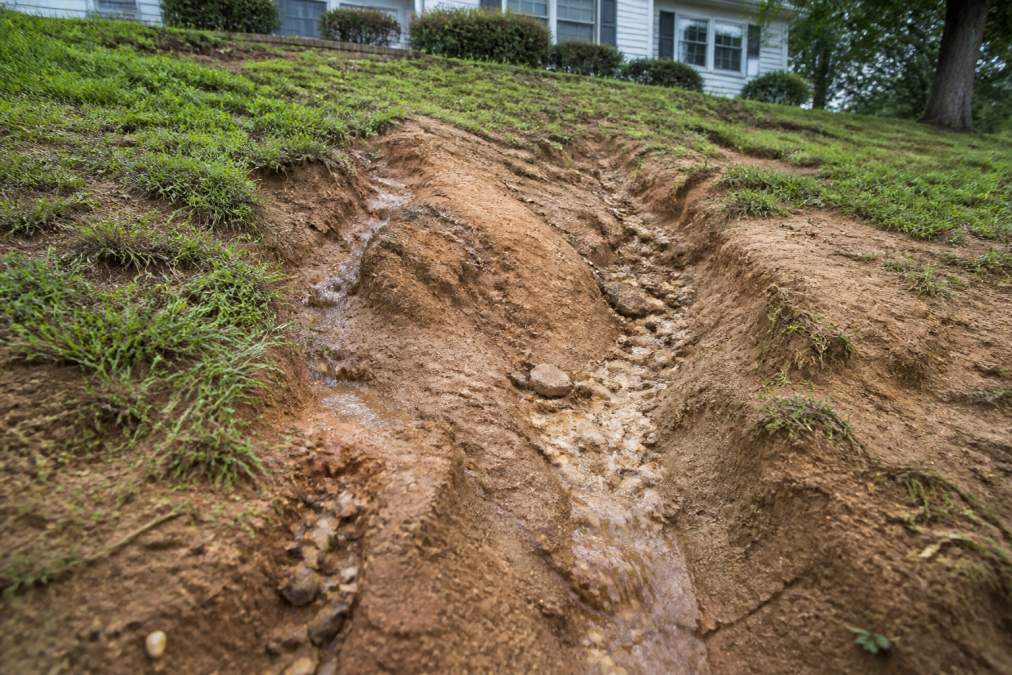
Mark problem zones on a sketch to prioritize attention. High-traffic areas compact soil faster and erode more easily. Slopes steeper than 3:1 ratio are especially vulnerable.
Test your soil and understand drainage patterns
Dig a 12-inch hole in your problem area, fill with water, and observe drainage speed to assess soil composition.
- Fast drainage (drains in under 1 hour): Sandy or gravelly soil. Prone to erosion. Needs mulch or ground cover urgently.
- Moderate drainage (drains in 1-3 hours): Loamy soil. Better structure. Still benefits from protective cover.
- Slow drainage (drains in over 3 hours): Clay-heavy soil. Water pools easily. Needs improved drainage systems.
Observe water flow patterns during rain to identify where drainage solutions are needed first.
Step 2: Install Drainage Systems and Manage Surface Runoff
Water management is essential for preventing soil erosion. Controlling water flow prevents particles from washing downhill.
Grade your landscape to direct water flow
Proper grading directs water away from structures. Slope ground away from foundations at least 6 inches over 10 feet, create gentle slopes (2-5% grade), and direct runoff toward storm drains or swales.
Add soil to create gentle slopes away from foundations and build shallow swales to direct water downhill without eroding slopes.
Add French drains and catch basins
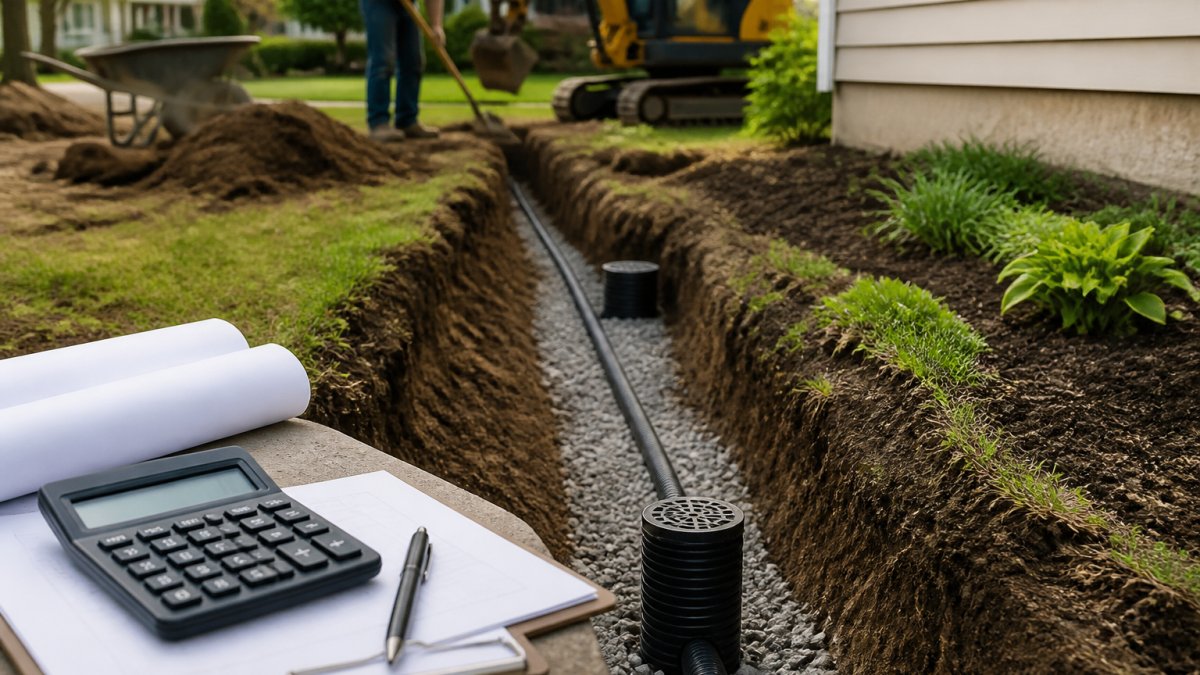
French drains are buried perforated pipes surrounded by gravel that intercept groundwater. Install them at slope bases, along retaining walls, under standing water areas, and behind swales.
Catch basins collect surface runoff at low points and are especially useful in high-traffic areas.
Both systems require proper outlet design away from homes and protected areas. Check local regulations before installation.
Step 3: Use Mulch and Ground Cover for Soil Protection
Vegetation and mulch protect soil from rain impact and slow water movement, preventing most residential erosion.
Apply mulch to bare areas
Mulch absorbs rain energy and improves soil moisture retention. Apply 2-3 inches around trees, under downspouts, on slopes, and in high-traffic areas.
Use 2-3 inches of mulch, keeping it 6 inches from tree trunks to prevent disease.
Mulch types: wood chips (affordable, improves soil), bark mulch (lasts longer), straw (temporary for new seeding), and compost (adds nutrients).
Mulch works best combined with ground cover plants. As plants establish, their roots stabilize soil. Mulch provides temporary protection while plants grow.
Best ground cover for erosion control
Living ground cover stops erosion permanently by holding soil in place with root systems and slowing water movement.
Choose plants by conditions: shade (creeping phlox, ajuga, vinca), sun (sedum, creeping juniper), wet areas (sedge, sweet flag), and steep slopes (native grasses and shrubs).
Native plants work best, they're adapted to local conditions, require less maintenance, and establish faster.
Plant ground cover densely with closer spacing for faster coverage and erosion protection while plants establish.
Step 4: Plant Vegetation and Stabilize Slopes
Vegetation is the most effective long-term erosion control, roots bind soil and slow water movement.
Choose native plants for slope stabilization
Native plants develop deep root systems that stabilize slopes. Select by conditions: steep sunny slopes (ornamental grasses, shrubs), shaded slopes (groundcovers), wet slopes (sedges), and compacted slopes (deep-rooted perennials).
Plant in clusters 18-24 inches apart for quick coverage and faster root network establishment. Thin after 2-3 years if needed.
Install retaining walls and terracing on steep areas
Retaining walls work best for slopes steeper than 2:1 ratio, areas needing flat space, high-erosion zones, and slopes taller than 4 feet.
Walls over 4 feet require professional design. Terracing creates level steps that reduce slope angle and prevent water concentration.
Install French drains and gravel backfill behind retaining walls to prevent water pressure buildup.
How to Fix Backyard Muddy Spots and High-Traffic Areas
Muddy areas and compacted zones need targeted fixes addressing water and foot traffic.
Reinforce compacted areas with permeable surfaces
Permeable surfaces allow water infiltration while supporting foot traffic. Options: permeable pavers, mulch pathways (4-6 inches), gravel paths, or stepping stones with vegetation between.
Combine permeable surfaces with ground cover to protect soil while allowing water infiltration.
Create drainage pathways in problem zones
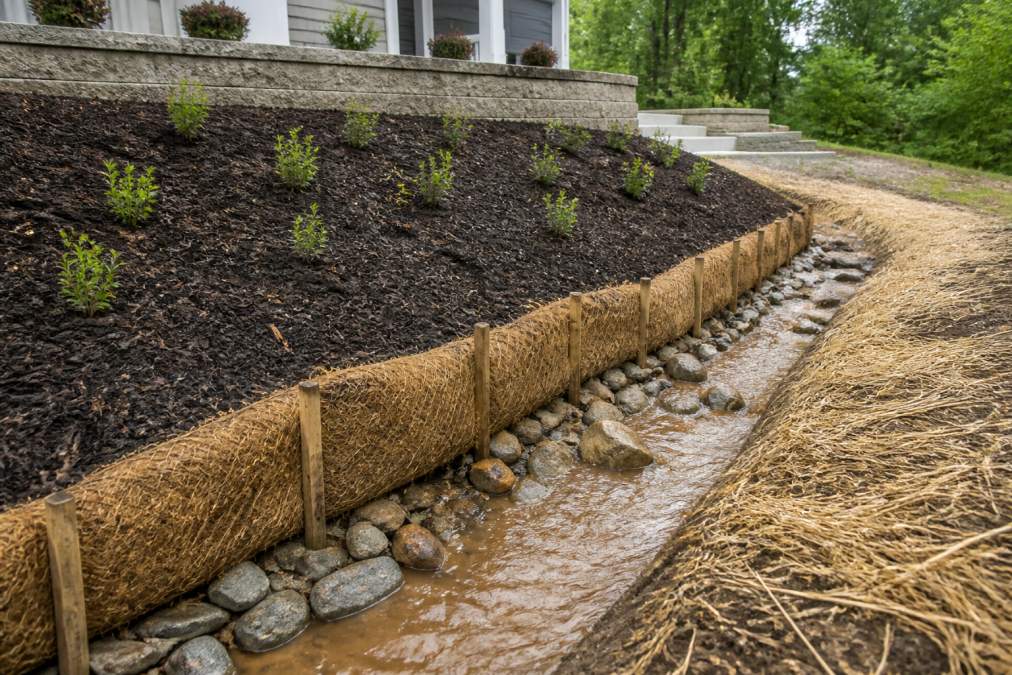
Build shallow swales (6-12 inches deep) along low points, line with geotextile fabric, fill with gravel or water-tolerant plants, and slope gently (2-3%) toward drainage outlets.
Swales slow water movement and allow infiltration while creating attractive landscape features.
When to Hire Professional Residential Land Grading Services
Knowing when to call professionals saves money and prevents costly mistakes.
DIY vs. professional intervention: Know your limits
DIY: mulch, ground cover, simple French drains, small retaining walls, swales, and minor gully repair. Professional: steep slopes, walls over 4 feet, multi-property drainage, major grading, unstable soil, and permitted projects.
Professional grading ensures proper slope, drainage design, and compaction for lasting results.
Permitting and local regulations for erosion control
Many jurisdictions require permits for slope modifications, retaining walls, drainage systems, and stormwater management. Check local building departments before starting major work.
Professional contractors handle permitting and ensure work meets code, protecting you from fines.
Maintenance Schedule to Keep Erosion Under Control
Erosion control isn't a one-time fix. Regular maintenance keeps systems working and prevents problems from returning.
| Task | Frequency | What to Check |
|---|---|---|
| Inspect for new erosion signs | Monthly during rain season | Gullies, bare spots, water pooling |
| Reapply mulch | Annually (spring) | Mulch depth 2-3 inches, top-up as needed |
| Clear drainage outlets | Quarterly | Drains, swales, and downspouts free of debris |
| Trim vegetation | Annually (late fall/winter) | Plants healthy, not blocking drainage |
| Check retaining walls | Twice yearly | Cracks, bulging, water seepage |
| Repair bare spots | As needed | Replant or remulch areas where erosion appears |
Monthly inspections during rain season catch problems early. Walk your property after heavy rain to note new erosion signs.
Add fresh mulch each spring to maintain protection.
Clear downspout outlets, swales, and drain grates quarterly to prevent clogging and water pooling.
Trim plants annually to maintain health and prevent shading. Remove dead vegetation to maintain dense plant cover.
Preventing soil erosion protects your property investment and prevents expensive foundation and drainage damage. Start with assessment and drainage management, then add vegetation and protective surfaces. OCAS Residential provides professional land grading, drainage solutions, and site preparation to stabilize eroded areas and restore your property. OCAS Residential provides professional land grading, drainage solutions, and site preparation to stabilize eroded areas and restore your property. Schedule a free estimate to discuss your erosion control needs.
Frequently Asked Questions
What are the most effective ways to prevent soil erosion on a residential lot?
The most effective approach combines multiple strategies: install proper drainage systems to manage surface runoff, plant native vegetation and perennial ground cover to stabilize soil, apply mulch to bare areas, and grade your landscape to direct water away from structures. For steep slopes, terracing and retaining walls provide additional slope stabilization. The combination of vegetative buffers, drainage improvements, and landscape grading creates a comprehensive erosion control plan tailored to your property's specific needs.
What is the best ground cover for erosion control?
Native perennial plants and ground covers are ideal for preventing soil erosion because they establish deep root systems that hold soil in place. Species like creeping juniper, native sedges, and ornamental grasses work well depending on your region and sunlight. Ground covers should be low-maintenance and drought-tolerant once established. Combine living ground cover with mulch for maximum sediment control. Professional land grading services can help you select and install the right species for your lot's drainage patterns and soil composition.
How can I fix backyard muddy spots without major construction?
Start by identifying the source of water pooling in muddy areas. Add mulch to absorb moisture and reduce soil compaction. Install permeable surfaces like gravel or permeable pavers in high-traffic zones. Grade the area slightly to direct surface runoff away from the muddy spot. If the problem persists, consider adding a French drain or catch basin to redirect groundwater. For persistent standing water, professional grading can recontour your landscape to improve drainage and eliminate the conditions that create muddy areas.
When should I hire a professional for residential land grading services instead of doing it myself?
Hire professionals if your property has significant slope issues, persistent standing water despite DIY efforts, or if erosion is causing damage to structures or neighboring properties. Professional land grading is essential for new construction foundation preparation and when local regulations require an erosion control plan. Complex grading work, terracing, or retaining wall installation requires proper equipment and expertise to ensure lasting results and compliance with local codes.