 how-to
Hiring Site Prep for Small Yards: What to Know
Table of Contents
- What Does Site Prep for a Small Yard Actually Include?
- Land Clearing and Debris Removal: The First Step
- Excavation, Grading, and Soil Compaction
- Understanding the Cost of Residential Site Grading
- DIY vs. Hiring a Professional for Site Prep
- How to Verify a Site Prep Contractor Before You Hire
- Questions to Ask Before Signing a Site Prep Contract
- Frequently Asked Questions
Last Updated: September 5, 2026
What Does Site Prep for a Small Yard Actually Include?
Site prep is the process of clearing, leveling, and stabilizing your land so construction, landscaping, or drainage work has a solid foundation. At OCAS Residential, we’ve seen too many homeowners assume a small yard means a simple job, only to discover hidden stumps, poor soil, or buried debris that complicate the timeline.
The work breaks down into four core phases: land clearing and debris removal, excavation, grading and leveling, and soil compaction. The most common mistake homeowners make is skipping the assessment phase, so they don’t know what’s under the grass until the equipment arrives.
Land Clearing and Debris Removal: The First Step
Land clearing removes everything from the surface that would interfere with your project: trees, stumps, brush, old fencing, and construction debris. A small yard can still hold a surprising amount of buried waste, especially on lots that have seen multiple renovations.
The process starts with a site survey to identify hazards like utility lines and underground pipes. Always call your local utility marking service before excavation begins. Once the site is marked, the crew removes above-ground vegetation and grinds or pulls stumps below grade so they don’t cause future settling.
The Benefits of Professional Debris Removal
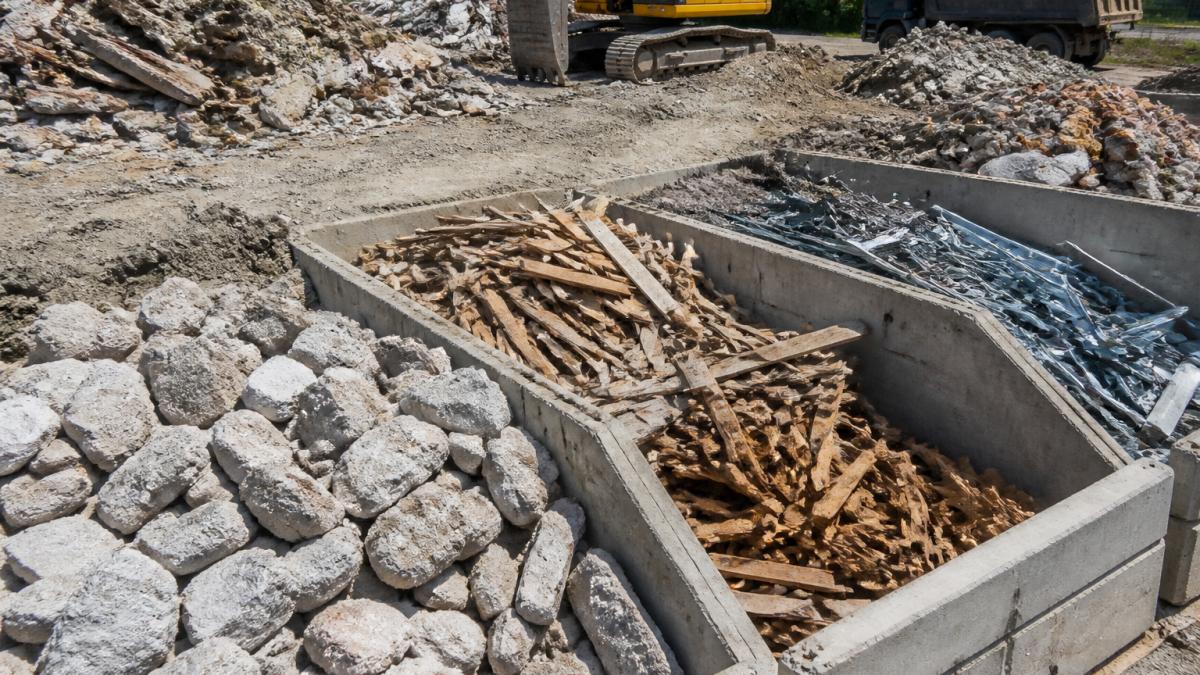
Professional debris removal goes beyond saving your back. A crew has the equipment to haul away materials that won’t fit in a standard dumpster, and they know how to dispose of them legally. Many municipalities have strict rules about where construction waste can go, and a contractor handles those permits and fees.
Professional crews also sort materials, separating recyclable aggregate and clean fill from true waste. Clean fill can often be reused on your property for grading, reducing new material you need to buy. A common mistake is letting a crew haul everything away, only to pay for clean soil to be brought back later.
Excavation, Grading, and Soil Compaction
Excavation, grading, and compaction are three distinct operations that work together to create a stable base, but each has failure modes amplified in small yards where space is tight.
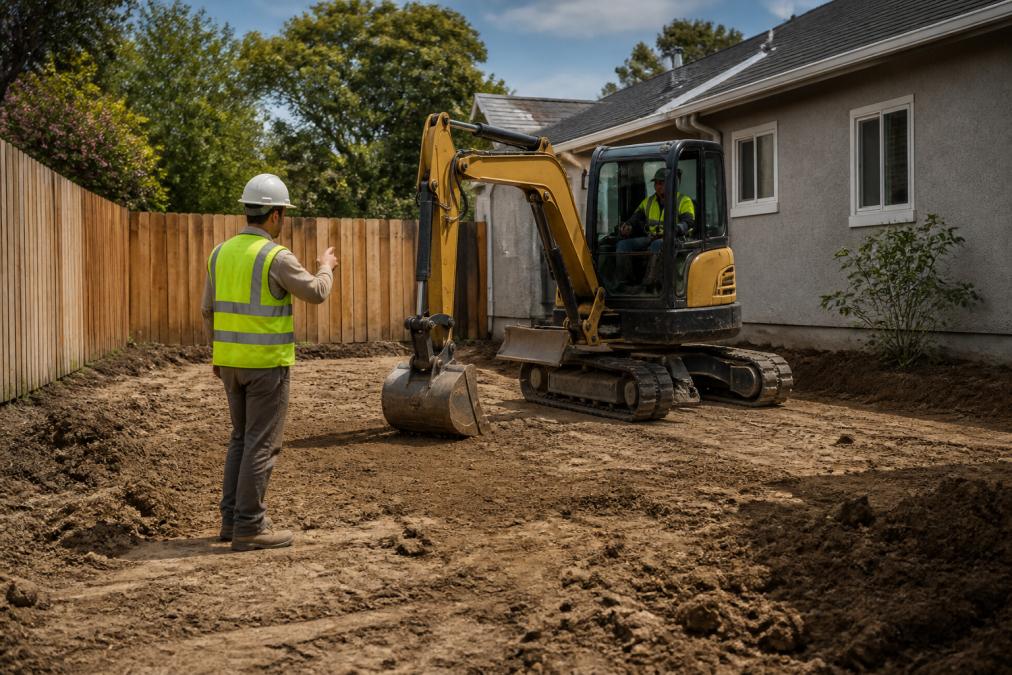
Excavation: Precision Over Power
Excavation for a small residential project typically involves removing 6 to 18 inches of topsoil to reach a stable sub-base. The critical mistake is assuming deeper is better: over-excavating creates a void requiring expensive fill, and if that fill isn't compacted properly, you've created a future sinkhole.
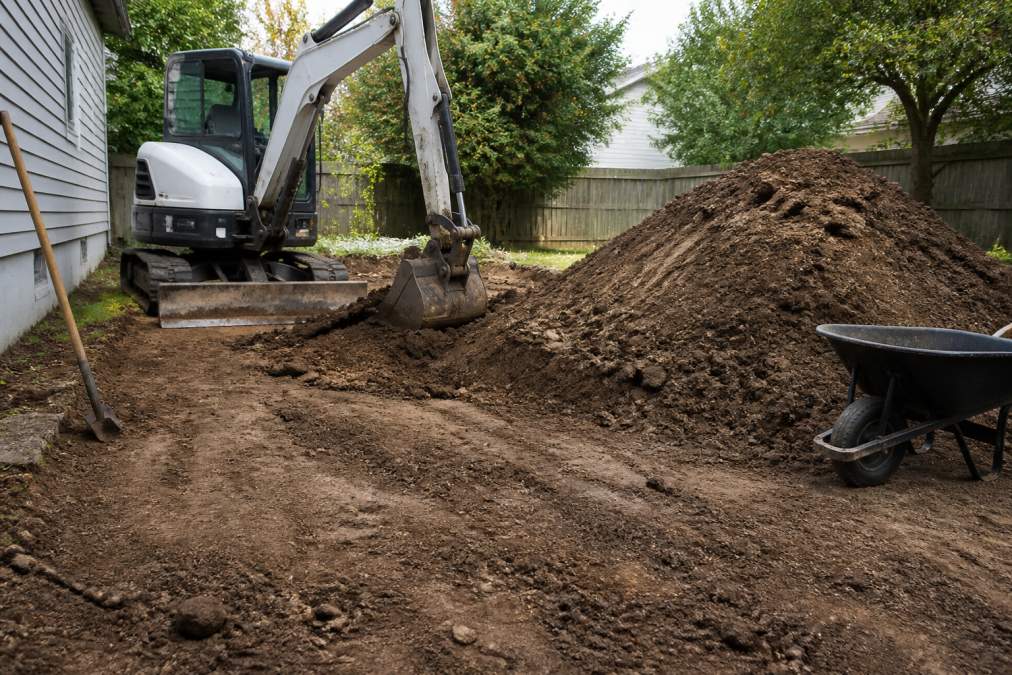
For small yards, a compact excavator (mini-excavator) in the 3.5 to 5 ton range is standard. These machines have a 12- to 18-inch bucket width for precise trenching around utilities and landscaping. A full-size excavator (20+ tons) is rarely appropriate, it will tear up your lawn, damage your driveway, and can't maneuver through a standard 36-inch gate.
Before excavation, the contractor should perform a private utility locate in addition to public marking. Public services only locate lines owned by the municipality or utility companies, they won't mark private irrigation lines, septic systems, or buried dog fences. A private locator costs $300 to $600, far less than the $2,000 to $5,000 to repair a cut buried electrical line (osha.gov).
Grading: The 1% Rule
Grading shapes the land to control water flow. The industry standard for residential drainage is a minimum slope of 1% (1 inch of drop per 8 feet of run) away from any structure, but most contractors aim for 2% to 3% on the first 10 feet (hud.gov). In a small yard, achieving this is challenging because you have less horizontal distance to work with.
A common pattern in small lots is a yard sloping toward the house, requiring the contractor to cut soil on the high side and fill on the low side to reverse the grade. This "cut and fill" requires a laser level or transit level; a contractor who eyeballs the slope with a string line is setting you up for standing water.
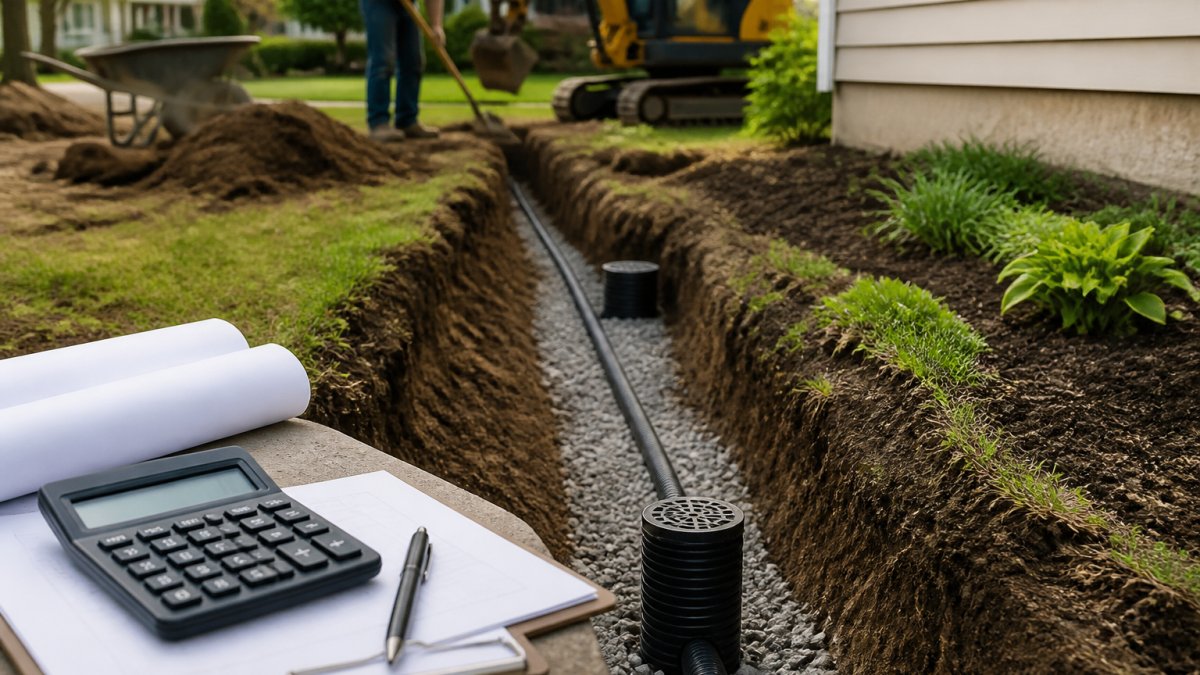
The direction of the slope matters as much as the percentage. Water should flow away from the foundation toward a storm drain, swale, or dry well. If your yard is landlocked with no natural outlet, the contractor will need to install a French drain or catch basin connected to a sump pump, a common scenario in small urban lots where neighbors are higher than you.
Soil Compaction: The Science of Density
Compaction increases soil density by removing air pockets through mechanical force. The goal is 95% of the soil's maximum dry density, as determined by the Standard Proctor test (ASTM D698), the benchmark for residential foundations and non-negotiable for any structure bearing weight (astm.org).
Compaction is only effective when the soil is at the right moisture content. Each soil type has an "optimum moisture content": around 10% for sandy soil, closer to 20% for clay. If too dry, particles won't bind; if too wet, water fills the voids and prevents densification.
A professional crew tests moisture content with a handheld meter and may add water or let the soil dry before compacting. They compact in lifts, layers of 6 to 8 inches, using a vibratory plate compactor for granular soils or a sheepsfoot roller for clay-heavy soils. Each lift is compacted separately.
How to Verify Compaction Quality
Don't take the contractor's word that the soil is compacted. Ask for test results, performed using one of two methods:
- Nuclear density gauge: A device that measures the density and moisture content of soil in real-time. The contractor places the gauge on the compacted surface and gets a reading within 60 seconds. Look for a result of 95% or higher of the Standard Proctor density.
- Sand cone test (ASTM D1556): A more labor-intensive method where the contractor digs a small hole, weighs the removed soil, and fills the hole with calibrated sand to measure the volume. This test is more accurate but takes 30-45 minutes per test.
A reputable contractor performs at least one test per 500 square feet of compacted area. If they can't provide results, or say "we've never needed to test for a job this small," that's a red flag. A test costs $150 to $300 and is the only way to verify your shed or patio won't sink next year.
Soil Stabilization Techniques for Problem Soils
If your soil test reveals expansive clay or poor load-bearing capacity, the contractor may need to stabilize the soil before compaction. Common techniques:
- Geotextile fabric: A permeable fabric placed between the native soil and new fill. It separates the layers, prevents the fill from sinking into the clay, and distributes the load. Cost is roughly $0.50 to $1.50 per square foot for materials.
- Crushed aggregate sub-base: A 4- to 6-inch layer of crushed stone (typically #57 stone or 3/4-inch minus) placed over the native soil and compacted. The angular edges of the stone interlock to create a stable base that won't shift. This is the standard approach for gravel pads and paver bases.
- Lime or cement stabilization: For heavily expansive clay, mixing in 3% to 5% lime or cement by weight can chemically alter the soil's properties, reducing its expansion potential. This is more common in commercial work but is occasionally used for residential projects with severe soil issues.
The Small-Yard Access Problem
One factor separating professional work from DIY is equipment access. In a small yard, a contractor might not get a full-size skid steer through your gate, requiring a smaller machine, more passes and longer labor time, but less damage to landscaping. Ask how they plan to access the site and whether they'll use plywood or track mats to protect your lawn. A professional has a plan before they arrive.
Understanding the Cost of Residential Site Grading
The cost of residential site grading varies widely based on your lot’s condition, the amount of soil moved, and local market rates for heavy equipment. Because every yard is different, there is no single "typical" price; the only way to get an accurate number is to have a contractor walk the property and provide a quote.
You're paying for equipment operation, labor, fuel, and disposal fees. A yard needing significant topsoil removal and backfill costs more than a flat lot needing light leveling. Site access also matters: if the crew can't get a full-size excavator through your gate, they may need smaller equipment or hand work, adding labor time.
Request itemized quotes from at least three contractors. The cheapest bid is not always the best value; a low price often means the crew plans to cut corners on compaction or drainage. Ask each to specify how many cubic yards of soil they expect to move and whether the quote includes hauling debris off-site.
DIY vs. Hiring a Professional for Site Prep
The decision to rent a machine or hire a crew isn't about budget or your back, it's about the physics of your soil and the square footage. Most homeowners can handle surface-level clearing, but the moment you need to change the grade or stabilize the ground, the math shifts dramatically.
The 500-Square-Foot Rule
If your project area is under 500 square feet and you're only removing sod or light brush, DIY with hand tools or a rented tiller is viable, a weekend of labor and $75 to $150 per day for a tiller or plate compactor. The risk is low because you're not moving enough earth to alter drainage.
Once you cross that 500-square-foot threshold, the volume grows exponentially. For a 1,000-square-foot pad, you're moving 20 to 40 cubic yards of soil for cut and fill, 30 to 60 tons, far beyond a shovel and wheelbarrow. A mini excavator rental runs $300 to $500 per day, not including delivery, fuel, or the dump trailer for spoils.
Soil Type Changes Everything
The single biggest variable is your soil composition, which you can determine with a simple jar test. Fill a clear jar one-third full with soil, add water, shake vigorously, and let it settle for 24 hours. The layers tell you your composition: sand settles first at the bottom, silt in the middle, and clay on top.
- Sandy soil (over 50% sand): Drains quickly and is easy to excavate, but it doesn't compact well on its own. You'll need to bring in a clay or aggregate binder to stabilize it. This is a DIY-friendly scenario if you're only leveling a few inches.
- Clay-heavy soil (over 40% clay): Expands when wet and contracts when dry, which means any structure you build will shift with the seasons unless you install a proper sub-base. Excavating wet clay is a nightmare, it sticks to equipment and doesn't break apart cleanly. This is the #1 reason to hire a professional with a trackhoe and the knowledge to manage moisture content during compaction.
- Silty soil: Prone to erosion and compaction issues. It feels smooth like flour when dry and slippery when wet. Silty soil requires careful moisture management during compaction, which is difficult to achieve with a rented plate compactor.
The Hidden Cost of DIY Mistakes
The most expensive DIY mistake isn't damaging your lawn, it's improper compaction. With a rented plate compactor, you need to know how many passes to make, how thick each lift should be (typically 6 to 8 inches), and when the soil has reached optimum moisture. If too dry, it won't densify; if too wet, you'll create a pump, a spongy layer that settles unevenly.
A professional crew uses a nuclear density gauge or sand cone test to verify compaction to 95% of standard Proctor density. Without that verification, you're gambling on a structure that could sink 2 to 4 inches within the first year. Tearing out and redoing a failed gravel pad costs 3 to 5 times hiring a professional the first time.
The Decision Matrix for Small Yards
Here's a practical breakdown of when to call a pro, based on the specific conditions you're facing:
| Condition | DIY Viable? | Why | Recommended Action |
|---|---|---|---|
| Flat yard, sandy soil, under 500 sq ft | Yes | Low volume, easy excavation | Rent a tiller and plate compactor |
| Sloped yard, any soil type | No | Grading changes water flow; one wrong cut sends runoff toward your foundation | Hire a pro with laser-guided grading equipment |
| Clay soil, any size | No | Requires moisture management and proper sub-base installation | Hire a pro who will test soil and bring in aggregate |
| Buried debris or old stumps | No | Hidden obstructions require excavation depth and disposal logistics | Hire a pro with a stump grinder and dump trailer |
| Gravel pad for a shed under 100 sq ft | Maybe | Small footprint can tolerate minor settling | DIY only if you're on sandy soil and you compact in 6-inch lifts |
If you go the DIY route for a small, flat project, limit yourself to surface work: clearing brush, removing sod, and raking level. Stop when you need to move more than 6 inches of soil or change the direction of water flow, that's where professional expertise becomes a necessity.
How to Verify a Site Prep Contractor Before You Hire
Verifying a contractor is about more than checking they have a truck and business card. Confirm they carry general liability insurance and workers’ compensation coverage. This protects you if equipment damages your property or a worker is injured; without it, you could be liable for medical bills or repairs.
Ask for references from recent residential projects, not just commercial work. A contractor who mostly handles large sites may not understand small-yard constraints like tight equipment access or protecting landscaping. Call references and ask whether the crew showed up on time, communicated clearly, and left the site clean.
Check that the contractor pulls the necessary permits. Grading and excavation often require a permit, and the contractor should handle this. If they say permits aren't needed for a job this small, that's a red flag; local codes exist to protect your property and neighbors from drainage issues caused by improper grading.
Questions to Ask Before Signing a Site Prep Contract
Before you sign, get every detail in writing. A verbal agreement leaves too much room for misunderstanding about what's included in the quoted price.
Ask these questions directly:
- Do you provide a written, itemized quote that includes debris hauling and disposal fees?
- Who is responsible for calling the utility marking service before excavation begins?
- Will you test the soil composition, and does your quote include bringing in fill or aggregate if needed?
- How do you handle drainage during the job if it rains and water pools in the excavated area?
- What is your process for compacting the soil, and can I see the compaction test results?
- Do you guarantee that the grading will solve my standing water problem, and what does that guarantee cover?
A contractor who hesitates on any of these questions is not the right fit. The cost should be transparent, with no surprise line items after work begins. A professional will walk the property with you, explain what they found in the site assessment, and show a clear plan for drainage, soil compaction, and runoff control.
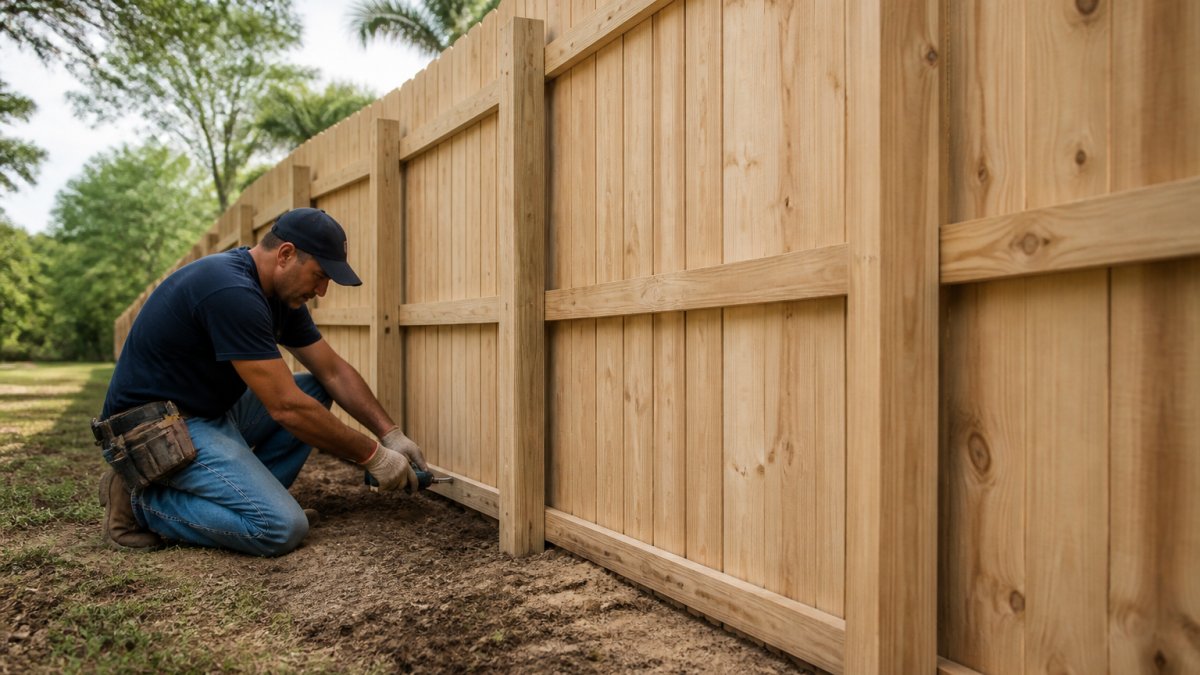
For homeowners in Southwest Ranches, Davie, Weston, and Cooper City, OCAS Residential handles the full scope of site preparation, from land leveling and precision grading to complete site cleanup with debris hauling. We also install custom fencing and gates, so you can coordinate your land prep and your perimeter security in a single visit rather than managing multiple contractors. Our team approaches every job, no matter how small, with the same attention to drainage and soil stabilization that protects your property for years to come.
Frequently Asked Questions
How much does site preparation cost for a small yard?
The cost of residential site grading varies widely based on yard size, soil conditions, and the scope of work. A simple grading project for a small yard will cost far less than one that requires extensive excavation, drainage installation, or debris hauling. Because every property is different, you should get a detailed quote after an on-site assessment. Contact OCAS Residential for a free estimate tailored to your property.
What is included in professional site preparation for a small yard?
Professional site preparation for a small yard includes land clearing, debris removal, excavation, and land grading. The goal is to create a stable, level sub-base for your intended project. This process often involves soil compaction testing and addressing drainage issues to prevent future settling or standing water. A full-service company will also handle utility marking coordination with your local utility providers before any digging begins.
What is the cheapest way to level the ground for a shed?
The cheapest way to level ground for a small shed is to build a gravel pad yourself. This involves removing topsoil, laying geotextile fabric, and compacting layers of crushed aggregate. However, doing it wrong leads to a sinking or uneven shed. Hiring a professional for a small grading job ensures proper soil compaction and drainage, saving you from costly repairs down the road.
How do I verify a site preparation contractor's credentials?
Ask for proof of licensing and insurance, including general liability and workers' compensation. Check for references from recent residential jobs similar to yours, and look for a physical address and verifiable business history. A reputable contractor will also handle the permit process and coordinate with local utilities. Confirm they have experience with small-scale residential projects, not just large commercial construction sites.
Preparing a small yard for construction or landscaping is a job where the details determine the outcome. A poorly graded lot will plague you with standing water and shifting structures long after the contractor has left. Get the assessment done, verify your contractor’s credentials, and make sure the contract covers drainage, compaction, and debris removal. Schedule a free estimate with OCAS Residential, and let our team handle your site prep with the precision your property deserves.
This article was written using GrandRanker