 comparison
DIY vs Professional Yard Drainage Solutions (2026)
Table of Contents
- DIY vs Professional Yard Drainage Solutions: Side-by-Side Comparison
- How to Fix Backyard Muddy Spots with DIY Methods
- What It Costs to Grade a Yard and Install Drainage
- Land Grading Equipment Rental: What You Need and Where to Get It
- Risks of Improper Drainage Installation and DIY Grading Mistakes
- Permits, Zoning, and Post-Installation Inspection Checklist
- When to Hire a Professional for Yard Drainage Solutions
- Frequently Asked Questions
Last Updated: September 16, 2026
DIY vs Professional Yard Drainage Solutions: Side-by-Side Comparison
Standing water after a heavy rain can saturate soil, stress foundations, and undo months of landscaping. Choosing between DIY and professional yard drainage solutions comes down to three factors: the scope of the problem, your soil and slope conditions, and how much risk you can absorb if the fix fails.
Quick Comparison Table: Cost, Timeline, and Risk
| Factor | DIY Approach | Professional Approach |
|---|---|---|
| Upfront cost | Materials only, lower | Labor and equipment included, higher |
| Timeline | Weekends over several weeks | Days, scheduled around weather |
| Equipment | Hand tools, rented trenchers | Excavators, laser levels, compactors |
| Risk of failure | High if slope or soil is misread | Low when site evaluation precedes work |
| Permits | Your responsibility to verify | Contractor typically handles compliance |
| Best for | Small, isolated muddy spots | Grading, foundation-adjacent water, large lots |
How to Fix Backyard Muddy Spots with DIY Methods
The fastest DIY win is redirecting water before it reaches the muddy area. Most backyard muddy spots trace back to a downspout dumping water too close to the foundation, a low spot that collects runoff, or compacted soil that refuses to drain. Start with the simplest fix: extend downspouts at least a few feet from the house so water discharges onto a slope rather than pooling at the base.
Numbered DIY Fixes: French Drains, Swales, and Downspout Extensions
- Downspout extensions. Attach rigid or flexible extensions to carry roof water away from the foundation. Cheapest fix, often enough for isolated spots.
- Surface grading by hand. Add topsoil to build a gentle slope away from the structure. Aim for a consistent fall so water moves rather than sits.
- Swales. Dig a shallow, vegetated channel to guide surface water around the yard instead of through it.
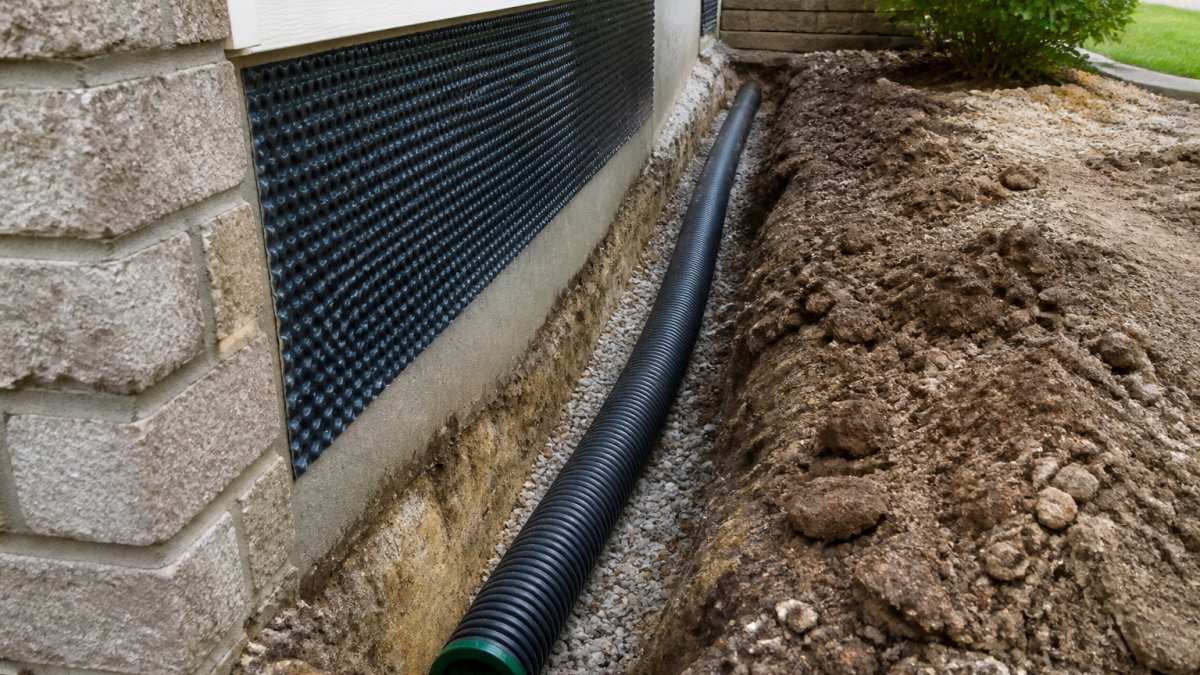
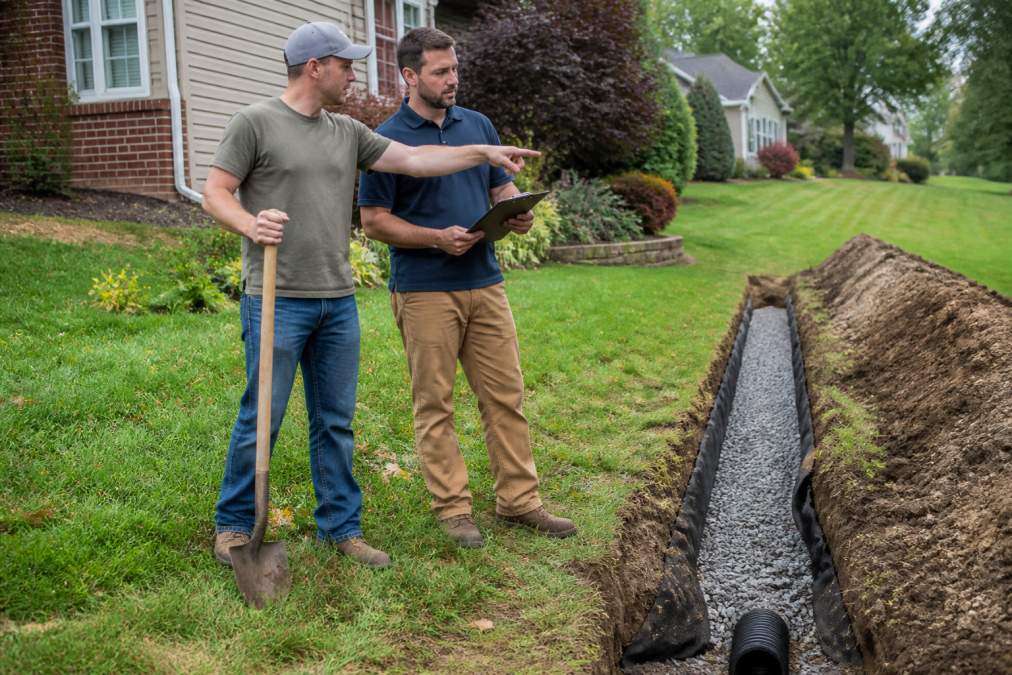
- French drains. Trench, line with landscape fabric, lay perforated pipe in drainage aggregate, and backfill. Effective for subsurface water, but unforgiving if the slope is wrong.
- Catch basins. Install a basin at the low point and connect it to your drain line to capture surface water quickly.
What It Costs to Grade a Yard and Install Drainage
Pricing for grading and drainage depends on square footage, soil conditions, access for equipment, and water volume. No honest estimate exists without a site visit, so get a professional assessment before committing to either path. You can still build a realistic budget by pricing components separately instead of asking for one lump number.
DIY Material Costs vs Professional Labor and Equipment
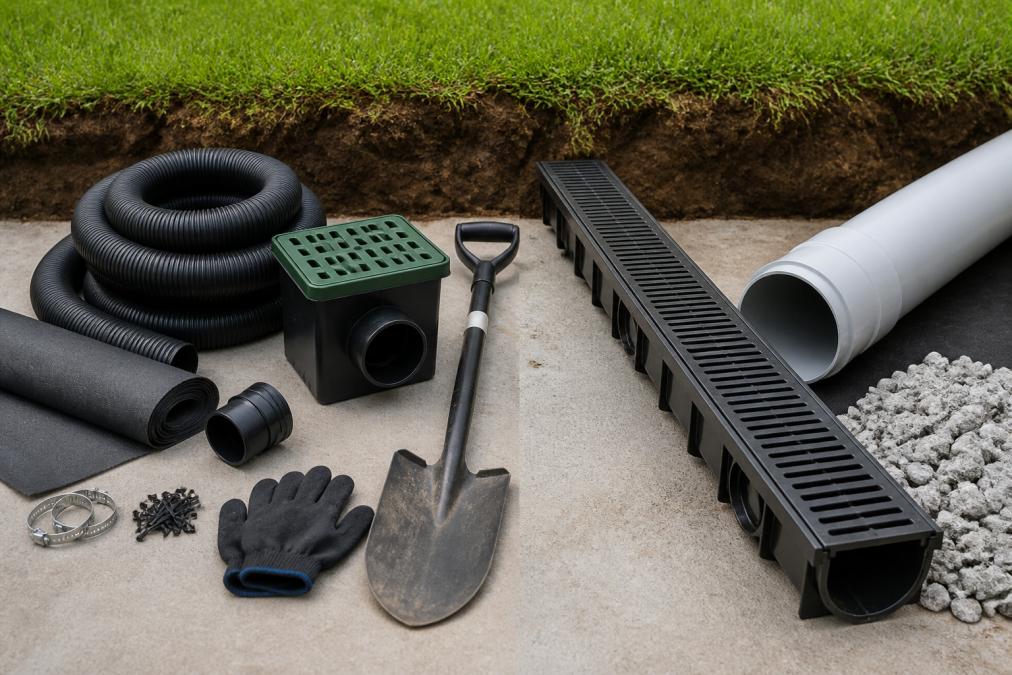
On the DIY side, your budget covers perforated pipe, landscape fabric, drainage aggregate, catch basins, and any rented equipment. DripWorks drainage components and installation guidance supplies many of these materials for homeowners building basic French drains, and their educational resources cover trench depth and slope requirements.
-
Perforated pipe, smallest line item, sold in 10-foot and 100-foot coils
-
Drainage aggregate, usually the largest material cost, since a proper trench is filled with washed stone, not native soil
-
Landscape fabric, cheap per roll but easy to under-buy; you need enough to line the trench and wrap the stone
-
Catch basins and fittings, priced per unit, and the count climbs fast on larger yards
-
Rented equipment, trencher, plate compactor, and laser level, billed by the day or half-day
-
Access, a backyard reachable only through a gate or over a fence line adds labor hours
-
Spoil disposal, excavated soil has to go somewhere, and hauling it off-site is a real line item
-
Slope correction, if the yard needs regrading before a drain will work, that is a separate scope
-
System type, a gravity French drain is cheaper than a system that needs a sump pump and discharge point
-
Permitting, where a permit is required, the application and inspection add cost and time
Land Grading Equipment Rental: What You Need and Where to Get It
Renting equipment makes sense when your project is genuinely small and you can finish it in a single rental window. For significant excavation or precision slope work, the rental math gets less favorable fast. Typical rental categories include:
- Walk-behind trenchers for French drain trenches in tight yards
- Mini excavators for larger trenches and catch basin placement
- Plate compactors for backfill and aggregate
- Laser levels or transit levels to verify slope, which is the step most DIYers skip
Risks of Improper Drainage Installation and DIY Grading Mistakes
Improper drainage does not just fail to fix the problem. It can create new ones. Water redirected toward a neighbor's property, a slope that pushes water against the foundation, or a drain that clogs within a season all turn a small project into an expensive correction.
The most common DIY grading mistakes we see:
- Grading toward the house instead of away from it, which invites foundation water damage
- Ignoring hydrostatic pressure, the force that pushes groundwater upward and sideways when soil is saturated
- Skipping landscape fabric, letting fine soil clog the perforated pipe
- Insufficient drainage capacity for the actual water volume during a storm
- No erosion control on bare slopes, so new channels carve themselves during rain
Permits, Zoning, and Post-Installation Inspection Checklist
Many homeowners never check whether their drainage work requires a permit. In many jurisdictions, grading that changes water flow toward a neighboring property, alters a drainage easement, or involves substantial earth movement does require approval. Rules vary by municipality, so verify with your local building department before you dig. Three issues come up repeatedly:
-
Drainage easements. Many lots carry a recorded easement that gives the utility, the city, or a neighbor the right to move water across a strip of your property. Digging a trench or regrading through an easement can violate the terms even if the work looks harmless on the surface. Easements are usually recorded on your plat or deed, and your county clerk or recorder's office can tell you whether one exists.
-
HOA covenants. If you live in a subdivision with a homeowners association, the covenants often govern grading, drainage, and any change to the appearance of the lot. HOA approval is separate from a municipal permit, and skipping it can trigger fines or a requirement to restore the yard.
-
Neighbor liability. Redirecting water onto a neighboring property is the most common source of drainage disputes. Depending on your state's law, a neighbor may have a claim if your grading concentrates runoff onto their land or causes erosion. This is the single strongest argument for having a professional review the outlet and discharge point before you dig.
-
Confirm water flows away from the foundation in a test run
-
Check that downspouts discharge onto graded ground, not pavement
-
Verify the drain outlet is clear and daylighting properly
-
Inspect for settling or low spots after the first heavy rain
-
Confirm no erosion is occurring along swales or graded slopes
-
Check that catch basins are free of debris
-
Confirm the discharge point does not send water onto a neighboring lot or into an easement
-
Photograph the finished work and keep the permit, if one was required, with your home records
When to Hire a Professional for Yard Drainage Solutions
Hire a professional when water threatens the foundation, when the yard requires regrading rather than a single drain, when the property is too large for hand work, or when a previous DIY attempt has already failed, situations where the cost of getting it wrong outweighs the savings.
How Professional Grading Protects Property Value and ROI
Correct grading protects the two most expensive things on your property: the foundation and the landscape. Water pooling against a foundation accelerates deterioration, and saturated soil destabilizes plantings, hardscape, and driveways, problems that cost far more to fix later than to prevent. Professional grading also shows up in resale: a buyer's inspector flags standing water and poor drainage immediately, and a documented, properly installed system removes that objection.
Frequently Asked Questions
How expensive is grading land for drainage?
The final price for yard grading depends on yard size, slope complexity, soil conditions, and whether a French drain, catch basin, or sump pump is added. For an exact quote on your property, schedule a free estimate with OCAS Residential.
What is the cheapest way to regrade my yard without professional equipment?
The cheapest DIY approach is surface grading with hand tools, a lawn roller, and bagged topsoil, combined with downspout extensions to move water away from the foundation. You can also rent a walk-behind trencher for a few hundred dollars to install a short French drain. This works for small, shallow slopes and minor standing water. For large yards, heavy clay soil, or water pooling near the foundation, hand tools rarely move enough soil to fix the drainage slope correctly.
When should you hire a professional for yard drainage issues?
Hire a professional when water pools within 10 feet of your foundation, when the yard slopes toward the house, when you see hydrostatic pressure cracks in the basement, or when DIY fixes have failed for more than one season. Complex sites with high water tables, large acreage, or grading tied to new construction also call for professional site evaluation and heavy equipment. A pro can confirm the drainage slope, install perforated pipe and drainage aggregate correctly, and protect your foundation from water damage.
What are the risks of improper DIY yard grading?
Improper grading can redirect water toward your foundation, causing hydrostatic pressure, foundation water damage, and structural integrity issues. A French drain installed without the correct slope, landscape fabric, or drainage aggregate will clog with sediment within a year or two. Trenching too deep near utilities risks hitting irrigation lines, gas lines, or electrical conduit. Many municipalities also require permits for grading that changes water runoff onto neighboring properties, so skipping that step can lead to fines or required rework.
How much does land grading equipment rental cost?
Rental rates depend on the machine and the rental period. Mini excavators, walk-behind trenchers, skid steers, and laser levels are the most common rentals for a yard drainage project. A trencher typically rents for a few hundred dollars per day, while a mini excavator costs more. Factor in delivery, fuel, and operator training if you have not used the equipment before. For larger properties, the total rental bill can approach the labor portion of a professional quote, which is why many homeowners hire a pro instead.
Standing water rarely fixes itself, and a failed DIY drain usually costs more to correct than the original installation would have. If your yard has drainage problems that keep returning, or you are preparing a site for new construction, OCAS Residential can evaluate the property, grade it correctly, and handle the cleanup. Schedule a free estimate and get a drainage plan built for your specific soil, slope, and lot size.