 comparison
CD Grading Alternative for Residential Land Needs
Table of Contents
- What Is CD Grading? A Residential Alternative
- Residential Site Drainage Solutions That Actually Work
- Land Leveling Services Cost: What Homeowners Should Expect
- Site Preparation for New Construction: A Step-by-Step Overview
- DIY vs. Professional Grading: Cost-Benefit Analysis
- Digital Preservation Alternatives for Media Collectors
- Frequently Asked Questions
Last Updated: September 11, 2026
What Is CD Grading? A Residential Alternative
CD grading is a term that means two completely different things depending on who you ask, and that split sits at the center of this guide from OCAS Residential. For music collectors, cd grading describes the process of evaluating the condition of a physical disc, its jewel case, and its inserts. For homeowners, "CD" often refers to a construction or drainage drawing, and grading means shaping the ground so water flows away from a structure rather than into it. If you searched for a CD grading alternative for residential land needs, you almost certainly want the second meaning, and you have landed in the right place.
Below, we break down both definitions, then focus on what actually matters for a residential property: site drainage, land leveling, and the site work that keeps a foundation dry.
The Two Meanings of Grading
Grading is the process of adjusting the slope and shape of ground to control how water moves across a surface. In construction and landscaping, that means creating a slight downward pitch away from a home so runoff reaches a swale, drain, or street instead of pooling against the foundation.
In the collector world, grading means something else entirely: assigning a condition score to a physical item. A near mint record and a scratched disc get different grades, and that grade drives resale value. The confusion happens because both uses of the word describe an evaluation of "how good something is," but only one involves moving dirt.
Residential Site Drainage Solutions That Actually Work
Effective residential site drainage starts with the slope of your yard. Water follows gravity, so the single most reliable fix for a soggy lawn or a damp crawl space is correcting the grade so surface water flows away from the structure and toward a defined exit point.
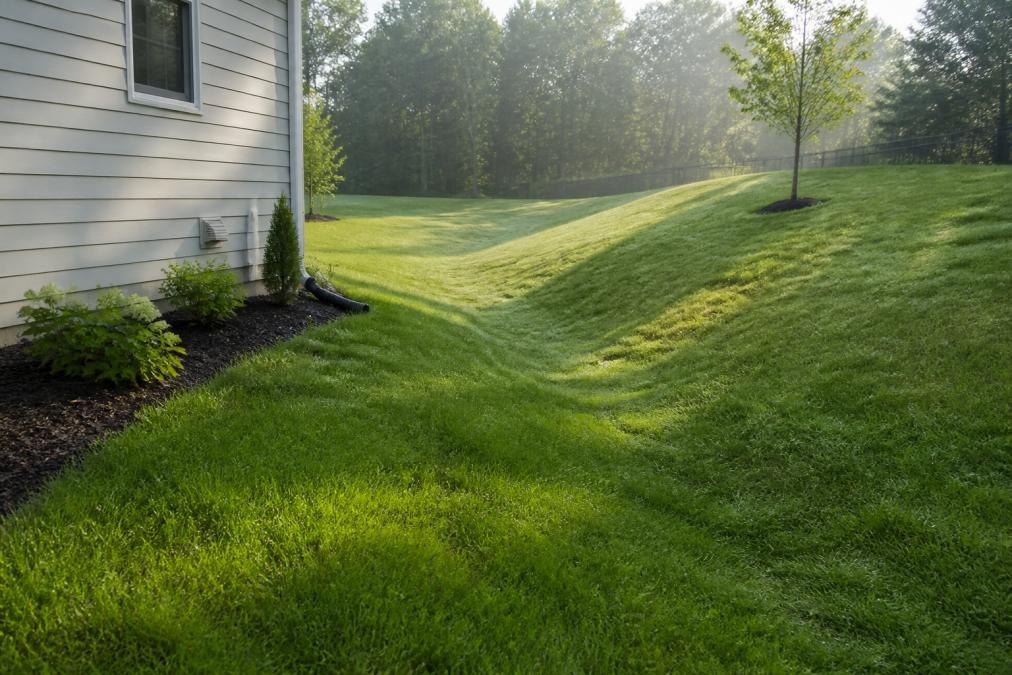
Grading Slopes and Water Management
A common target is a slope of roughly six inches of fall over the first ten feet away from the foundation, though the right figure depends on your soil, your lot, and local code (fema.gov). The goal is consistent fall, not a steep drop that erodes.
Water management on a residential lot usually combines several elements:
- Positive grade: soil that slopes away from the foundation on all sides
- Swales: shallow, vegetated channels that carry runoff to a low point
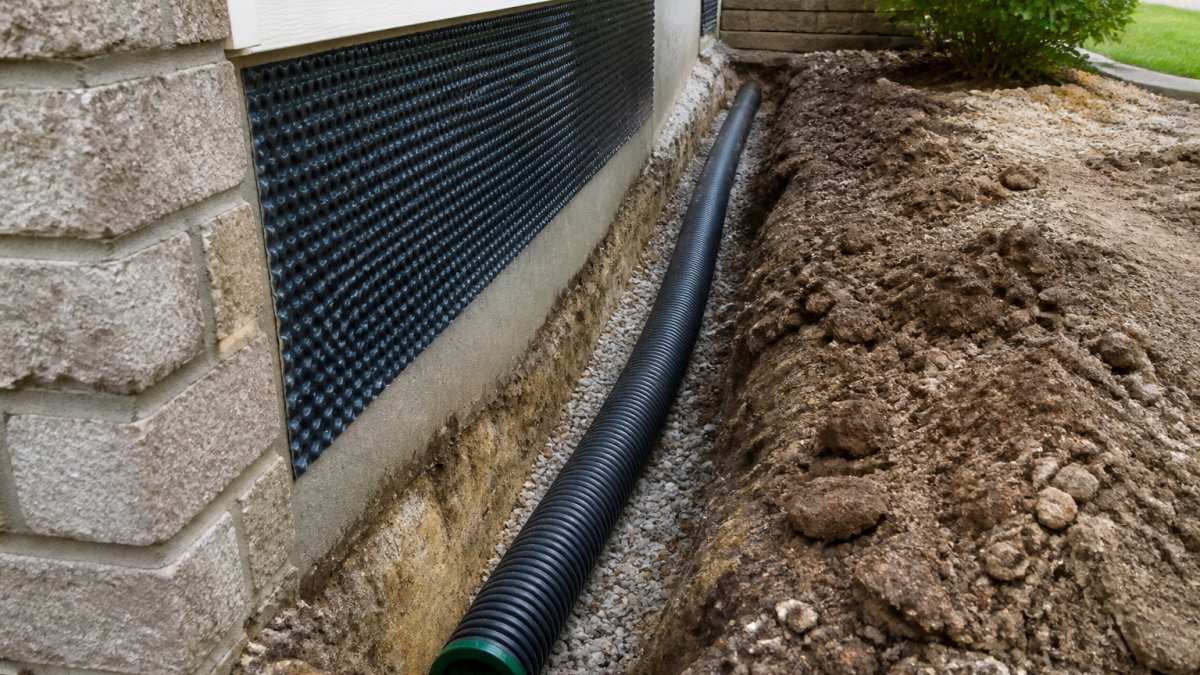
- French drains: gravel-filled trenches with perforated pipe that collect subsurface water
- Downspout extensions: redirecting roof runoff well past the foundation
- Dry wells: underground basins that let water soak into the soil
The thing nobody tells you about drainage is that most "drainage problems" are actually grading problems. Homeowners often add drains before fixing the slope, then wonder why water still pools. Correct the grade first, then add drainage features only where the slope alone can't solve it.
Land Leveling Services Cost: What Homeowners Should Expect
Land leveling services cost varies too widely to quote a single number, because pricing depends on lot size, how much soil has to be moved, access for equipment, and whether clearing or hauling is involved. That said, the honest way to budget is to understand how contractors actually build the number, then get a written estimate that itemizes each part of the job.
Most residential grading and leveling work is priced one of three ways:
- Hourly plus equipment: common for small touch-ups, typically billed per machine-hour with a separate labor rate
- Per square foot: used for straightforward lot leveling, with the rate rising as slope and cut/fill volume increase
- Fixed bid per project: used when the scope is well defined after a site walk
Several factors drive the total:
- Square footage and terrain: a flat quarter-acre is far cheaper to level than a sloped acre with mature trees
- Volume of cut and fill: moving soil across a large property costs more than a light touch-up; hauling dirt off-site adds trucking and disposal
- Access: narrow gates or steep driveways slow equipment and raise labor time
- Debris and hauling: removing stumps, rock, or construction waste adds trucking costs
- Drainage work: adding swales or French drains is a separate line item from leveling
- Permits and inspections: some jurisdictions require a grading permit and inspection for significant earth movement, which adds fees and schedule time
A useful way to sanity-check a quote is to ask the contractor to break it into three buckets: mobilization and equipment, earthwork (cut, fill, compact), and drainage or finish work. If a bid lumps everything into one number, you cannot tell whether you are paying for soil movement or for drainage features you may not need.
For a precise figure for your property, OCAS Residential's free estimate request is the fastest path, since pricing is quoted per project rather than from a flat rate card.
Site Preparation for New Construction: A Step-by-Step Overview
Site preparation for new construction is the sequence of clearing, excavating, and grading that turns a raw lot into a buildable pad. Done well, it protects the foundation for decades. Done poorly, it shows up as cracks, settling, and water intrusion within a few years.
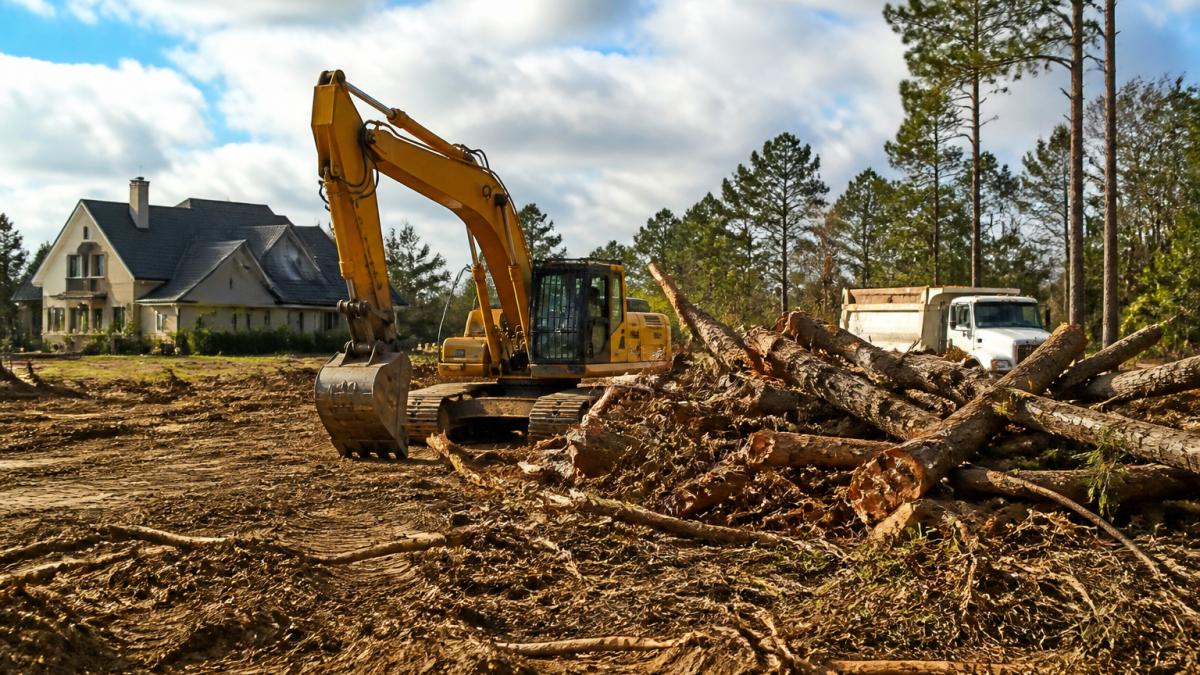
Land Clearing and Excavation
The process generally follows a predictable order, with inspection and verification points built in:
- Survey and mark: locate property lines, utilities, and the building footprint. Call 811 before any digging so underground utilities are marked (call811.com).
- Permit and plan review: confirm whether the jurisdiction requires a grading permit, erosion control plan, or stormwater plan before earth moves.
- Clear: remove trees, brush, stumps, and surface debris. Grind or haul stumps rather than burying them, since buried organic matter decomposes and creates voids.
- Strip topsoil: separate and stockpile topsoil for later landscaping; do not compact it into the building pad.
- Excavate: dig for the foundation, footings, and any utility trenches.
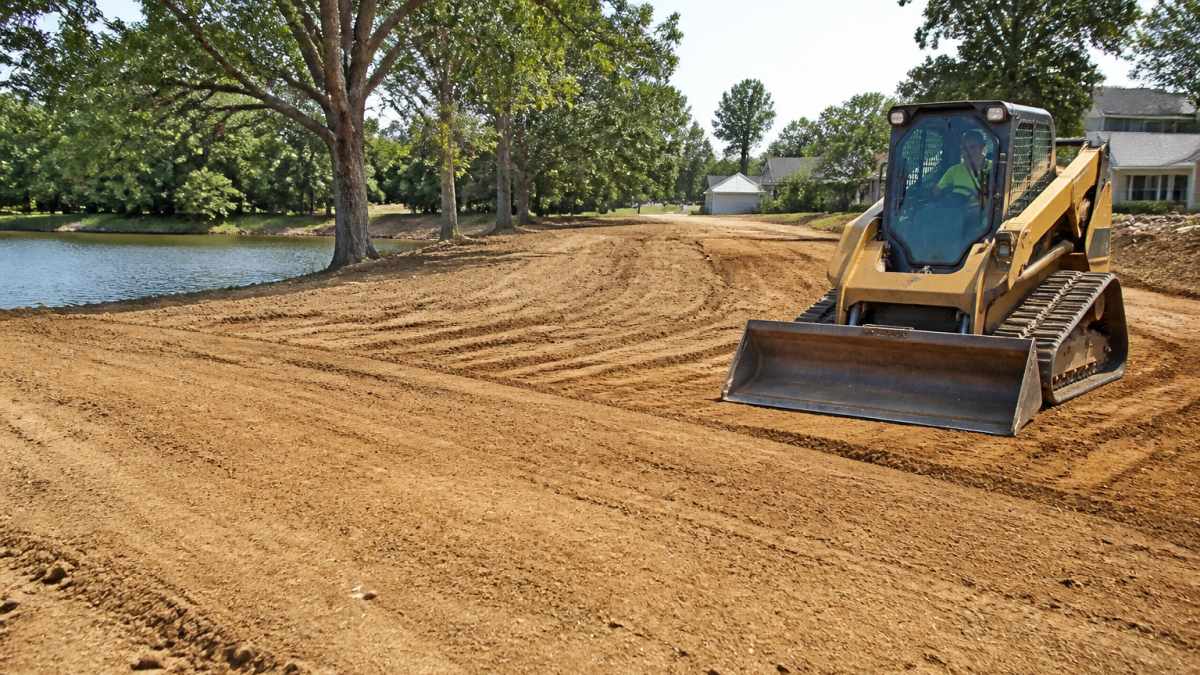
- Grade: shape the pad and surrounding lot to the designed elevations, maintaining positive fall away from the structure.
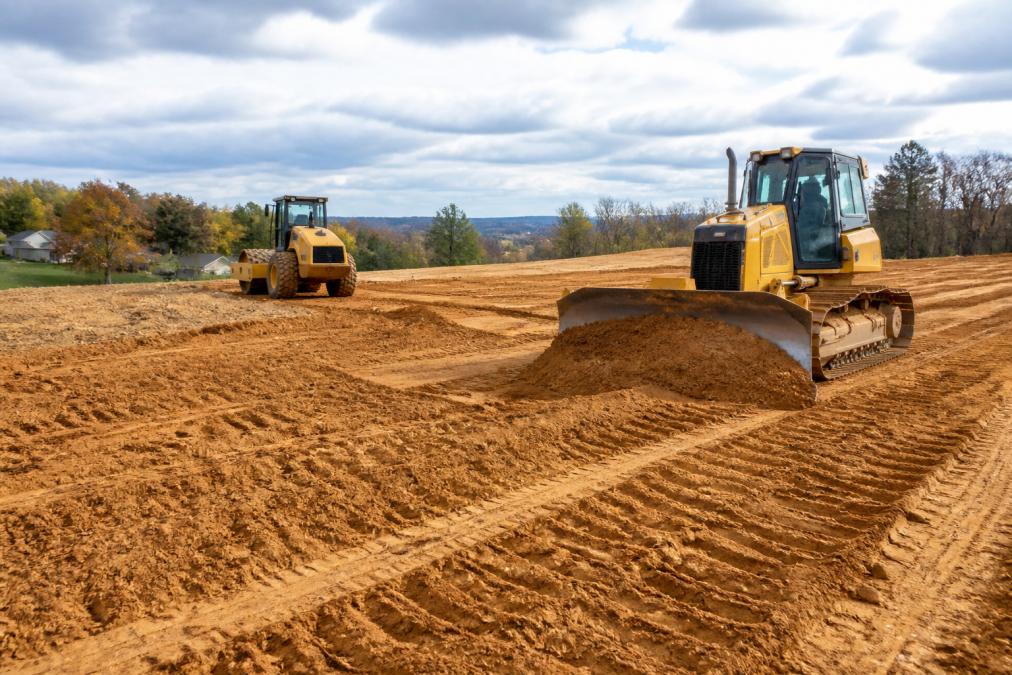
- Compact: compact fill in lifts so the soil can support the structure. Lifts are typically placed in shallow layers and compacted between each one.
- Verify: have compaction and elevations checked before the foundation is poured. This is the checkpoint that catches problems while they are still cheap to fix.
- Drain: install swales, drains, and downspout routing before landscaping.
- Stabilize and clean up: apply erosion control, haul away debris, and restore the surrounding ground.
Excavation and land clearing are the heaviest phases, and they set the elevation everything else is built on. A frequent mistake is rushing the compaction step. Loose fill settles unevenly, and that settlement transfers straight into the foundation.
Erosion Control and Water Management on the Lot
Two things run in parallel with grading: keeping soil on site during construction and managing water once the pad is finished.
- Silt fence and inlet protection: keep disturbed soil out of storm drains and waterways during construction
- Stabilized construction entrance: a gravel pad that knocks mud off equipment tires before it reaches the street
- Temporary seeding or mulch: applied to stockpiles and bare slopes to limit wind and rain erosion
- Positive grade: final fall away from the foundation on all sides
- Swales and dry wells: shallow channels and underground basins that move or absorb runoff
A common pattern is that erosion control is treated as paperwork and water management is treated as an afterthought. Both are cheaper to plan up front than to retrofit after the foundation is in.
DIY vs. Professional Grading: Cost-Benefit Analysis
DIY grading can work for small, cosmetic fixes, but it rarely holds up for anything that involves drainage, elevation, or a building pad. The cost-benefit math comes down to three things: the size of the job, the equipment required, and the consequence of getting it wrong.
| Factor | DIY Grading | Professional Grading |
|---|---|---|
| Best for | Small touch-ups, minor slope fixes | Drainage, foundations, large lots |
| Equipment | Hand tools, rented tiller | Skid steers, excavators, lasers |
| Time | Days to weeks | Usually a few days |
| Risk | Uneven slope, poor compaction | Managed with proper technique |
| Drainage outcome | Hard to verify | Designed and tested |
| Warranty | None | Workmanship coverage from the contractor |
A homeowner with a rake and a weekend can usually fix a small low spot near a walkway. What they can't easily do is calculate the correct fall across an acre, compact fill to a stable density, or guarantee that a new swale actually carries water off the property. For anything tied to a foundation or chronic flooding, the professional route usually costs less over time because it avoids rework.
Digital Preservation Alternatives for Media Collectors
For collectors who arrived here looking for the media meaning of CD grading, the modern alternative to physically grading and storing discs is digital preservation. Ripping audio to lossless files, scanning inserts, and backing everything up to redundant drives or cloud storage removes the wear-and-tear problem entirely.
The trade-off is real, though. A digital file has no jewel case, no slipcase, and no clamshell to inspect, so it carries no collector resale value in the traditional market. What it does offer is permanence and access. Where condition grading protects the value of a physical item, digital preservation protects the content itself.
If you do keep physical media, storage still matters. Discs and their cases hold up best away from heat, direct sunlight, and humidity, standing upright rather than stacked flat. For collectors who want a formal assessment, services like the Goldmine Standard grading guide provide a widely used scale, while professional authentication and encapsulation exist for high-value pieces. The point is simple: grading documents condition, storage preserves it, and digital backup insures the content against loss.
Two things usually stand between a homeowner and a dry, usable yard: the wrong grade and the wrong sequence of work. Fixing both is what OCAS Residential does, from professional land leveling and precision grading for new construction to complete site cleanup and debris hauling, plus custom fence and gate installation once the ground is ready. If you have water pooling, a lot that needs prepping, or a fence to add, get a clear plan before the first scoop of dirt moves. Schedule a free estimate with OCAS Residential and get your property prepared right from the start.
Frequently Asked Questions
What is the difference between CD grading and residential land grading?
CD grading has two distinct meanings. In media collecting, it refers to assessing the condition of a compact disc using standards like the Goldmine Standard. In residential construction, it means shaping the land to control water flow and prepare a site for building. For homeowners, the relevant meaning is land grading, which involves leveling soil, creating drainage slopes, and preparing the property for construction or landscaping.
How does professional land leveling improve property drainage?
Professional land leveling creates a consistent slope that directs water away from your home and foundation. Standing water and poor drainage often result from uneven ground, which causes pooling and potential erosion. A grading contractor will assess your property's topography, identify low spots, and reshape the soil to establish proper water management. This prevents water from collecting near your foundation and reduces the risk of costly structural damage over time.
What are the signs that your residential property needs professional grading?
Common signs include standing water after rain, soggy patches in your yard, soil erosion near your foundation, cracks in your driveway or walkways, and water pooling in one area of your property. If you notice these issues, your property likely needs regrading to restore proper drainage. A professional can evaluate your site's topography and recommend solutions like swales, French drains, or complete land leveling to fix the problem.
Is site preparation the same as landscaping?
No. Site preparation for new construction involves clearing land, excavation, grading, and establishing drainage before any landscaping begins. Landscaping comes after and focuses on planting, hardscaping, and aesthetic features. Proper site prep ensures your property has a stable foundation and correct water management, which landscaping alone cannot fix. Skipping site prep can lead to drainage problems that ruin even the best landscaping work.
How do I choose a reliable residential site grading contractor?
Look for a contractor with experience in residential projects, proper licensing, and insurance. Ask for references from homeowners in your area and request a detailed written estimate that explains the scope of work. A reliable contractor will assess your property's drainage and topography and explain their approach. Avoid choosing solely on price, as cheap grading can leave you with bigger problems like erosion or foundation issues.