 how-to
Can Land Leveling Fix Yard Drainage? What Works
Table of Contents
- Land Leveling vs. Drainage: Why One Isn't Enough
- Signs of Poor Yard Drainage You Can't Ignore
- How Grading Affects Water Management
- How to Fix Backyard Muddy Spots With Proper Solutions
- Drainage Infrastructure: French Drains and Beyond
- Yard Drainage Solutions Cost and DIY vs. Professional
- When to Call a Professional for Land Leveling and Drainage
Last Updated: August 29, 2026
Land Leveling vs. Drainage: Why One Isn't Enough
Land leveling alone rarely solves chronic drainage problems. Leveling and drainage are complementary solutions, not interchangeable ones. Leveling creates the slope necessary for water to move, but without proper drainage infrastructure, water still pools in low spots or saturates the soil.
At OCAS Residential, we've worked with homeowners who tried leveling-only solutions and still faced standing water months later. Grading establishes pitch and slope, but it doesn't remove water from your property efficiently. True drainage requires both proper grading AND infrastructure like French drains, catch basins, or subsurface drainage systems. Leveling tells water which direction to go. Drainage infrastructure tells it where to go and how to get there safely.
A properly graded yard with no drainage system will still shed water, but that water ends up in your neighbor's yard, erodes your foundation, or saturates the soil beneath your home. Conversely, a French drain installed in an improperly graded yard works harder than it should and may fail prematurely. This distinction changes how you approach the problem and what you should budget for.
Signs of Poor Yard Drainage You Can't Ignore
Poor yard drainage announces itself in specific ways. Standing water in your yard after rain, muddy patches that never dry, or a spongy feel underfoot all signal that water isn't moving away from your property efficiently. These aren't cosmetic problems; they're warnings that your foundation, landscaping, and soil health are at risk.
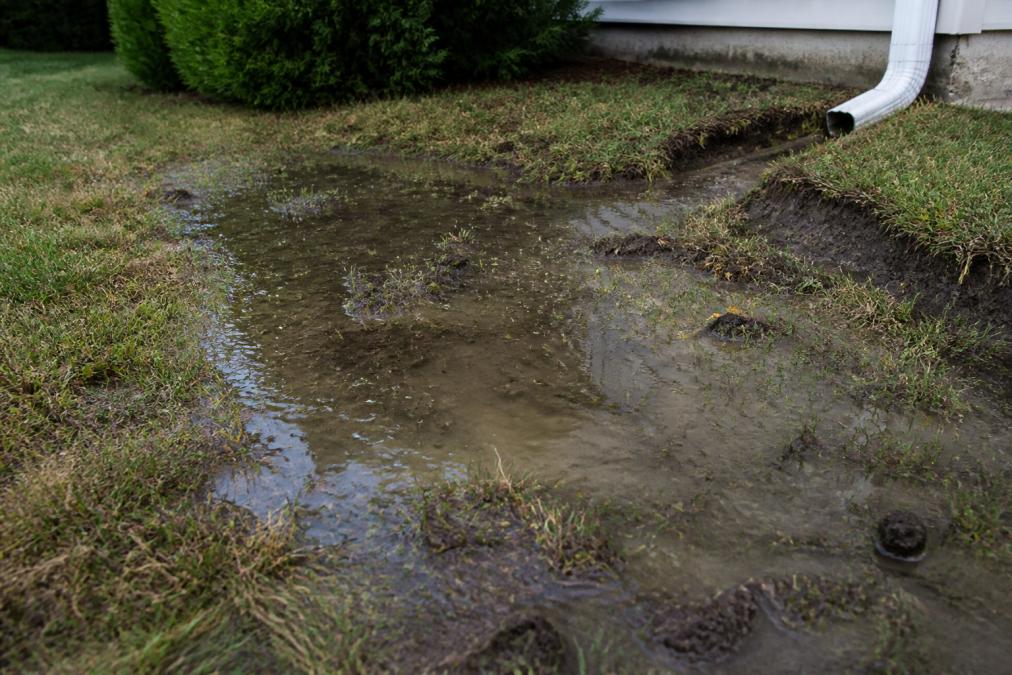
Water pooling in the same spots after every rain is the most obvious sign. If you see puddles that linger for hours or days, your grading isn't directing water away, or your soil lacks permeability. Clay soil compacts easily and resists water infiltration. The longer water sits, the more damage it does: grass dies, soil erodes, and foundation cracks can develop if water pools near your home's perimeter.
Muddy areas that remain soft or boggy even weeks after rain indicate saturation. Your soil can't absorb or shed water effectively. Walking across these areas creates ruts that collect more water, accelerating erosion.
Erosion gullies or washouts show where water moves too fast or concentrates in one path. These channels indicate that runoff isn't being managed; water is scouring the landscape instead of being directed safely. Over time, erosion undercuts roots, destabilizes soil, and can expose utility lines.
Vegetation dying in patches, especially when surrounded by healthy grass, often points to waterlogging. Plant roots need oxygen. When soil stays saturated, roots suffocate and die.
Foundation cracks, efflorescence (white mineral deposits on basement walls), or a damp basement are serious signs that water is pooling near or under your home. This happens when yard grading slopes toward the house or when subsurface water has nowhere to go.
How Grading Affects Water Management
Grading is the art of reshaping your land to control water movement. Proper grading creates slope, technically called pitch, that directs surface water away from structures and toward collection points. Without adequate grading, water has no incentive to move and pools wherever the ground is lowest.
Water follows gravity. If your yard is flat or slopes toward your home, water will pool or flow the wrong direction. A properly graded yard slopes away from the foundation at a rate of roughly 1 inch of drop per 4 feet of horizontal distance. This pitch is subtle enough to look natural but steep enough to move water consistently.
Grading also affects soil compaction and permeability. When you level and grade a yard, you're compacting soil, which reduces its ability to absorb water. This is why grading alone often isn't enough. You've created the slope, but the soil beneath can't absorb the water you've directed to it. This is where soil amendments or drainage infrastructure become necessary.
A landscape architect or experienced grading contractor uses a laser level to ensure consistent pitch across your property. Without this precision, you end up with low spots that defeat the purpose of grading. Even a 1-inch variance over 20 feet can create a pocket where water pools.
For most residential properties, proper grading is foundational. But grading alone assumes your soil can absorb water at the rate it arrives. In clay-heavy soils, during heavy rain, or in low-lying areas, that assumption fails.
How to Fix Backyard Muddy Spots With Proper Solutions
Muddy spots indicate that water is pooling and soil can't absorb it. Fixing them requires addressing the root cause: improving drainage, amending the soil, or both.
Start with a site assessment. Walk your yard after rain and note where water collects. Check your soil type by digging a small hole and examining the texture. Clay soil feels sticky and compacts hard. Sandy soil drains quickly. Understanding your soil type determines whether you need to amend it, install drainage, or both.
For minor muddy spots in otherwise well-graded yards, soil amendment can work. Adding topsoil mixed with compost or sand improves permeability and allows water to infiltrate instead of pooling. Spread 2-4 inches of amended topsoil over the affected area, rake it level, and seed or sod (peer-reviewed research). This works best when the underlying grading is sound and the muddy spot is temporary.
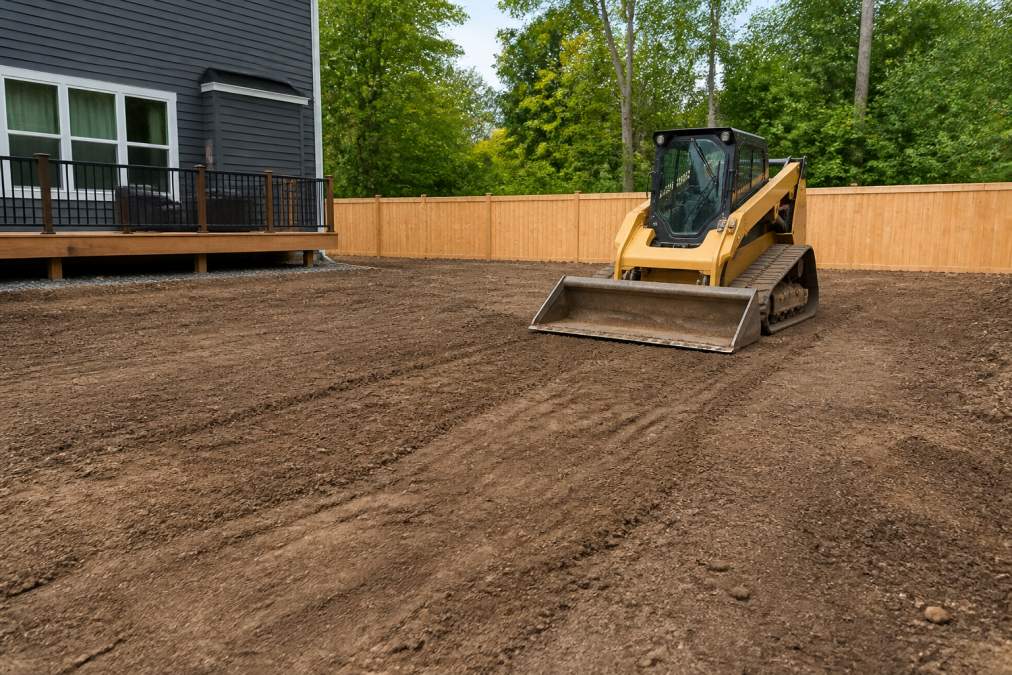
For persistent muddy areas, grading correction is necessary. If your yard slopes toward the muddy spot or has a depression, re-grading redirects water away. This involves moving soil to create proper pitch and addresses the underlying problem.
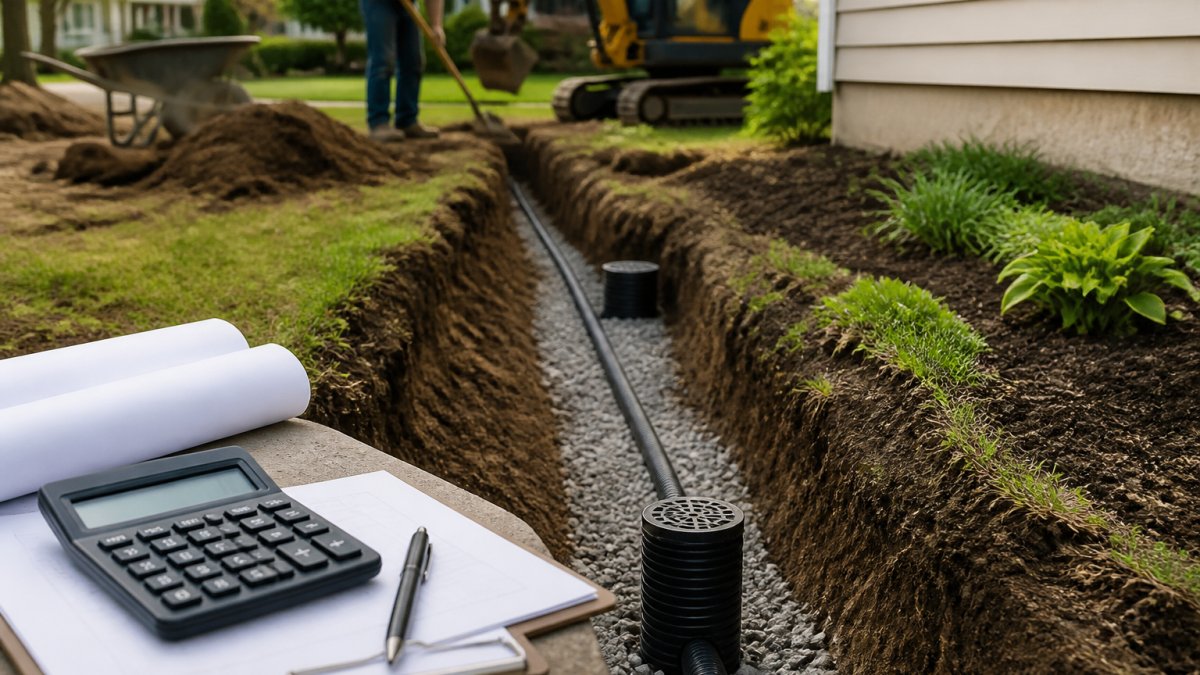
For areas where grading and soil amendment aren't enough, subsurface drainage becomes necessary. A French drain installed beneath the muddy area collects water before it pools on the surface. The drain consists of a perforated pipe surrounded by aggregate and wrapped in geotextile fabric. Water infiltrates through the soil, enters the pipe, and flows to a discharge point or dry well.
Vegetation-based solutions also help. Planting native species that tolerate wet conditions can stabilize wet areas while allowing water to percolate. These plants have deep root systems that improve soil structure and water infiltration over time.
Drainage Infrastructure: French Drains and Beyond
Drainage infrastructure moves water off your property efficiently and safely. A French drain is the most common residential solution, but other systems exist depending on your situation.
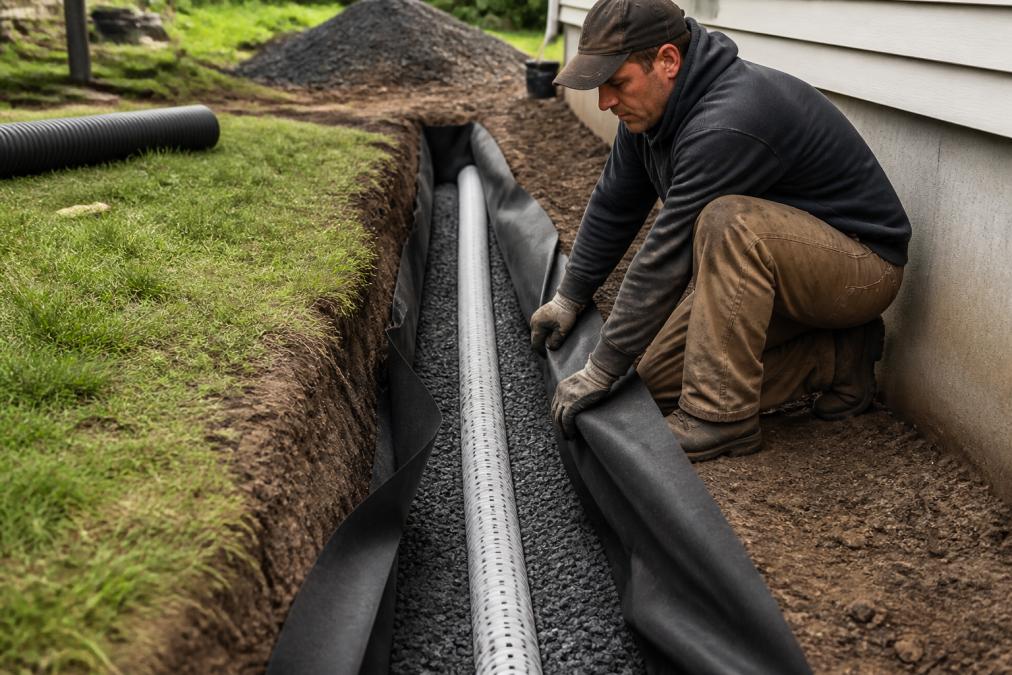
A French drain works by collecting water that infiltrates through soil and directing it away from problem areas. The system consists of a trench dug at a consistent downward slope, a perforated drainage pipe laid in the trench, aggregate (gravel) surrounding the pipe, and geotextile fabric preventing soil from clogging the aggregate. Water enters through the perforations, flows inside the pipe, and exits at a lower elevation or into a dry well.
French drains are effective for subsurface water management. They handle water that percolates through soil and groundwater that would otherwise saturate your yard or pool near your foundation. They're less effective for surface runoff. If water is pooling on top of your soil, a French drain won't help until grading directs that water into the drain's collection area.
Catch basins collect surface runoff from graded areas. A catch basin is a small underground box installed at low points in your yard. Graded water flows into the basin through a grate, and a pipe carries it away to a drainage outlet. Catch basins are often combined with French drains: catch basins handle surface water, and French drains handle subsurface water.
Culverts are larger-scale drainage solutions for properties with significant water flow. A culvert is essentially a large pipe buried beneath your yard that channels water from one area to another. They're less common in typical residential yards but essential in some situations.
Swales are shallow, vegetated channels that direct water across your property. Unlike a French drain, a swale is visible and functions as both a drainage feature and a landscape element. Swales are graded to move water gently toward a collection point or discharge area.
The choice between these systems depends on your site conditions, the type of water problem you're facing, and your budget. A professional assessment identifies which combination works best for your property.
Yard Drainage Solutions Cost and DIY vs. Professional
Understanding the cost-benefit of DIY versus professional drainage work is essential before committing to a solution.
DIY grading is possible for minor adjustments. If you need to fill a low spot or create gentle slope over a small area, renting a landscape rake and moving topsoil yourself can work. However, achieving consistent pitch requires a laser level and experience. Most homeowners underestimate the precision required. A 1-inch error over 20 feet means water pools instead of flowing.
DIY French drain installation is more complex. You need to excavate a trench at the correct slope, install perforated pipe, layer aggregate correctly, and ensure proper discharge. If the trench slope is wrong, the drain won't flow. If the pipe is crushed during backfill, it fails. Most DIY attempts result in partially functional drains that fail within a few years.
Professional grading and drainage installation ensures precision. Contractors use laser levels to verify slope, specialized equipment to excavate efficiently, and experience to anticipate problems. They understand local soil conditions, permitting requirements, and best practices for long-term performance.
Permitting varies by location. Some municipalities require permits for drainage work, especially if it affects neighboring properties or local waterways. Professional contractors navigate permitting and ensure compliance.
For small drainage issues, a muddy corner or minor pooling, soil amendment or a simple grading adjustment might be sufficient and DIY-feasible. For systemic problems, persistent standing water, or foundation concerns, professional work is the better choice. OCAS Residential offers free estimates, so you can compare costs and understand what professional work entails before deciding.
When to Call a Professional for Land Leveling and Drainage
Knowing when to hire a professional prevents costly mistakes and ensures your yard drainage system works long-term.
Call a professional if standing water persists after rain despite existing grading. This indicates that grading alone isn't addressing your problem. A professional evaluates whether the issue is insufficient pitch, poor soil, or missing drainage infrastructure.
If your yard has a history of water problems, multiple muddy areas, foundation dampness, or erosion gullies, professional assessment is essential. These patterns suggest systemic drainage failure, not a one-off problem.
When building new construction or making major landscaping changes, professional grading ensures proper pitch from the start. Mistakes during initial grading are expensive to correct later.
If your property sits low relative to surrounding land or in a natural drainage basin, professional design is necessary. Water naturally flows toward your property, and you need infrastructure to manage it.
Foundation concerns, dampness, efflorescence, or cracks require professional drainage work. These issues indicate water is pooling near or under your home.
Permitting and regulatory compliance often require professional involvement. If your local jurisdiction requires permits for drainage work or has specific grading standards, professionals handle compliance.
OCAS Residential provides free estimates and site assessments. A professional visit costs nothing and gives you clear information about what your yard needs. You'll understand whether simple grading, soil amendment, drainage infrastructure, or a combination is required.
Standing water in your yard isn't just an aesthetic problem; it's a warning that your property's drainage system isn't working. Whether land leveling can fix yard drainage depends on your specific situation, but most chronic problems require both proper grading and drainage infrastructure working together. OCAS Residential specializes in precision grading and comprehensive drainage solutions that address the root cause, not just symptoms. Our team assesses your property, designs a system matched to your soil and water patterns, and installs it with the precision that ensures long-term performance. Schedule a free estimate to understand exactly what your yard needs and what professional drainage work costs.
Frequently Asked Questions
Q: Can land leveling alone fix yard drainage problems?
A: Land leveling alone typically won't solve drainage issues. While proper grading and slope help direct surface water away from structures, standing water and muddy spots often result from poor subsurface drainage or soil compaction. A complete solution usually combines grading with drainage infrastructure like French drains, downspout extensions, or soil amendments. Professional assessment determines what your property actually needs.
Q: What are the signs of poor yard drainage?
A: Common signs include standing water that persists after rain, muddy patches that stay wet for days, dead or yellowing grass in certain areas, erosion patterns, foundation dampness, and a sour smell from soil saturation. You might also notice mosquitoes clustering near wet spots or soil that feels spongy underfoot. These indicate water isn't percolating through soil or flowing away properly.
Q: How much does it cost to fix yard drainage problems?
A: Yard drainage solutions cost depends on the scope, soil conditions, property size, and the methods used. Simple grading adjustments cost less than installing French drains or subsurface systems. Soil amendments and vegetation-based solutions fall at different price points than full drainage infrastructure. Contact OCAS Residential for a free estimate tailored to your specific drainage challenges and property layout.
Q: Can I fix backyard muddy spots myself, or do I need a professional?
A: Small muddy spots may respond to DIY soil amendments or improved grading, but persistent drainage problems usually require professional evaluation. Incorrect slope calculations, improper French drain installation, or misplaced fill can worsen the issue. Professionals use laser levels, site assessment tools, and knowledge of local soil composition to solve the root cause. A free consultation helps determine whether your situation needs professional intervention.
This article was written using GrandRanker