 comparison
Bush Hog Gone Wild Alternatives: Equipment & Services
Table of Contents
- Why Homeowners Look Beyond Bush Hog Services
- Tractor-Mounted Rotary Cutters vs. Walk-Behind Mowers
- Professional Land Leveling and Grading for Site Preparation
- Forestry Mulchers and Heavy-Duty Brush Clearing Equipment
- Debris Hauling and Site Cleanup Services
- Understanding Residential Site Preparation Costs
- Choosing the Right Bush Hog Gone Wild Alternative for Your Property
- Frequently Asked Questions
Last Updated: September 3, 2026
Why Homeowners Look Beyond Bush Hog Services
When property owners search for Bush Hog Gone Wild alternatives, they're often facing one of three problems: the service provider isn't available in their area, pricing doesn't align with their budget, or they need specialized work that general brush clearing doesn't address. Understanding why homeowners explore other options is the first step toward finding the right solution for your property.
Many residential property owners discover that a one-size-fits-all brush clearing service leaves gaps. One homeowner might need precise grading for drainage, while another requires heavy debris removal after storm damage. A third might be preparing land for new landscaping and needs site-specific expertise. This is where exploring Bush Hog Gone Wild alternatives becomes essential.
The market for land management services has expanded significantly. Beyond traditional rotary cutters, homeowners now have access to forestry mulchers, professional grading services, and specialized debris hauling, each designed for different property challenges. The key is matching the right tool or service to your specific situation, terrain, and budget constraints.
Tractor-Mounted Rotary Cutters vs. Walk-Behind Mowers
Tractor-mounted rotary cutters represent the heavy-duty workhorse of vegetation management. These attachments mount directly to your tractor's three-point hitch and deliver serious cutting power across wide swaths, typically 4 to 6 feet of coverage per pass. A rotary cutter uses spinning blades to slice through brush, small trees, and dense vegetation in a single operation.
Walk-behind mowers, by contrast, are manual or self-propelled machines you push or ride across your property. They work best on established grass and light brush but struggle with thick vegetation, woody growth, or uneven terrain. The cutting width on walk-behind equipment typically ranges from 30 to 60 inches, making them slower for large acreage.
Here's where the choice becomes practical: if your property is under 2 acres and mostly grass with occasional light brush, a walk-behind mower handles the job efficiently. If you're clearing overgrown pasture, fence lines choked with woody growth, or rough terrain with 4-inch diameter trees, a tractor-mounted rotary cutter outperforms walk-behind equipment by a significant margin. Rotary cutters also reduce fatigue, you're seated on your tractor rather than pushing equipment through dense material.
The trade-off is equipment cost and access. Rotary cutters require a tractor (minimum 20-30 horsepower for most residential applications) and the skill to operate it safely on varied terrain (usda.gov). Walk-behind mowers are more affordable and work on smaller properties, but they demand physical effort and take longer to complete larger jobs.
| Equipment Type | Best Terrain | Cutting Width | Vegetation Capacity | Physical Demand |
|---|---|---|---|---|
| Tractor Rotary Cutter | Rough, uneven, overgrown | 4-6 feet | Trees up to 4 inches diameter | Low (seated operation) |
| Walk-Behind Mower | Established grass, light brush | 2.5-5 feet | Grass and thin brush only | High (manual pushing) |
| Forestry Mulcher | Dense woods, heavy brush | 3-4 feet | Trees up to 8 inches diameter | Low (seated operation) |
OCAS Residential often encounters homeowners who've rented equipment for one-time jobs, only to realize professional service saves time and eliminates the learning curve. When precision matters, especially for drainage-critical grading or site preparation, the difference between DIY equipment rental and professional execution becomes clear.
Professional Land Leveling and Grading for Site Preparation
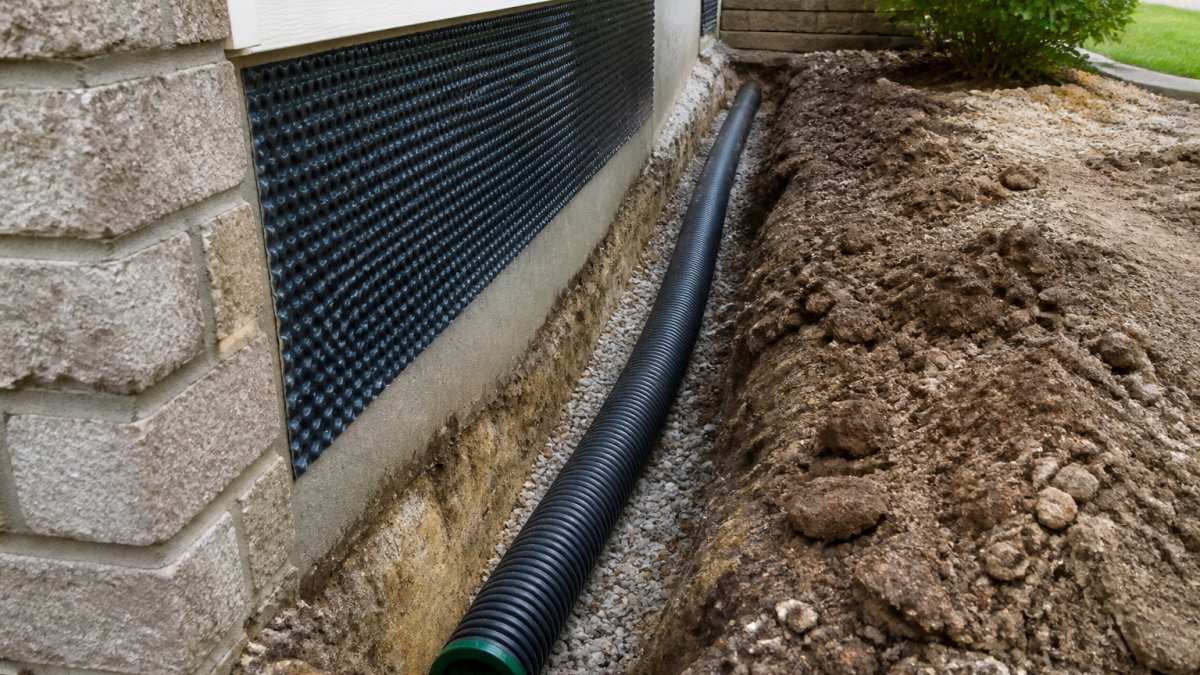
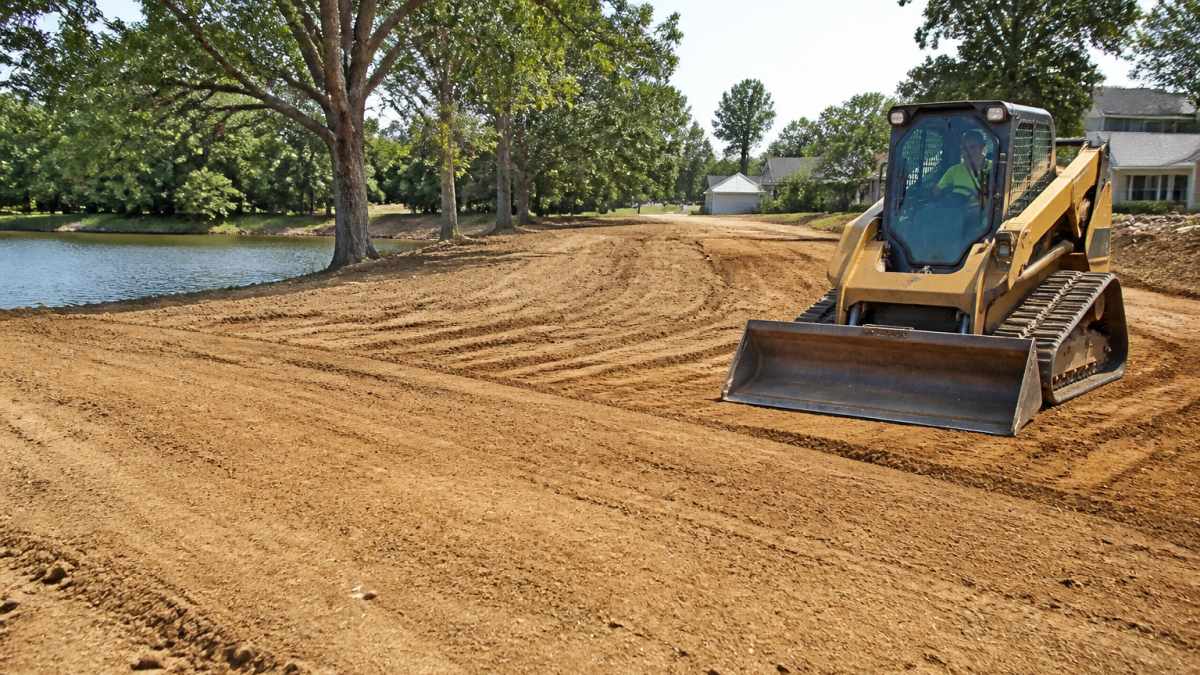
Professional land leveling and grading goes beyond cutting vegetation. It reshapes your property to achieve specific goals: establishing proper drainage, preparing foundation pads for new construction, or creating level spaces for landscaping. This is where Bush Hog Gone Wild alternatives often fall short, brush clearing alone doesn't solve underlying drainage or elevation issues.
Grading requires heavy equipment like dozers, graders, and excavators, plus expertise in reading terrain, understanding water flow, and achieving proper slopes. A professional grading contractor evaluates your property's natural drainage patterns and either enhances them or redirects water away from problem areas. The standard slope for residential drainage is typically 1 to 2 percent grade, which sounds minor but makes the difference between standing water and proper runoff (the FDA).
Site preparation for new construction demands even greater precision. Building codes require specific foundation elevations, utility clearances, and slope requirements. A professional grading service ensures your site meets those specifications before the builder arrives. This prevents costly delays, foundation issues, and post-construction problems.
The cost difference between DIY brush clearing and professional grading reflects the complexity. Clearing brush is mechanical work; grading is engineered work. It requires understanding soil composition, compaction requirements, and how your property's topography affects water management. Many homeowners discover this distinction after attempting DIY solutions that temporarily improve drainage but fail during heavy rain.
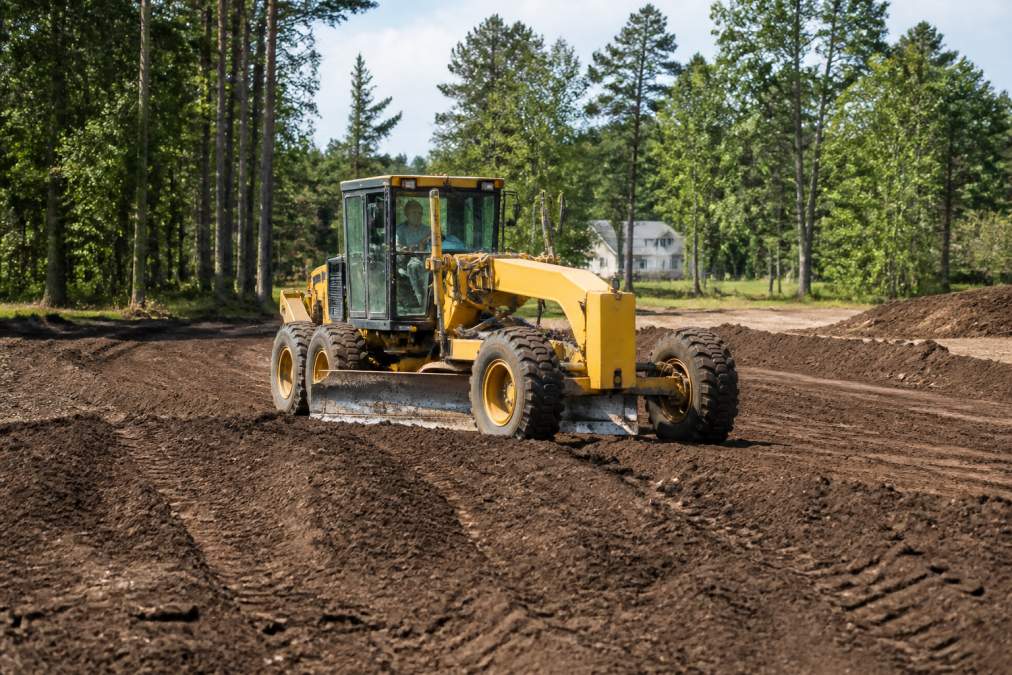
Forestry Mulchers and Heavy-Duty Brush Clearing Equipment
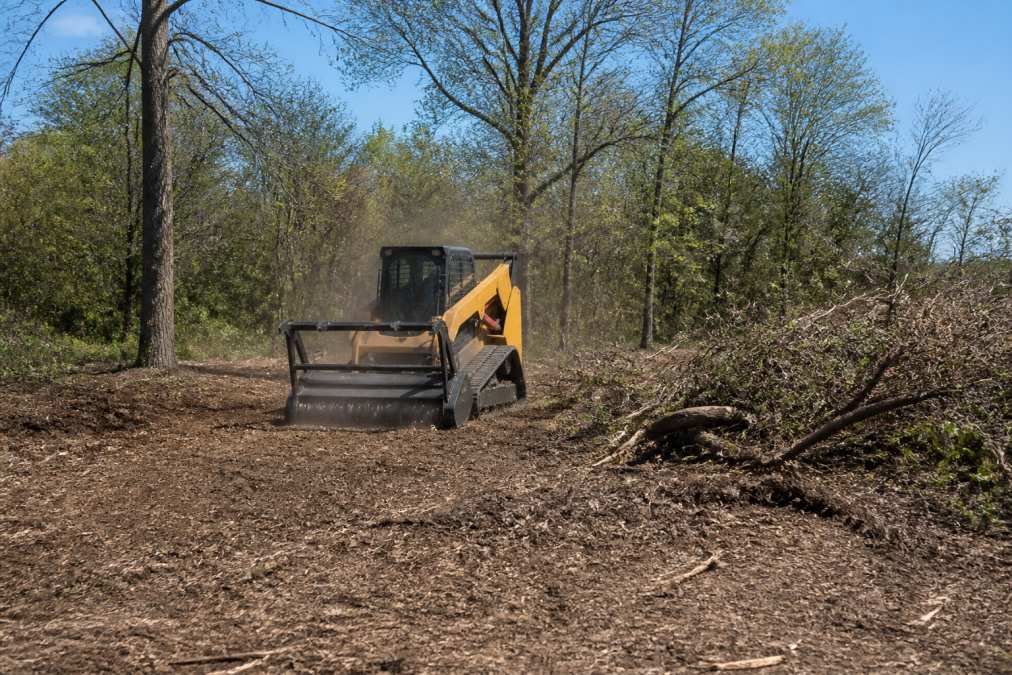
Forestry mulchers represent the premium tier of brush clearing technology. Unlike rotary cutters that leave behind cut vegetation, a forestry mulcher grinds material into fine mulch as it cuts, eliminating the debris removal step. This attachment uses rotating heads with carbide-tipped teeth to process trees, brush, and woody debris into manageable material.
The cutting capacity of forestry mulchers far exceeds standard rotary cutters. A quality forestry mulcher handles trees up to 8 inches in diameter, roughly double the capacity of a rotary cutter (peer-reviewed research). This makes them ideal for clearing wooded acreage, removing storm-damaged trees, or processing land that's been neglected for years. The mulch output can be left on-site as ground cover or collected for removal, depending on your goals.
Heavy-duty brush clearing equipment like the Rockland Heavy Duty Brush Cutter features three bidirectional blades made from AR400 steel, powered by a high-torque Parker motor with a 100HP gearbox. This design handles dense brush and thick vegetation where lighter equipment would stall. The strong 3/16-inch deck with reinforced 3/8-inch sides provides durability for extended operation in challenging conditions.
For comparison, the Davco Brush Cutter series represents industrial-strength equipment engineered for extreme durability. Models like the BC604 EVO and HD706 EVO are built for thousands of hours of demanding use, making them suitable for commercial land clearing operations or property owners with extensive acreage and frequent maintenance needs.
The Brush Wolf Hydraulic Rotary Brush Cutter stands apart through its continuously welded decks and use of high-strength materials like Hardox steel. As a veteran-owned American manufacturer that pioneered the rotary brush-cutting industry over two decades ago, Brush Wolf delivers premium build quality for operators seeking long-lasting equipment.
The Express Steel 72" Heavy Duty Brush Cutter offers a practical middle ground. With a 72-inch cutting width and direct-drive motors for improved efficiency, it handles trees up to 8 inches in diameter. The universal skid steer quick attach mount provides broad compatibility, and the oil-filled lubrication system simplifies maintenance. This equipment is particularly suited for skid steer operators needing strong, American-made performance.
Choosing between these options depends on your equipment access, terrain complexity, and vegetation density. If you own a tractor, a quality rotary cutter or forestry mulcher delivers excellent results. If you work with skid steer equipment, the Express Steel attachment provides strong performance. For commercial operations or extensive acreage, industrial-grade equipment like Davco ensures reliability over years of heavy use.
Debris Hauling and Site Cleanup Services
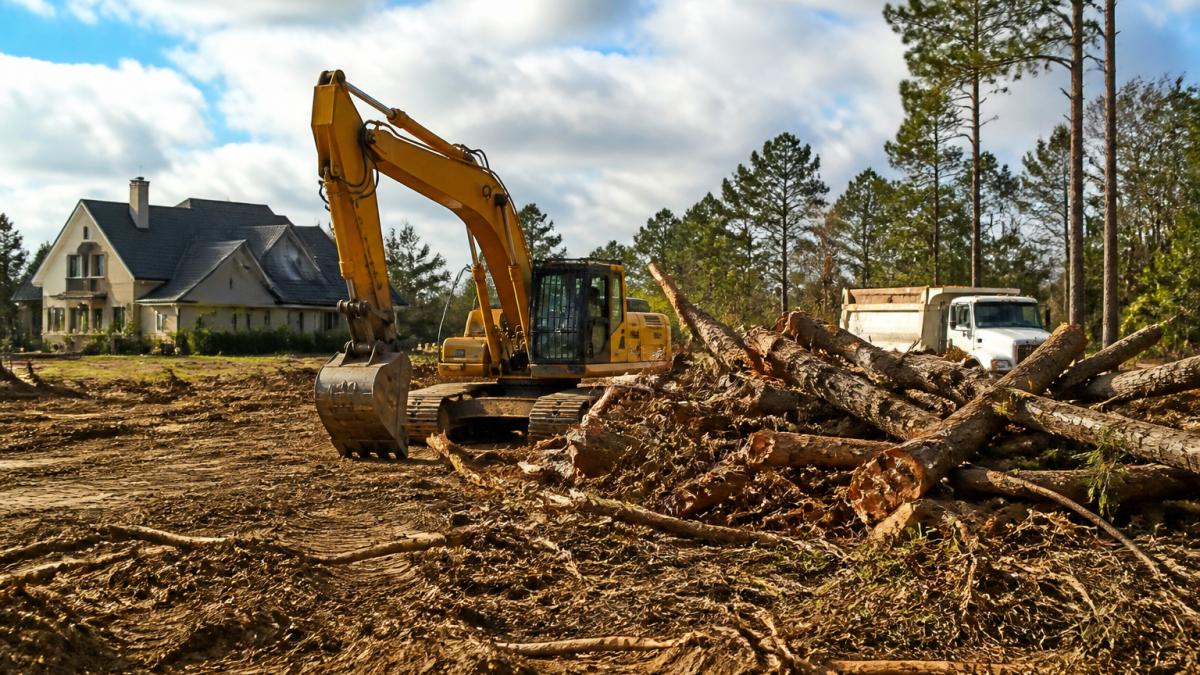
After clearing vegetation, you're left with the debris problem. Brush piles, tree stumps, and cut material accumulate quickly, especially on overgrown properties. This is where debris hauling and site cleanup services become invaluable, and where many DIY attempts stall.
Professional debris hauling involves more than loading a truck. It requires proper equipment (dump trucks, grapple units, or chippers), knowledge of local disposal regulations, and access to licensed landfills or recycling facilities. A grapple unit, essentially a mechanical claw mounted on a heavy vehicle, efficiently grabs and compacts debris for transport. Without this equipment, you're left hand-loading material or renting expensive machinery.
Many property owners underestimate the volume of debris from clearing overgrown land. A quarter-acre of dense brush can produce several tons of material. Hauling this yourself requires multiple trips, heavy equipment rental, and disposal fees. A professional service consolidates these steps, handling everything from collection to final disposal in a single operation.
Site cleanup services go beyond debris removal. They address post-clearing cleanup, raking, smoothing, and preparing your property for the next phase. If you're clearing land for new construction, this preparation work is essential. If you're restoring an overgrown property for landscaping, professional cleanup ensures a clean canvas for your vision.
OCAS Residential provides complete site cleanup and construction debris hauling, handling everything from brush and tree debris to construction waste. This comprehensive approach eliminates the coordination headaches of managing multiple vendors for clearing, hauling, and cleanup.
Understanding Residential Site Preparation Costs
Residential site preparation costs vary widely based on property size, vegetation density, terrain complexity, and the specific work required. A small clearing project on flat land with light brush differs dramatically from clearing wooded acreage with drainage issues and heavy equipment needs.
Several factors drive cost variation. Property size is obvious, larger acreage costs more. Vegetation density matters significantly; clearing established grass is far cheaper than processing dense woods or overgrown brush. Terrain complexity affects equipment choices and operational efficiency; steep slopes or rocky ground require more careful work and specialized equipment.
The type of work required shapes costs most dramatically. Simple brush cutting is the least expensive option. Adding debris hauling increases costs. Professional grading for drainage or site preparation adds another tier. When multiple services combine, clearing plus grading plus cleanup plus fence installation, the scope expands substantially.
Many homeowners discover that comparing quoted prices without understanding scope leads to confusion. One contractor's estimate for "land clearing" might mean rotary cutting only, while another includes debris removal and basic grading. This is why detailed site assessments matter; they clarify what work actually needs to happen and why different quotes vary.
Pricing depends on quantity, terrain, site conditions, and the specific services required. For current pricing on professional land leveling, grading, site cleanup, and debris hauling services, contact OCAS Residential for a detailed estimate. The team can assess your property, identify the actual work required, and provide transparent pricing based on your specific situation.
Choosing the Right Bush Hog Gone Wild Alternative for Your Property
Selecting the right Bush Hog Gone Wild alternative requires honest assessment of your property's needs, your equipment access, and your timeline. A systematic approach eliminates confusion and prevents costly mistakes.
Start by defining the actual problem. Are you clearing overgrown vegetation? Addressing drainage issues? Preparing land for construction? Removing debris after a storm? Each situation points toward different solutions. Brush clearing alone won't solve a drainage problem; professional grading will. Site cleanup alone won't prevent future overgrowth; proper maintenance planning will.
Next, evaluate your equipment and expertise. Do you own a tractor suitable for rotary cutting? Do you have experience operating heavy equipment on varied terrain? Are you comfortable managing debris disposal? Honest answers determine whether DIY equipment rental makes sense or whether professional service is more practical. Many property owners find that professional work saves time, eliminates safety risks, and delivers better results than rental equipment operated without experience.
Consider your timeline. Emergency clearing after storm damage demands quick turnaround; professional services deliver this. Routine maintenance clearing can be scheduled flexibly. Site preparation before construction has hard deadlines; missing them delays building timelines and increases costs. Your timeline influences which option makes practical sense.
Budget constraints matter, but they shouldn't drive decisions alone. The cheapest option often creates problems later. Incomplete grading causes ongoing drainage issues. Inadequate debris removal leaves material that becomes a liability. Professional work costs more upfront but prevents expensive corrections later.
For residential property owners in areas like Southwest Ranches, Davie, Weston, and Cooper City, OCAS Residential offers comprehensive solutions combining land leveling, precision grading, site cleanup, and debris hauling. The team handles everything from initial assessment through final site preparation, eliminating coordination hassles and ensuring professional-grade results. Whether you need simple brush clearing or complex site preparation, professional service delivers reliability that DIY approaches or one-off service providers often can't match.
Transforming your property requires more than clearing vegetation, it demands proper site preparation, effective drainage solutions, and professional execution. OCAS Residential specializes in comprehensive land leveling, precision grading for new construction, and complete site cleanup with debris hauling. The team delivers effective drainage solutions, proper landscape preparation, and property restoration tailored to your specific needs. Schedule a free estimate today and discover how professional site preparation transforms your residential property from start to finish.
Frequently Asked Questions
What works better than a bush hog for clearing overgrown land?
Professional land leveling and grading services, forestry mulchers, and heavy-duty rotary cutters often outperform standard bush hogging for extensive vegetation management. A forestry mulcher can handle trees up to several inches in diameter and processes debris on-site, while professional grading companies handle terrain issues that bush hogging alone cannot address. The best choice depends on vegetation density, terrain type, and whether you need site preparation beyond cutting.
How does professional site preparation compare to renting bush hog equipment?
Professional site preparation companies handle land leveling, drainage solutions, debris hauling, and site cleanup in one coordinated service. Renting equipment requires operator expertise and multiple passes. Professional services cost more upfront but eliminate equipment rental fees, operator liability, and the time investment. For homeowners managing overgrown acreage with drainage or grading issues, professional debris hauling and site cleanup often delivers better results and faster completion.
What equipment is used for precision site cleanup and debris hauling?
Professional site cleanup uses a combination of heavy equipment: skid steers with brush cutters, forestry mulchers for processing vegetation, grapple units for debris collection, and hauling trucks for removal. Rotary cutters and flail mowers handle vegetation management while mulching heads process material on-site. Hydraulic systems power these attachments for efficient ground engagement. Professional operators coordinate equipment selection based on vegetation density, terrain, and debris volume to ensure complete site restoration.
Should I hire a professional service or rent equipment for land clearing?
Professional services are typically more cost-effective for residential properties with significant overgrowth, drainage problems, or site preparation needs. Rental equipment requires operator training, multiple trips, and coordination. Professional land leveling and grading services provide expertise in terrain assessment and long-term drainage solutions. For small-scale projects, equipment rental may work; for comprehensive site restoration or complex terrain, professional debris hauling and site cleanup services deliver better value and results.
This article was written using GrandRanker