 listicle
Best Fence Materials for Home Security in 2026
Table of Contents
- Best Fence Materials for Home Security: A Comparison
- Steel and Wrought Iron: Maximum Intrusion Deterrence
- Aluminum Fencing: Security with Visibility
- Privacy Fences: Wood, Vinyl, and Composite
- Chain Link and Mesh Fencing for Large Properties
- What Is the Best Fence Height for Security?
- How to Reinforce a Fence for Security
- Security Fence Installation Cost: What to Expect
- Frequently Asked Questions
Last Updated: September 8, 2026
Best Fence Materials for Home Security: A Comparison
Choosing the best fence materials for home security isn't about picking the tallest option on the lot. It comes down to matching the material's strengths against your threat model, property layout, and local regulations. A fence only works when it deters intrusion, survives weather, and meets code.
The fundamental trade-off is privacy versus visibility. A solid privacy fence blocks sight lines but hides an intruder's activity from neighbors. An open metal fence keeps your yard visible but offers zero privacy. Most security experts agree a fence is one layer in a broader perimeter strategy.
Steel and Wrought Iron: Maximum Intrusion Deterrence
For sheer intrusion deterrence, ornamental steel and wrought iron are the gold standard. These materials combine high structural integrity with a design that is difficult to climb, especially with spear-top pickets or finials. The visual deterrent alone signals a hardened property. Unlike wood or vinyl, a steel fence cannot be kicked in, pried apart, or easily cut with handheld tools.
True wrought iron has largely been replaced by ornamental steel, which offers similar aesthetics with better rust resistance. The key to longevity is a quality powder coating. Many homeowners pair steel fencing with smart technology, such as video cameras or sensor-equipped gates, to close the visibility gap.
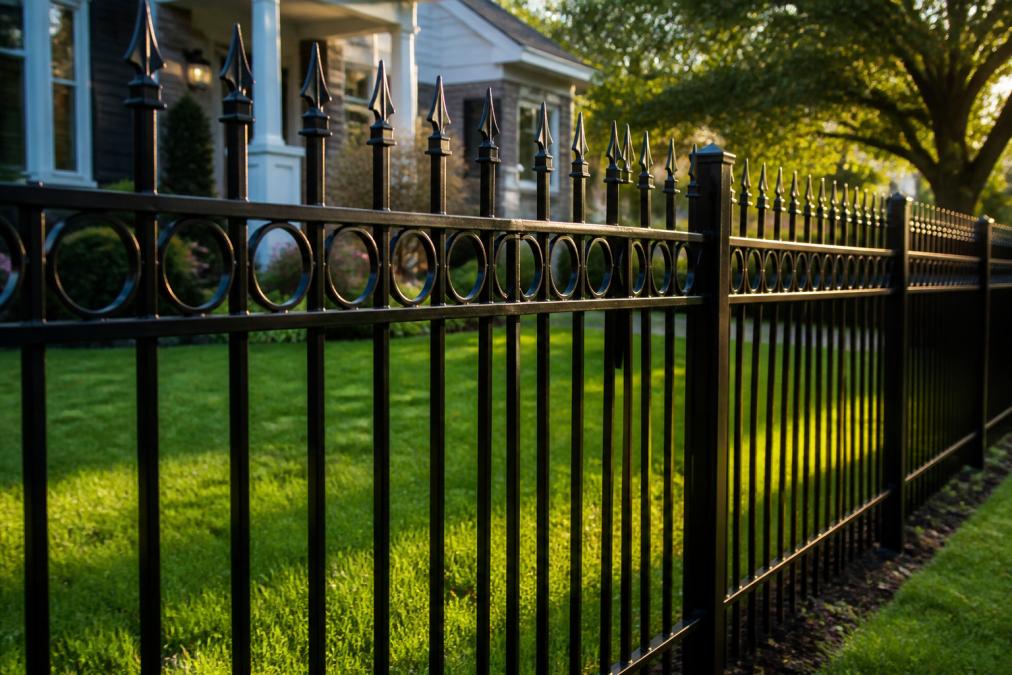
The main drawback is cost and installation complexity. Steel posts require deep concrete footings, and the sections are heavy. A common mistake is setting posts too shallow, compromising the entire fence's integrity. When installed correctly, a steel fence can last decades with minimal upkeep.
Aluminum Fencing: Security with Visibility
Aluminum fencing offers the look of steel with significantly less maintenance. It provides perimeter security without obstructing visibility, making it ideal for front yards. The corrosion-resistant finish does not rust like wrought iron, so it holds up well in humid coastal climates without painting.
The trade-off is that aluminum is lighter than steel, meaning a determined intruder could potentially bend or cut a section. However, most residential break-ins are crimes of opportunity. A well-built aluminum fence with security-grade picket spacing and a locking gate presents a formidable barrier.
Privacy Fences: Wood, Vinyl, and Composite
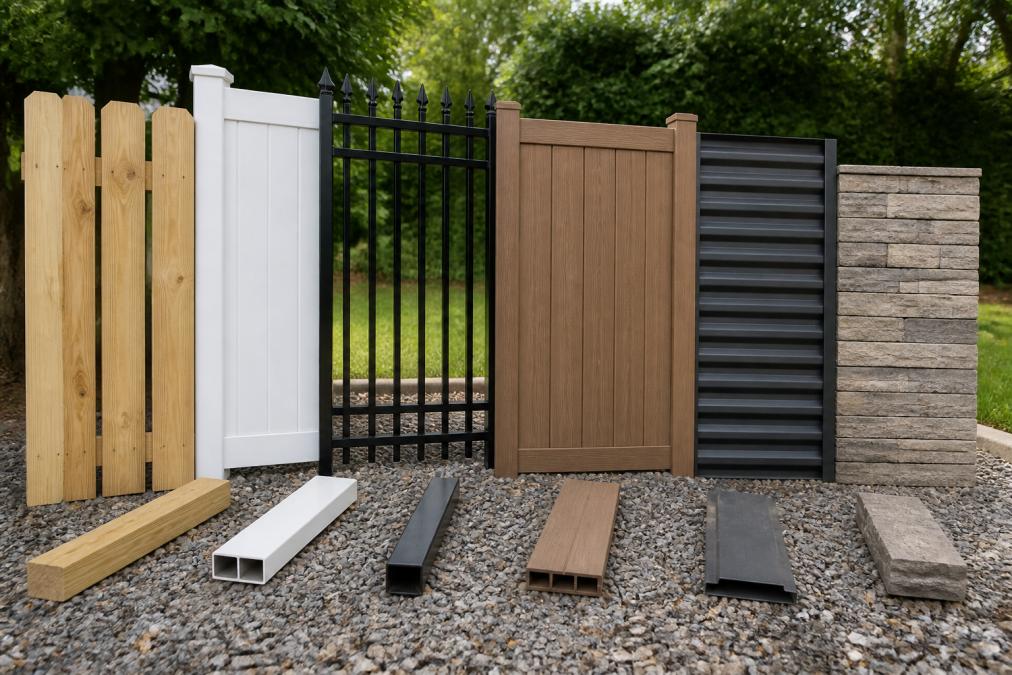
When privacy is the primary goal, solid panel fences create a complete visual barrier. Wood, vinyl, and composite each handle this job differently, depending on your budget and tolerance for upkeep.
Cedar privacy fencing resists rot and insects but demands periodic staining or sealing. Pressure-treated pine is the budget option, costing less upfront but requiring regular maintenance to prevent warping and moisture damage. Both wood types are the weakest link against a determined intruder who can pry boards or kick through weakened sections.
Vinyl panels offer a "set it and forget it" solution. The material does not warp, rot, or require painting, and its gap-free coverage ensures consistent privacy. Vinyl is harder to breach than wood, but extreme cold can make it brittle. Composite fencing sits at the top of the privacy category. Blending wood fibers with recycled plastics, it offers high structural density, resists moisture and insects, and mimics wood's appearance without the maintenance. The downside is cost: composite is a premium material.
| Material | Security Strength | Maintenance | Privacy | Relative Cost |
|---|---|---|---|---|
| Ornamental Steel | Highest | Low (powder coated) | None | High |
| Aluminum | High | Very Low | None | Medium-High |
| Cedar Wood | Medium | High (stain/seal) | Complete | Low-Medium |
| Pressure-Treated Pine | Medium | High | Complete | Low |
| Vinyl | Medium-High | Very Low | Complete | Medium |
| Composite | High | Very Low | Complete | Highest |
| Chain Link | Medium | Low | None (add slats) | Low |
Chain Link and Mesh Fencing for Large Properties
For large residential acreage, chain link fencing is the most cost-effective way to secure a boundary. Its galvanized steel construction is durable and impact-resistant, covering vast perimeters without the expense of solid materials. The open weave maintains sight lines.
The obvious weakness is privacy and climbability. Standard chain link is easy to scale and offers no screening. Adding privacy slats converts the fence into a semi-solid barrier. For higher security, mesh fencing with a tighter weave and heavier gauge wire presents a more serious obstacle. Some owners add a fence topper, though local ordinances often restrict these.
What Is the Best Fence Height for Security?
Selecting the right fence height balances physical deterrence and legal compliance. While a 6-to-8-foot fence is the standard recommendation, the actual limit is often dictated by local zoning ordinances and HOA covenants.
Most residential zoning codes cap backyard fences at 6 feet and front-yard fences at 4 feet, but these are not universal (hud.gov). Some jurisdictions allow up to 8 feet in rear yards, while others impose stricter limits in historic districts. Check your local municipal code before finalizing a height.
HOA rules can be even more restrictive. Many planned communities limit fence heights to 5 or 6 feet and require specific materials or colors. Some prohibit metal fences entirely. If you live in an HOA-governed property, review the CC&Rs before purchasing materials. Violating these rules can result in fines, forced removal, or legal action.
If your local code caps height at 6 feet, you can still enhance security without exceeding it:
- Add a fence topper or extension: Some jurisdictions allow decorative toppers, such as angled metal brackets or trellis extensions, that add 1-2 feet of effective height without counting toward the base fence height. Check your local code first, as some areas restrict these additions.
- Use anti-climb designs: Spear-top pickets or finials on a 6-foot metal fence are significantly harder to scale than a flat-topped panel of the same height. The visual deterrent alone often discourages casual intruders.
- Combine height with landscaping: Planting thorny shrubs like barberry or holly along the fence line adds a natural barrier that increases the effective difficulty of entry without altering the fence structure.
- Install motion-activated lighting: A well-lit perimeter is a powerful deterrent. Lights mounted on the fence or nearby structures eliminate dark zones where intruders might otherwise work unnoticed.
For most residential properties, a 6-foot fence paired with a locking gate and motion-activated lighting delivers the best balance of deterrence, legality, and cost. If your property allows 8 feet, the added height provides a meaningful margin. Fences below 5 feet are primarily decorative.
Also consider how height interacts with sight lines. A solid 6-foot privacy fence blocks ground-level views but may not deter someone who can approach unseen. An open metal fence of the same height keeps your yard visible, often a stronger deterrent than height alone.
How to Reinforce a Fence for Security
A fence is only as strong as its weakest point, which is almost always the gate, the posts, or the absence of smart monitoring. Physical reinforcement is the foundation, but modern security fences integrate technology to close gaps that brute strength cannot.
Gate Hardware and Physical Reinforcement
Start with the gate. Standard latches are easy to lift from the outside, so replace them with a keyed lock or a smart deadbolt. Smart deadbolts, such as those from Schlage or August, allow remote locking, entry logs, and temporary access codes. Hinges should be heavy-duty with non-removable pins.
Fence post depth should extend below the frost line, typically 24 to 36 inches, set in concrete footings. Shallow posts create leverage points that compromise the entire run. For existing fences, inspect posts annually for rot or rust. Adding steel post guards shields the base from lawn equipment and moisture.
Smart Technology Integration
Physical barriers deter, but smart technology detects and responds. The most effective security fences integrate with a broader home security ecosystem. Key upgrades:
- Motion-activated lighting: Install floodlights or pathway lights along the fence line that activate when motion is detected. This eliminates dark zones and alerts you to activity near the perimeter. Brands like Ring and Arlo offer solar-powered options that do not require hardwiring.
- Security cameras: Mount cameras on fence posts or nearby structures to monitor the perimeter. Choose cameras with night vision, wide-angle lenses, and motion alerts. For fence-mounted cameras, ensure they are positioned to capture both the fence line and the approach path, not just a narrow view of the yard.
- Contact sensors on gates: Wireless contact sensors, like those from Ring or SimpliSafe, trigger an alert when the gate opens. This is especially useful for side gates that are out of sight from the main entry points.
- Video doorbells at gates: If your gate is the primary pedestrian entry, a video doorbell provides two-way audio and video, allowing you to screen visitors before granting access.
Installation Quality and Security Risks
Improper installation is a silent security risk. A fence that looks solid but has shallow posts, loose pickets, or a misaligned gate is a liability. DIY installation can save money upfront but often leads to errors:
- Inadequate post depth: Posts set in soil without concrete or below the frost line will heave and shift, creating gaps under the fence.
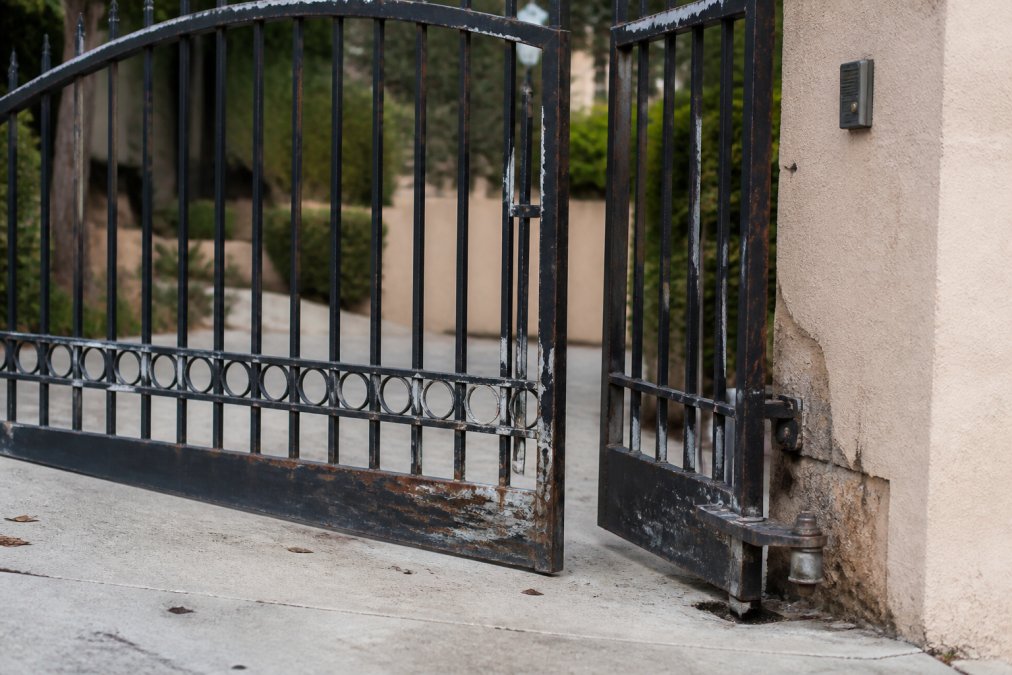
- Poor gate alignment: A gate that does not close flush leaves a gap that can be pried open or used to reach the latch.
- Incorrect picket spacing: On metal fences, pickets spaced too far apart allow a person or tool to pass through. Security-grade spacing is typically 4 inches or less (iccsafe.org).
Professional installation ensures proper post depth, correct spacing, and secure gate mounting. If you choose to DIY, research your local frost line, use concrete footings, and test the gate thoroughly.
Seasonal Maintenance Checklist
Security features degrade over time. A seasonal checklist ensures they remain functional:
- Spring: Inspect posts for frost heave, check gate hinges and locks, and test motion-activated lights and cameras.
- Summer: Trim vegetation that could provide climbing aids or obscure sight lines. Check for rust or corrosion on metal fences.
- Fall: Clear leaves and debris from gate tracks and sensors. Test all smart devices and replace batteries.
- Winter: Remove snow buildup from gates and ensure locks do not freeze. Inspect for ice damage to posts or panels.
Security Fence Installation Cost: What to Expect
Security fence installation cost varies widely based on material, linear footage, terrain, and site preparation. The installed cost includes labor, concrete footings, and gate hardware. Request a site-specific quote, as grading and soil conditions can significantly affect the final price.
A common mistake is comparing only material costs and ignoring the foundation. A fence set in shallow footings will fail, regardless of panel cost. A security fence is a long-term investment, and cutting corners on installation undermines the material's effectiveness. Schedule a free estimate to discuss your property's needs and get a transparent, project-based price.
The cheapest quote is rarely the best value. A security fence is a long-term investment, and cutting corners on installation undermines the material's effectiveness. Schedule a free estimate to discuss your property's needs and get a transparent, project-based price.
Choosing the right fence materials for home security requires balancing intrusion deterrence, privacy, maintenance, and budget against your property's layout and local rules. Steel and aluminum offer the strongest physical barriers, while vinyl and composite provide privacy with minimal upkeep. Whatever material you select, proper installation depth and reinforced gate hardware are non-negotiable. OCAS Residential provides secure residential fencing backed by professional land leveling and precision grading. Get started with OCAS Residential and secure your property.
Frequently Asked Questions
What is the most secure type of fencing?
For residential properties, ornamental steel or wrought iron is generally considered the most secure fencing material. Its structural integrity resists bending and impact, and the design often includes anti-climb features like spear-top pickets. Solid panels of steel, masonry, or high-density composite also provide strong security by blocking visibility and creating a physical barrier that is difficult to breach without significant noise and effort.
What do police recommend for home security fencing?
Law enforcement typically recommends a fence that is at least 6 feet tall, made of a durable material like steel or aluminum, and includes a secure, self-latching gate. The goal is to create a visual deterrent and a physical delay. They often advise against solid privacy fences that block sightlines from the street, suggesting that a see-through metal fence allows neighbors and passersby to spot potential intruders on your property.
Does a privacy fence provide better security than an open fence?
It depends on the trade-off. A solid privacy fence blocks a burglar's view of your home and yard, which can be a benefit, but it also provides cover for them to work unseen once they are inside your property line. An open fence, like ornamental steel, allows for natural surveillance. For high-value residential security, a metal fence with anti-climb features often provides a better deterrent than a tall wooden privacy fence.
What can I add to my fence to stop burglars?
Several additions can significantly improve your fence's security. Consider installing a motion-activated security camera and lights. Reinforce the gate with a heavy-duty latch and a keyed lock or deadbolt. You can also add anti-climb toppers, such as decorative spikes or rotating brackets, to the top of the fence. Ensuring your fence posts are set in concrete footings is a critical step to prevent the entire structure from being pushed over.