 listicle
Benefits of Professional Debris Removal Explained
Table of Contents
- Why Professional Debris Removal Outperforms DIY Cleanup
- Job Site Safety and Liability Reduction
- Environmental Compliance and Eco-Friendly Disposal
- Land Clearing and Debris Hauling: What the Process Covers
- Post-Construction Site Cleanup Checklist
- Construction Debris Removal Cost: What Drives Pricing
- How Professional Debris Removal Improves Project Timelines and Workflow
- Conclusion
Last Updated: August 28, 2026
Why Professional Debris Removal Outperforms DIY Cleanup
Professional debris removal is the process of hiring trained crews to haul, sort, and dispose of waste from residential properties, construction sites, or land clearing projects, and it consistently outperforms the DIY alternative in ways that go beyond simple convenience.
Most homeowners underestimate what debris cleanup actually involves until they're standing in the middle of it. A single post-construction project can generate concrete rubble, treated lumber, metal scraps, and contaminated soil, all of which require different disposal methods under federal and state regulations. Renting a pickup truck and making runs to the local landfill is not just slow; it often violates waste sorting requirements and can expose you to fines.
At OCAS Residential, we handle complete site cleanup and debris hauling as part of a broader property preparation process. The difference between professional debris removal and a DIY cleanup isn't just speed, it's the difference between a property that's ready for its next phase and one that creates new problems.
A professional crew brings the equipment, the regulatory knowledge, and the labor to finish in hours what a homeowner might spend a weekend attempting. They know which materials can be recycled, which require special handling, and how to document disposal for compliance purposes. That last point matters more than most people realize.
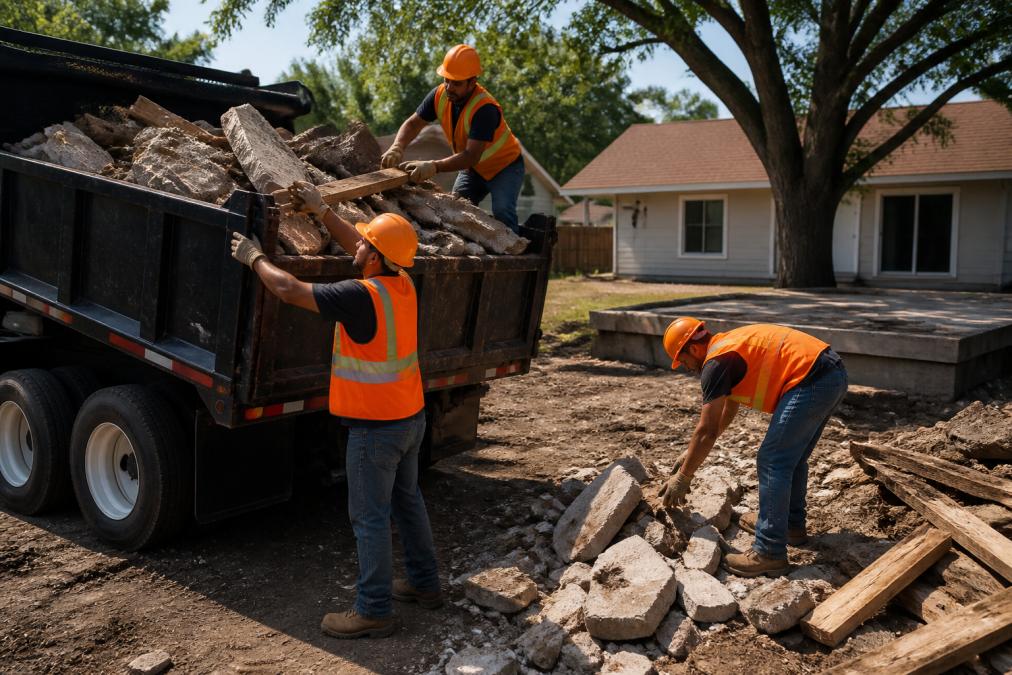
Here's the part most guides skip over: the hidden labor cost of DIY cleanup. Sorting debris, making multiple landfill trips, and managing heavy materials without proper equipment leads to project delays, physical injury risk, and disposal fees that often exceed a professional quote. The economics rarely favor going it alone.
Job Site Safety and Liability Reduction
Job site safety is one of the strongest arguments for professional debris removal, and it's one that contractors and property owners often underestimate until something goes wrong.
Occupational Hazards That Debris Creates
Accumulated debris creates a dense cluster of occupational hazards. Loose nails, broken glass, unstable material piles, and sharp metal edges are among the most common causes of job site injuries during the cleanup phase of a project. Heavy items like concrete blocks and roofing materials present serious fall and crush risks when handled without proper equipment or technique.
According to the OSHA guidelines on construction site safety, slip, trip, and fall hazards related to poor housekeeping and debris accumulation are among the leading causes of construction-related injuries. Keeping a site clear isn't optional, it's a regulatory requirement under OSHA's general duty clause.
Professional debris removal crews are trained in safe handling procedures. They use appropriate personal protective equipment, know how to stage removal to avoid creating secondary hazards, and work within established waste management protocols. That training matters on a residential site just as much as a commercial one.
How Insurance and Liability Exposure Change
Here's something most debris removal guides never address: your liability exposure changes significantly depending on whether you manage cleanup professionally or handle it yourself.
If an injury occurs on your property during a DIY cleanup, to you, a helper, or even a passerby, your homeowner's insurance may not cover it if the circumstances suggest negligent site management. An unlicensed crew hauling debris without proper documentation creates a similar gap. Professional hauling companies carry their own liability insurance and workers' compensation coverage, which shifts the risk away from the property owner.
For contractors, this is even more critical. A job site with unmanaged debris can trigger OSHA citations, delay final inspections, and create grounds for client claims if subcontractors are injured. Professional debris hauling is not just a cleanup service, it's a liability management tool.
Environmental Compliance and Eco-Friendly Disposal
Environmental compliance is not a box-checking exercise, it's a legal requirement with real consequences for property owners who get it wrong.
Landfill Diversion and Recycling Protocols
Professional debris removal services maintain established recycling protocols that divert significant volumes of material from landfills. Wood, metal, concrete, and certain plastics can all be sorted and redirected to recycling facilities rather than going straight to a landfill. This landfill diversion reduces disposal costs, extends the life of local waste facilities, and supports broader sustainable practices in the construction sector.
The EPA's sustainable materials management guidelines outline how construction and demolition debris represents one of the largest waste streams in the country. Proper waste sorting at the point of removal, rather than after the fact at a landfill, is the most effective way to increase recycling rates.
A professional hauling crew sorts debris during the removal process, which is something a homeowner loading a rental dumpster simply cannot replicate efficiently. That sorting discipline is where the environmental benefit is actually created.
Hazardous Materials and Regulatory Compliance
Hazardous materials present a separate compliance challenge that goes beyond standard waste management. Older residential properties may contain asbestos-containing materials, lead paint debris, or treated wood with chemical preservatives. Construction projects can generate contaminated soil, solvents, and adhesives that cannot be disposed of in standard landfill streams.
Federal regulations under the Resource Conservation and Recovery Act govern the disposal of hazardous waste, and violations can result in substantial fines. Professional debris removal providers understand these requirements and either handle hazardous material separation themselves or coordinate with certified specialists. That regulatory knowledge protects property owners from unintentional violations that can occur when debris is handled without proper screening.
Land Clearing and Debris Hauling: What the Process Covers
Land clearing and debris hauling cover more ground than most property owners expect when they first request a quote.
A full land clearing engagement typically includes the removal of vegetation, tree stumps, root systems, and surface rocks in addition to any existing structural debris. On residential lots, this often means clearing overgrown areas, removing old fencing materials, hauling away demolition waste from outbuildings, and grading the surface to prepare for new construction or landscaping.
Debris hauling within a land clearing project involves multiple waste streams. Organic material, brush, stumps, and green waste, is often chipped or mulched on site or hauled to composting facilities. Construction debris like concrete, metal, and treated lumber goes to separate disposal streams. Soil that has been contaminated or is unsuitable for the site is removed and replaced.
The scope of work matters when comparing quotes. A low-cost option that clears surface debris but leaves root systems, buried concrete, or contaminated soil creates significant problems downstream, particularly if you're planning new construction, drainage improvements, or landscaping. Proper site sanitation at the clearing stage prevents those problems from surfacing later.
What most providers won't tell you upfront: the condition of access routes, the depth of root systems, and the presence of buried debris all affect both the timeline and the total cost of a clearing project. A thorough site assessment before work begins is the only way to get an accurate scope.
Post-Construction Site Cleanup Checklist
Post-construction site cleanup is the final phase of any building or renovation project, and skipping steps here creates problems that show up weeks or months later.
Use this checklist to verify that a cleanup is complete before signing off:
- All loose construction debris removed from the site, including nails, screws, and fasteners
- Concrete formwork, rebar, and excess materials hauled off-site
- Treated lumber and composite materials separated from general waste for proper disposal
- Hazardous materials (adhesives, solvents, paint) identified and routed to appropriate disposal
- Topsoil assessed for contamination and graded to design specifications
- Drainage pathways cleared of debris and verified functional
- Site perimeter checked for debris that has migrated beyond the work area
- All dumpsters, equipment, and temporary structures removed
- Final surface grading completed to prevent standing water
- Disposal documentation collected from hauling crew for compliance records
That last item, disposal documentation, is the one most homeowners and contractors overlook. If a regulatory question arises about how materials were handled, documentation from your debris removal provider is your primary protection.
Construction Debris Removal Cost: What Drives Pricing
Construction debris removal cost depends on several variables, and understanding them helps you evaluate quotes accurately rather than simply choosing the lowest number.
The primary cost drivers for professional debris removal include:
| Cost Factor | What It Affects | Why It Matters |
|---|---|---|
| Volume of debris | Truck loads required | More material = more trips and labor |
| Material type | Disposal method and fees | Hazardous materials cost more to dispose of |
| Site accessibility | Equipment and time needed | Difficult access increases labor hours |
| Hauling distance | Fuel and time costs | Distance to disposal facility affects pricing |
| Sorting requirements | Labor intensity | Recycling-focused sorting adds time |
| Permits required | Administrative overhead | Some municipalities require disposal permits |
General junk removal services price on volume, typically charging by the fraction of a truck load. Full-service construction debris haulers often quote by the project after an on-site assessment, because the material complexity and site conditions vary too much for a standard rate.
What drives costs up unexpectedly: buried debris discovered during clearing, materials that require hazardous waste routing, and sites with limited vehicle access. A thorough site assessment before work begins is the best way to avoid cost surprises.
OCAS Residential provides quote-based pricing for site cleanup and debris hauling, because an accurate estimate requires seeing the site. Contact us for a free estimate rather than relying on a generic range that may not reflect your actual project.
How Professional Debris Removal Improves Project Timelines and Workflow
The clearest operational benefit of professional debris removal is the direct impact on project timelines. A cluttered site slows every trade that follows.
When debris accumulates between construction phases, it creates physical obstacles that slow subcontractors, creates safety hazards that require workarounds, and delays inspections that require clear site access. Scheduling professional hauling between phases, rather than letting debris accumulate until the end, keeps operational workflow moving without interruption.
For residential property owners, this matters most during renovation projects where multiple contractors are sequenced. A framing crew that has to work around demolition debris from the previous phase loses productive time. A grading contractor who arrives to find the site cluttered with construction waste cannot work to spec until the debris is cleared. These delays compound across a project timeline.
Professional debris removal also supports better waste stream management at the project level. When hauling is scheduled as a defined phase rather than an afterthought, materials are sorted correctly, disposal documentation is captured, and the site is ready for the next phase on schedule.
The thing nobody tells you about debris management: the cost of delay almost always exceeds the cost of professional hauling. A single day of contractor downtime due to a cluttered site typically costs more than the hauling service that would have prevented it.
For property owners managing complex projects, new construction, major renovations, or land clearing for new landscaping, integrating professional debris removal into the project schedule from the start is the most cost-effective approach. Reactive cleanup, scheduled after problems appear, is always more expensive than proactive hauling built into the project plan.
According to OSHA's guidelines on construction site housekeeping, maintaining clear work areas is not just a safety requirement, it directly supports productivity by reducing the time workers spend navigating hazards and locating materials.
Frequently Asked Questions
Q: How much does professional debris removal typically cost?
A: Professional debris removal pricing depends on several factors: the volume and type of debris, whether hazardous materials are present, site accessibility, and the scope of land clearing required. Because no two properties are identical, most reputable providers offer free on-site estimates rather than fixed rates. Contact OCAS Residential directly for accurate pricing based on your specific project.
Q: What are the safety risks of DIY debris removal?
A: DIY debris removal exposes homeowners to serious occupational hazards. Sharp materials like nails, broken glass, and metal scraps cause lacerations. Lifting heavy bulk items without proper equipment leads to back injuries. Disturbing older construction materials can release hazardous substances such as asbestos or lead dust, which require licensed disposal under EPA and OSHA regulations. Professional crews carry the right protective equipment, training, and insurance to handle these risks without exposing you to injury or regulatory liability.
Q: Does professional debris removal include hazardous waste disposal?
A: Many professional debris removal services handle common construction hazardous materials including treated lumber, certain paints, and contaminated soils, but capabilities vary by provider. Regulated hazardous waste such as asbestos-containing materials must be handled by licensed contractors under EPA and state environmental agency rules. Always confirm with your provider which waste streams they are certified to manage before scheduling service, and ask for documentation of proper disposal to protect yourself from future liability.
Q: Why is professional site cleanup important for new construction?
A: Post-construction site cleanup directly affects what comes next. Leftover debris interferes with grading accuracy, drainage performance, and landscape preparation. It also creates tripping and puncture hazards for anyone on the property. Professional debris hauling ensures the site is cleared to a standard that supports precision grading, proper soil compaction, and fence or structure installation. Skipping thorough cleanup can compromise foundation integrity and drainage solutions, turning a short-term cost-saving into a long-term repair expense.
Managing debris effectively is one of the most overlooked factors in keeping a property project on schedule, on budget, and compliant with waste disposal regulations. OCAS Residential provides complete site cleanup and construction debris hauling as part of a full-service approach that includes precision grading, land clearing, drainage solutions, and landscape preparation. Schedule a free estimate with OCAS Residential and get your property cleared, graded, and ready for what comes next.
This article was written using GrandRanker